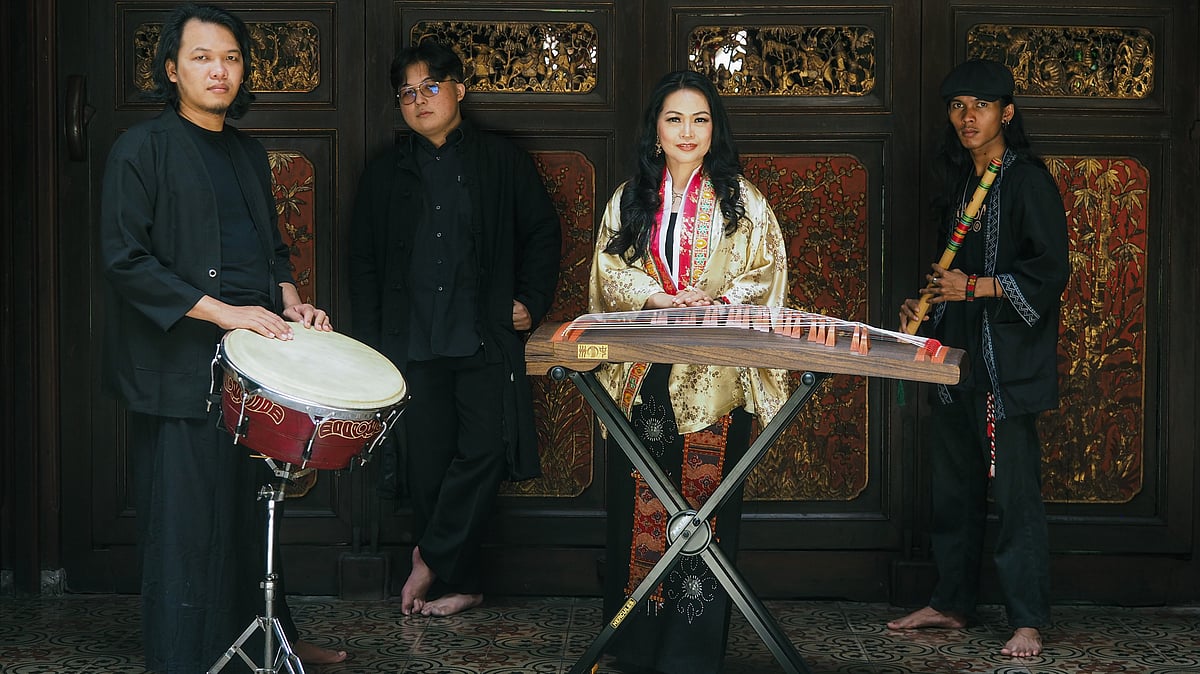
Growing up in the Indonesian city of Medan, Ngartini Huang watched a lot of martial arts movies. Besides their storylines and action sequences, she was enamoured by their background music. That inspired her to learn traditional Chinese instruments like the guzheng and pipa, ultimately leading to a course at the prestigious Sun Wen Yen Music School in Shanghai, China.
Ngartini was in New Delhi last week to perform at the Soundscapes of India showcase festival, organised by the Indian Performing Right Society (IPRS) and curated by MusiConnect India. She says, “I was happy to be invited, and it gave me an opportunity to create awareness about the beautiful instrument guzheng through my performance.”
Also known as the Chinese zither, the guzheng is said to have been first played over 2,200 or 2,300 years ago. It contains a minimum of 21 strings stretched over moveable bridges on a soundboard made of Paulownia wood, commonly available in China. The pipa, on the other hand, is a Chinese lute with a pear-shaped body.
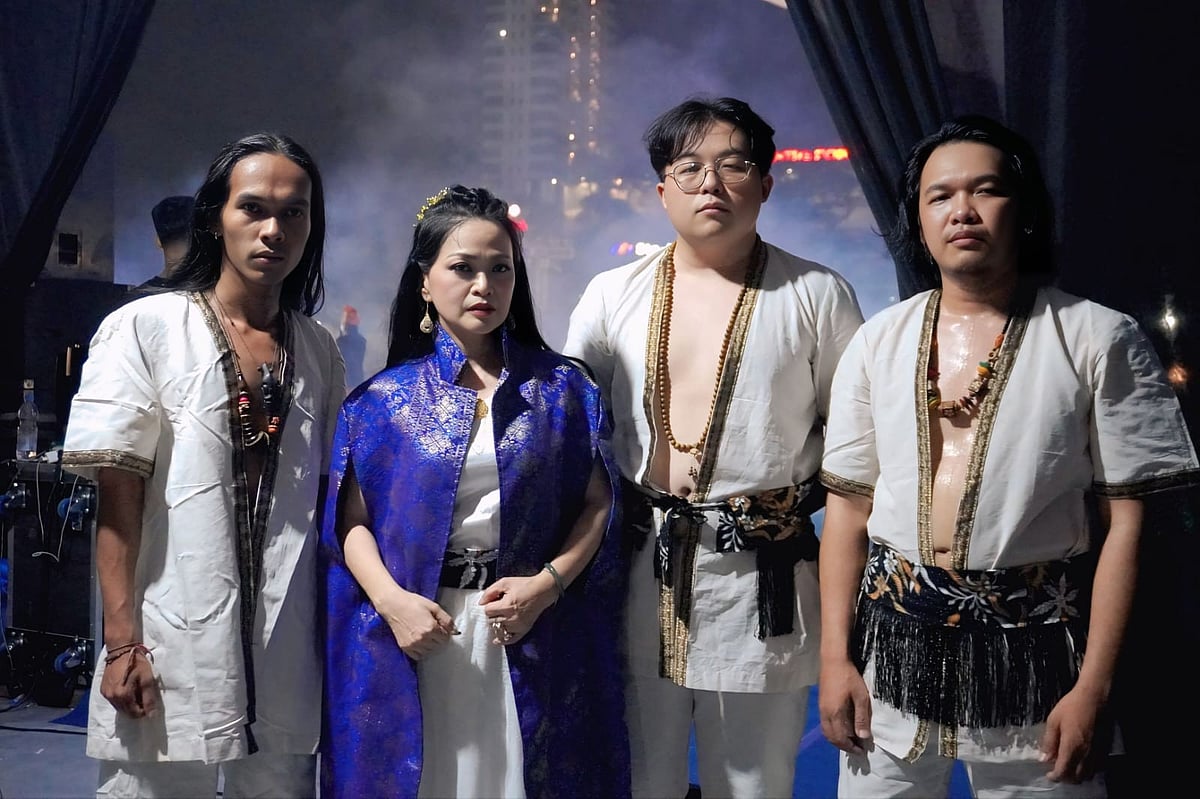
At her show in the capital’s Dr Ambedkar International Centre on August 29, Ngartini only played the guzheng. She was accompanied by Aldo on flute, Zakky on keyboards and Lana on multi-percussion. Dressed in a Chinese hanfu jacket and wearing a traditional Indonesian necklace, she was a picture of joy as she smiled and swayed while playing. Even the band members danced in performance.
According to Ngartini, as the guzheng is played a lot in classical Chinese music, the artistes normally have serious and formal expressions while playing. She says, “I have tried to change that. I want the audience to feel happy and even my compositions are written keeping that in mind. But I maintain the peaceful and serene nature of music the instrument has to offer.”
|
The Delhi set began with Jadeite, a composition inspired by her love for jade. “It’s a stone I always wear,” she says. Another song was Au Revoir, which means goodbye in French. She explains, “It was a song I wrote for my daughter when she got married, and was meant to indicate that all goodbyes need not be sad. They can be happy too.”
Ngartini also played a tune called Pink Raga, where the colour’s choice was inspired by Jaipur. She adds, “In Indonesia, raga means soul. In India, it has a musical connotation. So I decided to use that just to establish a connection.”
The other Indian element at the show was the addition of the right drum of the tabla to the percussion kit. She says, “The drummer Lana had to practise a lot because the instrument was new to him. But now that he has got the hang of it, he may use it in the future too.”
Other pieces that Ngartini is known for are Whisper in the Night and Take No Niva, which is the name of a garden in the Japanese mountains. The title means ‘bamboo garden’, and the beautiful scenery around it inspired her to create the tune. In the original recording, she collaborated with Canadian flautist Ron Korb.
The musician points out that though her roots are in traditional Chinese music, she focuses on bringing a unique fusion of traditional and modern styles to the world stage. “I try and incorporate diverse global influences in my compositions,” she says.
One of her main objectives is to collaborate with talented young musicians from North Sumatra, so that she can reflect the rich tapestry of her Indonesian heritage. “My aim is to not only showcase the beauty of the guzheng but to highlight the creativity and innovation of emerging artistes from my community,” she says.

As a torchbearer of Chinese culture, Ngartini has been actively involved in promoting the Four Arts of China - Qin, Qi, Shu, Hua, a traditional concept encompassing guzheng, chess strategy, calligraphy and painting. To popularise the guzheng and other traditional instruments, she has created a music academy in Medan, capital of north Sumatra. She is also a lecturer at the University of North Sumatra.
Ngartini says her performance at Soundscapes of India may just mark a new beginning, as she plans to understand how to collaborate with Indian musicians. She also plans to return in January, when she will visit Kolkata and Goa to expand her horizons. It may well mark the beginning of another journey.

