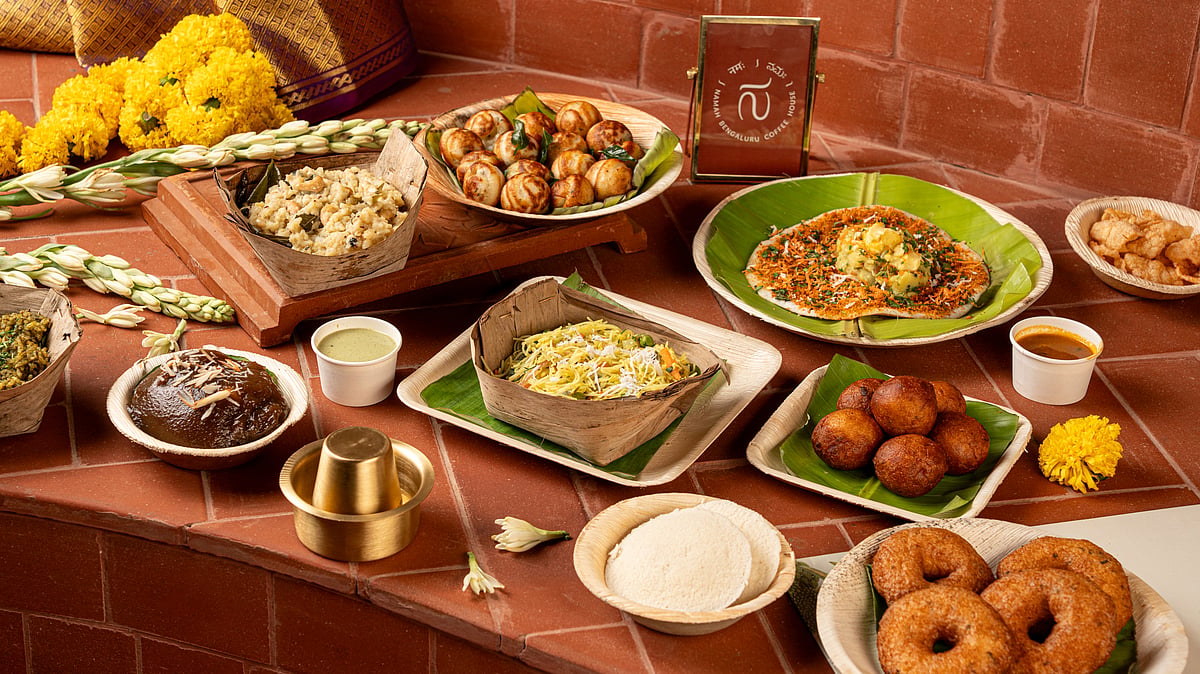
Just days after opening on May 19, Namah - Bengaluru Coffee House has already become one of Mumbai’s busiest food spots. By lunch hour, queues spill outside, tables are packed, and plates of dosas and idlis fly out within minutes. In a city obsessed with the next viral restaurant, Namah, founded by Arvind Shetty and Pallavi Shetty, has managed to become the place everyone suddenly wants to eat at.
Built around the philosophy of “Namma Mane, Nimma Mane” – My Home is Your Home – Namah isn’t created like your usual polished Mumbai restaurant. Instead, it recreates the warmth of a South Indian home, particularly the kind you’d stumble into somewhere in Bengaluru or coastal Karnataka. And honestly, the moment you walk in, you get what they mean.
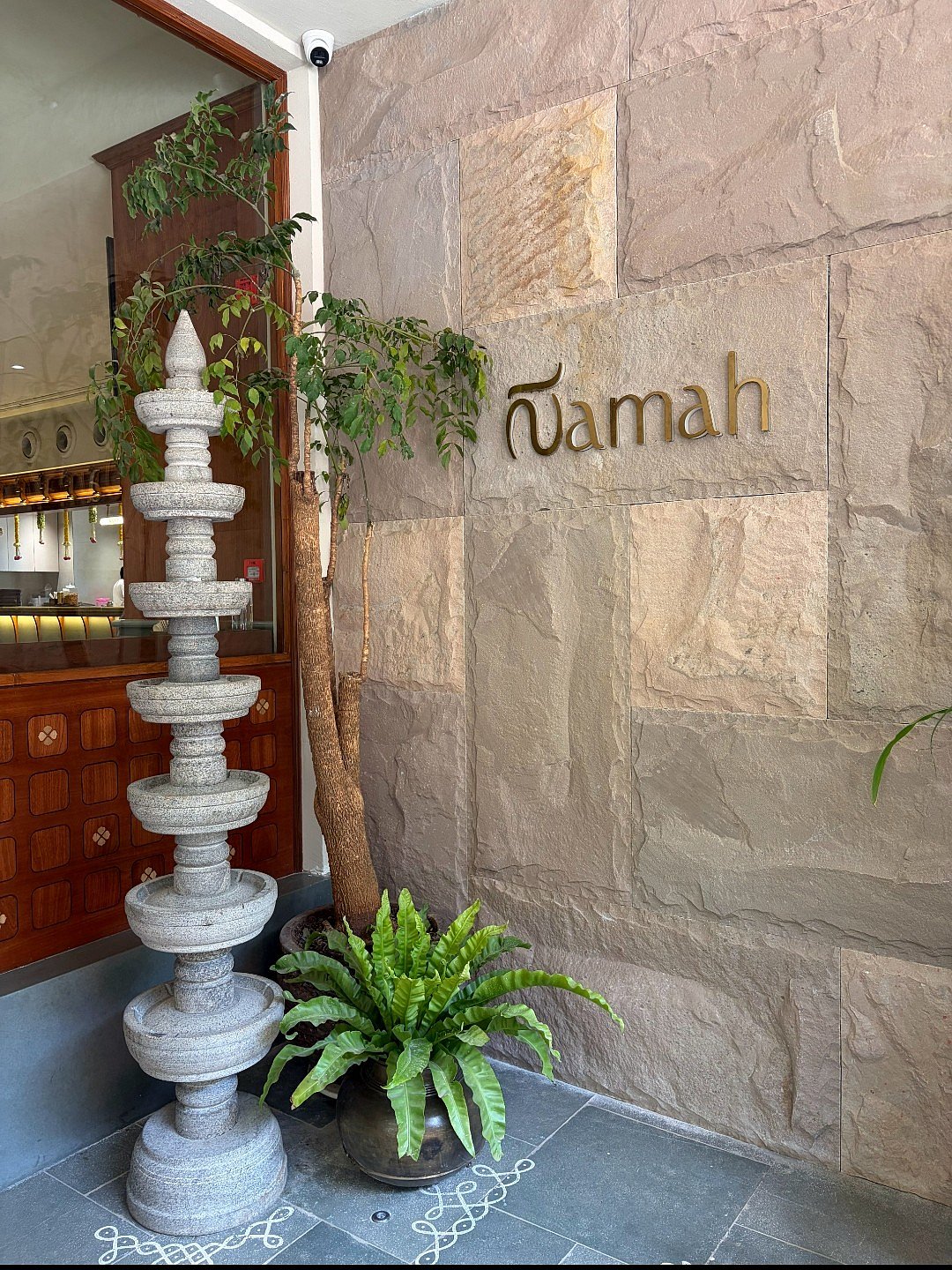
South Indian home, reimagined in Mumbai
The restaurant is massive, but somehow doesn’t feel intimidating. The first thing you notice is the sudden drop in temperature from Mumbai’s heat outside, followed by the smell of fresh flowers, filter coffee, sambhar simmering somewhere in the background. Traditional instrumental music softly plays as people move between counters carrying trays stacked with food.
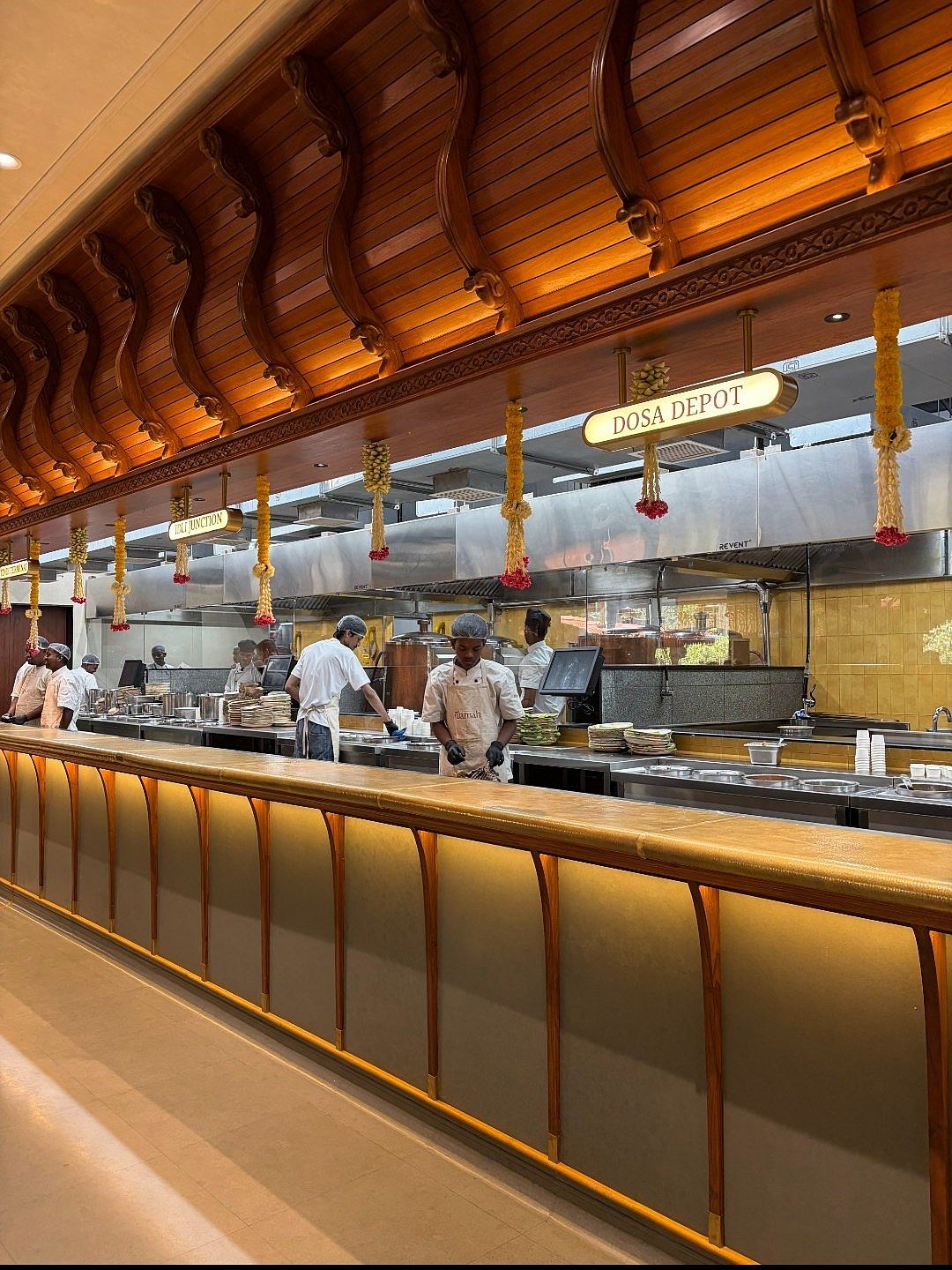
Instead of table service, the ordering system follows the classic South Indian Darshini format. You place your order through digital machines (with staff around to help), collect your bill, and head to different sections named almost like railway stations: Dosa Depot, Idli Junction, Tindi Terminal, Rice & Dessert, and Kaapi & Beverages.
And somehow, despite the crowd, the food arrives surprisingly fast. Within two to five minutes, plates start appearing.
For Pallavi Shetty, the project is deeply personal. She credits the larger vision to her husband, Arvind Shetty, while calling herself the person who brought the concept to life.
“The whole idea was to bring the Bangalore Darshini culture to Mumbai, but in a larger, more immersive way,” she explains. “Most places here are doing smaller versions with limited menus and cramped spaces. We wanted to create a proper South Indian experience – not just food, but comfort, warmth, and familiarity.”
Interiors feel more personal than performative
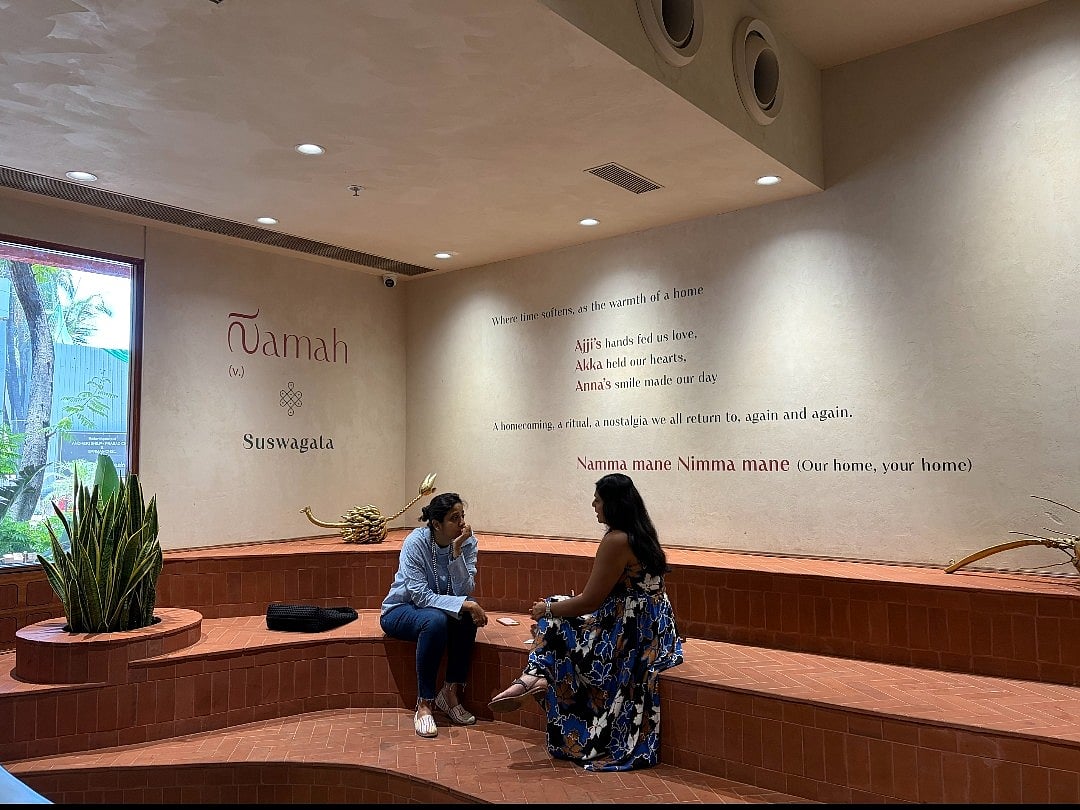
What makes Namah stand out is that it doesn’t look like a typical quick-service restaurant. In fact, if you removed the counters, parts of it could easily pass off as a heritage home.
There’s a traditional Padipura-style entrance, landscaped courtyards, amphitheatre seating, stone pillars, a flower-filled gazebo inspired by ancestral Kannada homes, and an adorned Ganesh idol quietly anchoring the space. The “Wall of South” acts almost like a cultural collage, while Kota flooring, terracotta tiles, terrazzo textures, and Sadarahalli stone add warmth without making the space feel overly designed.
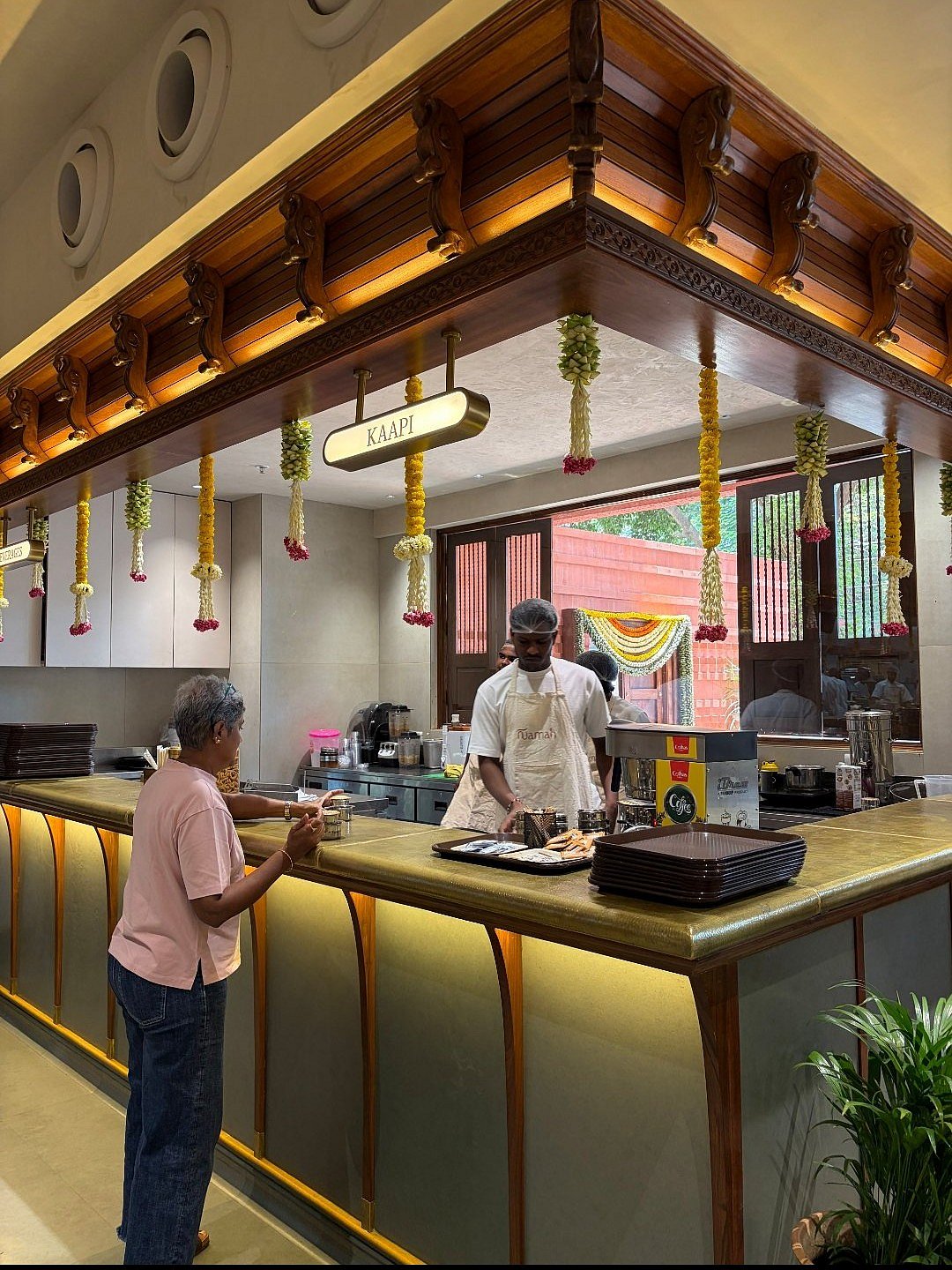
Pallavi explains that making the restaurant feel like a home was always the priority. “If a place this large isn’t designed properly, it can start looking like a canteen,” she says honestly. “So we decided to build a second home instead. Somewhere people feel calm the moment they enter.”
That “chaos to calm” idea is visible throughout the restaurant, although Pallavi laughs that the calm disappears during peak hours because of the overwhelming crowds.
Still, there’s thought in every corner. The amphitheatre seating, for instance, wasn’t just aesthetic. “We wanted Gen Z to hang out here too,” she says. “People should be able to sit, watch food being made, spend time here comfortably.”
Menu is classic done right
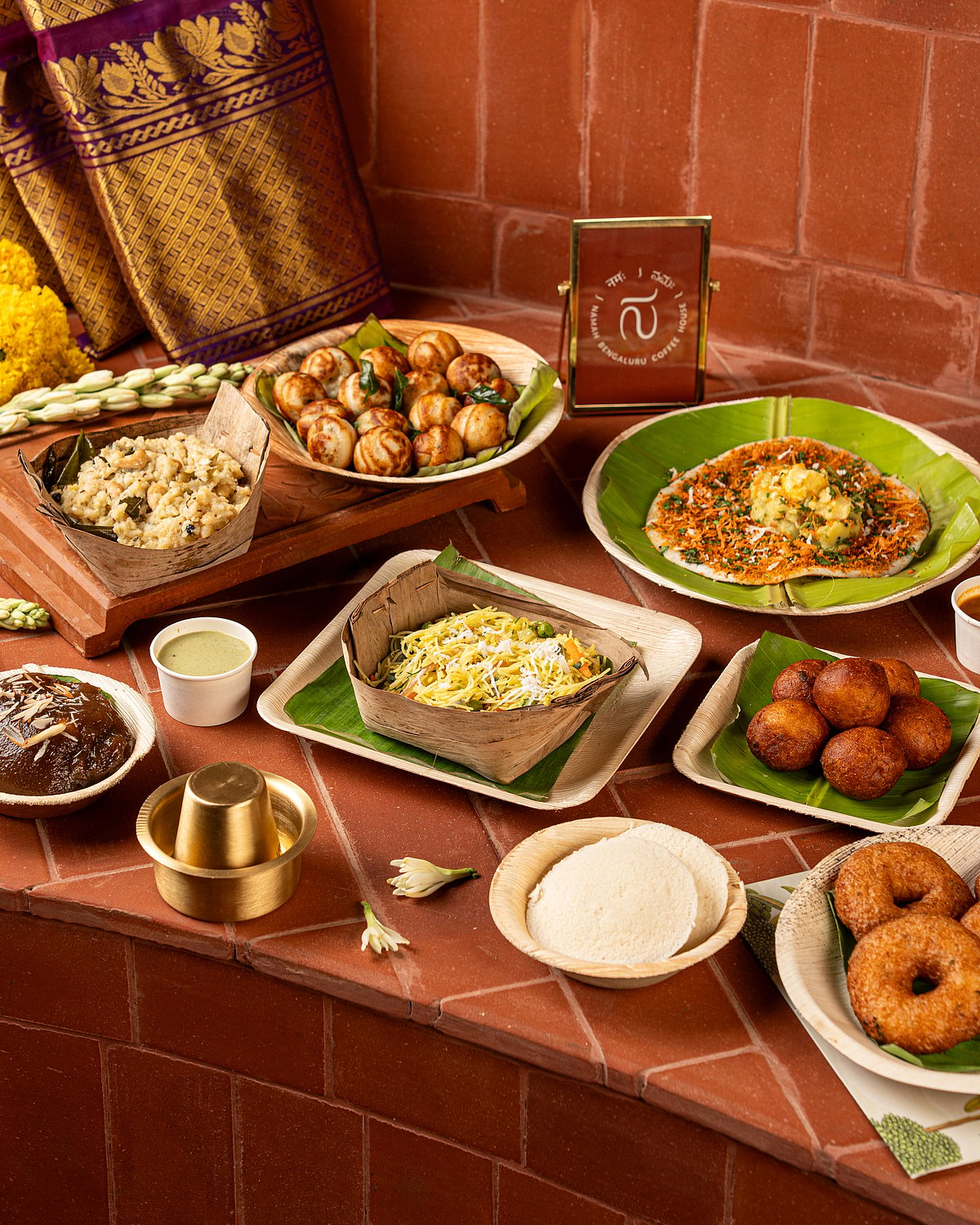
Unlike many South Indian cafés in Mumbai that stick to predictable menus, Namah goes all out. Pallavi makes it clear they didn’t want to stop at “just dosa and idli.”
“We wanted people to have options throughout the day,” she says. “Breakfast, lunch, dinner, snacks, desserts – there should always be something comforting available.”
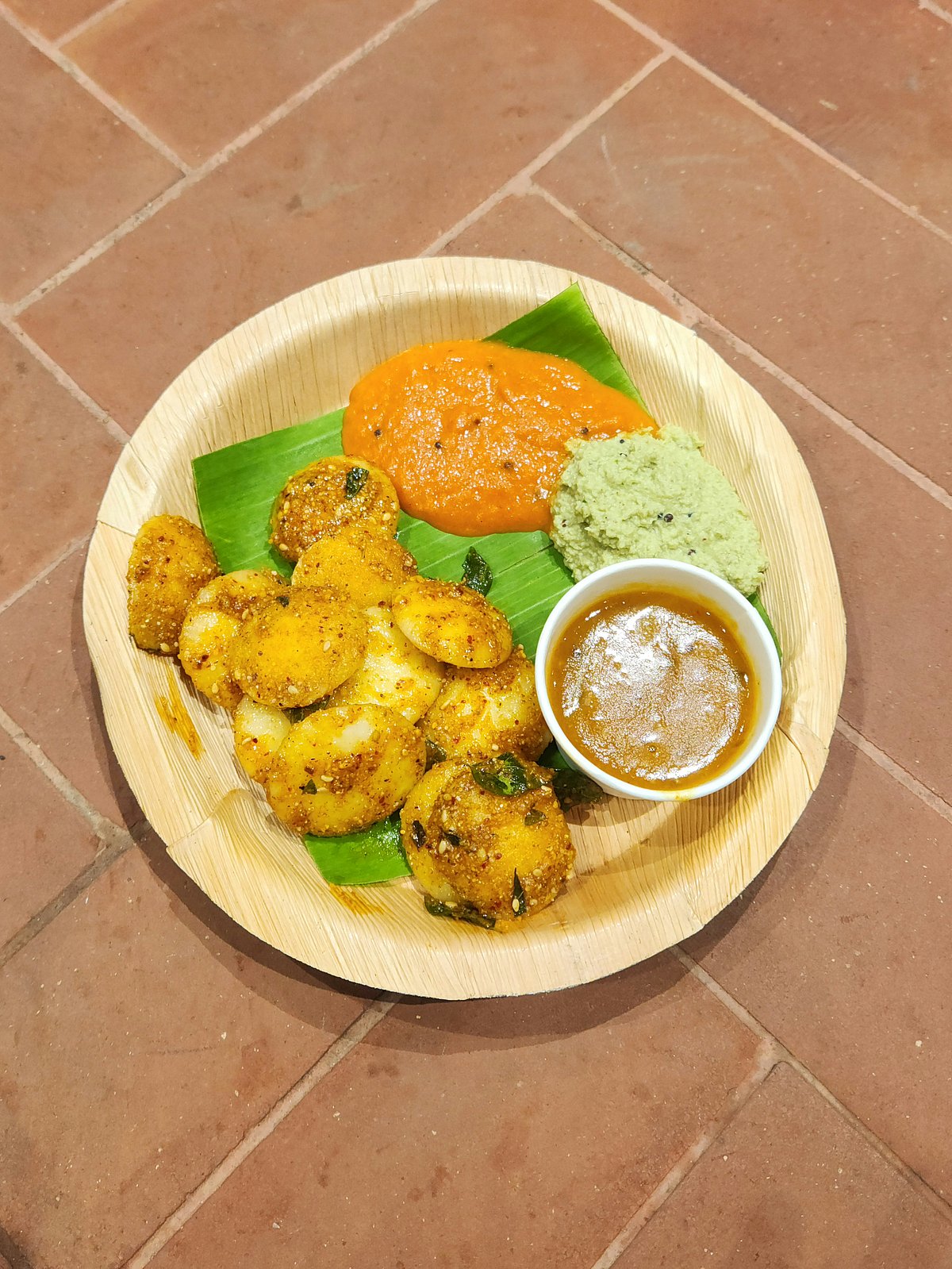
Coming to the food, the Ghee Podi Button Idlis are bite-sized idlis tossed in ghee and podi, keeping things simple yet comforting. Slightly chewy and flavourful, they pair well with the tangy tomato chutney, thick coconut gatti chutney, and a rich sambhar that thankfully isn’t watery. Nothing feels overpowering here, just classic South Indian flavours done right.
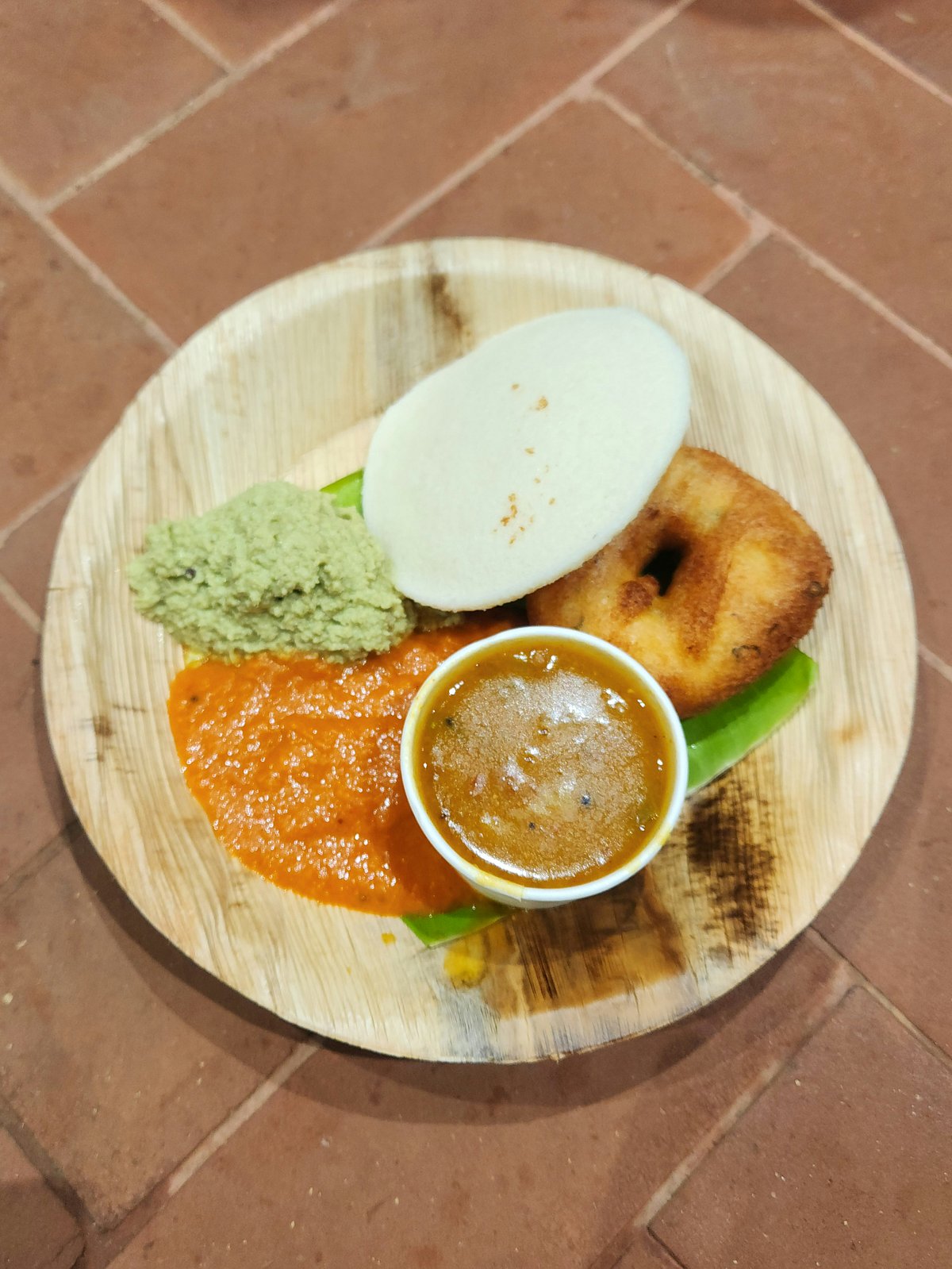
Sometimes the simplest dishes reveal the most about a place. The idli-vada combo here feels very close to something you’d eat at home rather than at a commercial restaurant. The idli has a comforting softness, while the vada nails the perfect balance with crisp outside and soft inside.
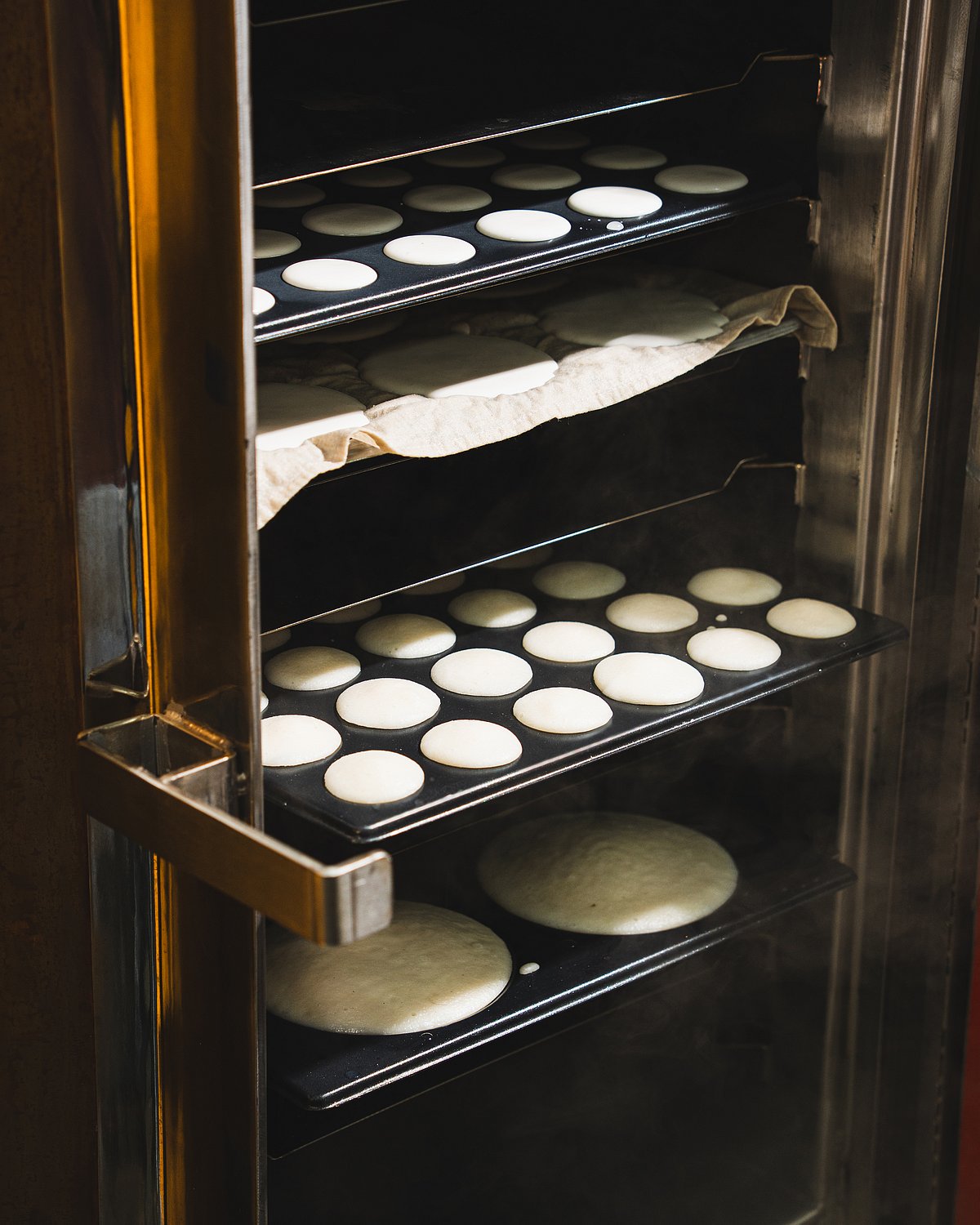
Watching rows of idlis being steamed live through giant steamers somehow makes the experience even better.
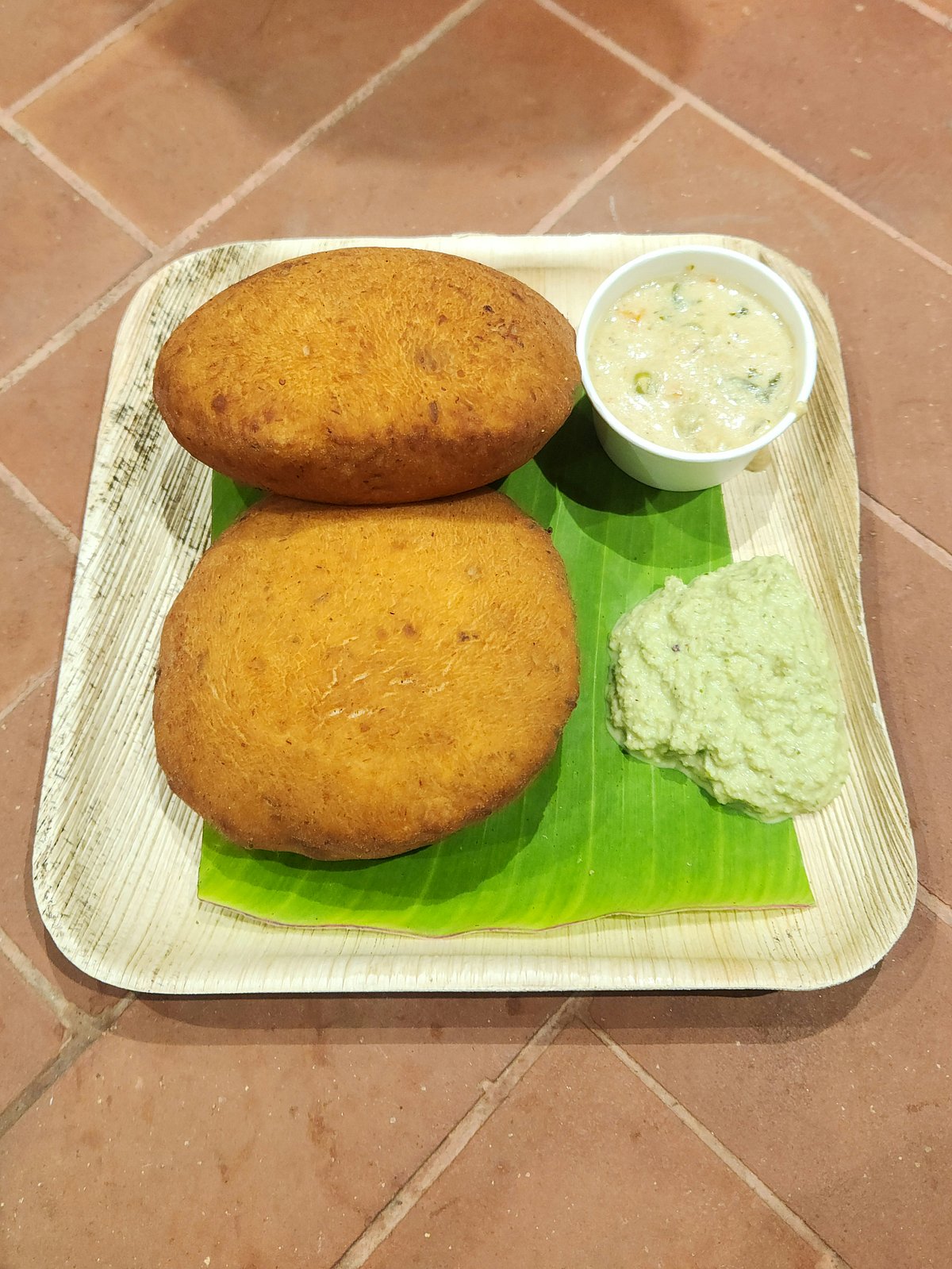
The Mangaluru Buns are soft, lightly sweet, and thankfully not greasy. There’s a subtle hint of hing in the dough, while the creamy veg korma and coconut chutney make the dish feel wholesome and comforting.
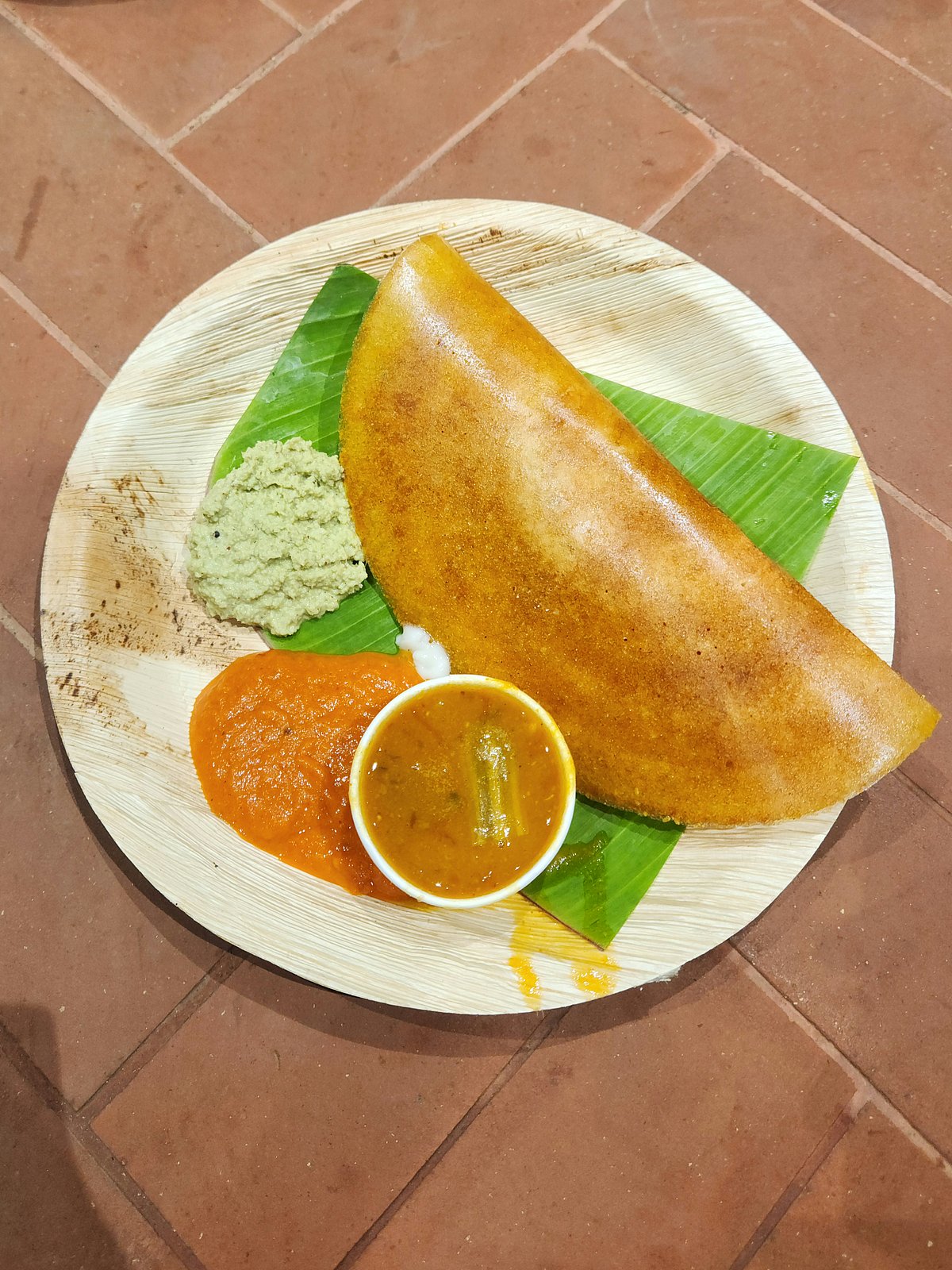
Meanwhile, the Benne Dosa is crisp, ghee-loaded, and exactly indulgent enough without crossing into oily territory. That balance matters because many places overdo the ghee. Here, the ghee enhances the dosa instead of overwhelming it.
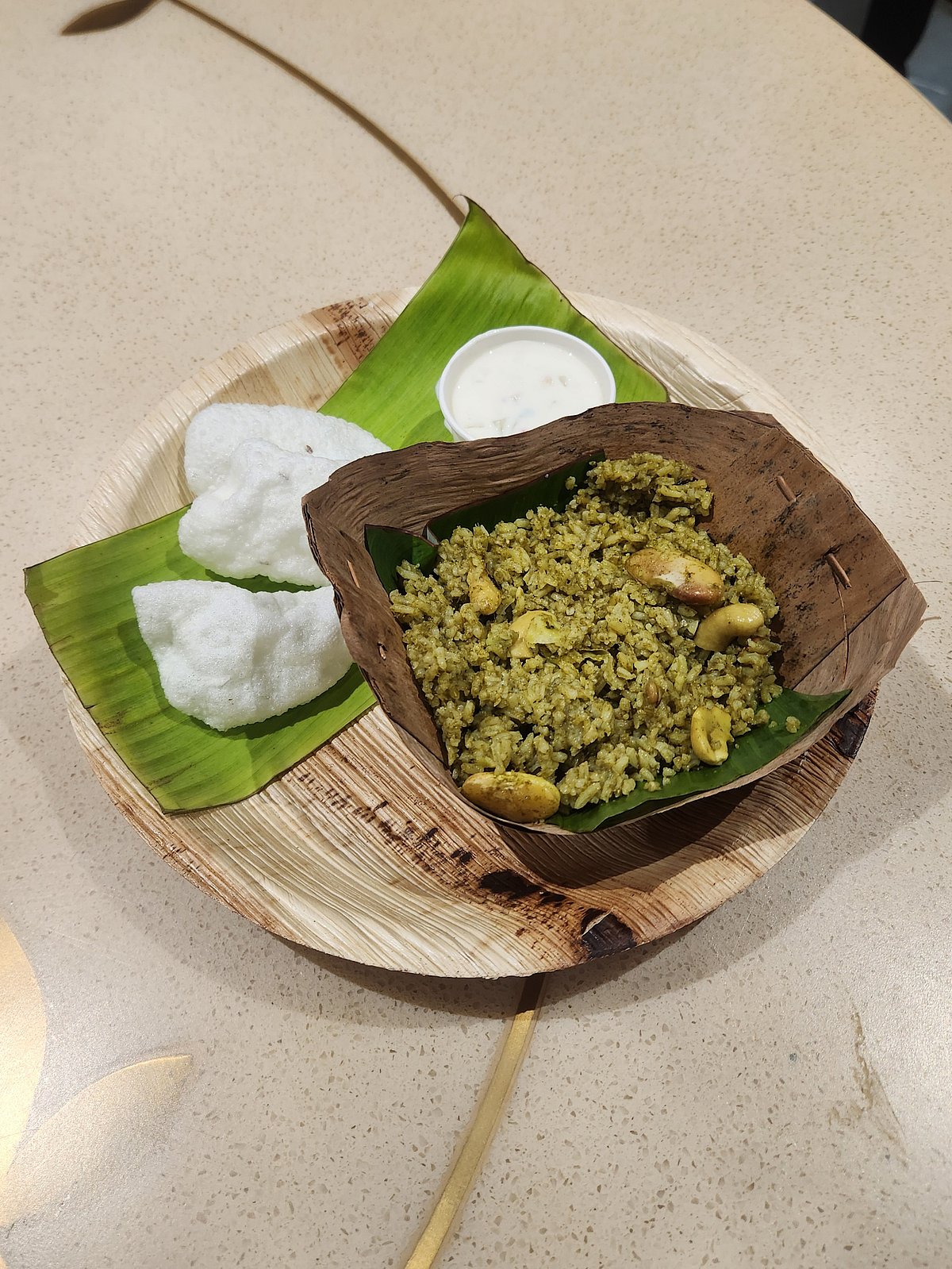
Even hardcore non-vegetarians probably won’t miss meat with this Donne Pulao. Fragrant, herby, mildly spicy, and packed with flavour, the rice easily becomes one of the standout dishes on the menu. The curd raita adds a refreshing balance, while the papad brings in the perfect crunch.
The best part, though, isn’t just the comforting food, it’s the pricing too. In a city where dining out is becoming increasingly expensive, Namah keeps most dishes between ₹100 to ₹210, making it surprisingly accessible for a space operating at this scale.
Drinks are simple, but work
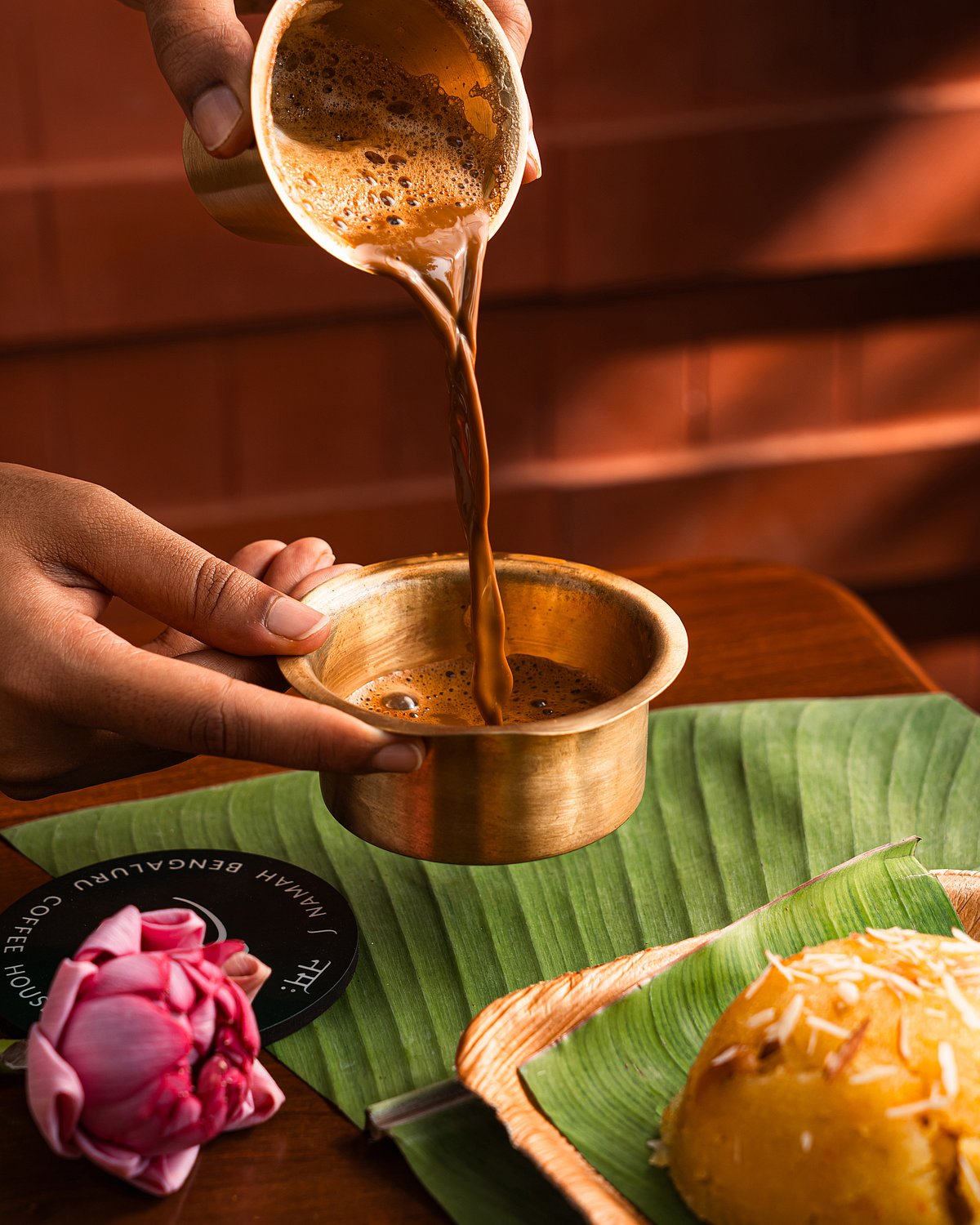
The filter coffee does exactly what it should – strong, bold, and comforting. Meanwhile, the filter cold coffee is balanced too, though less memorable.
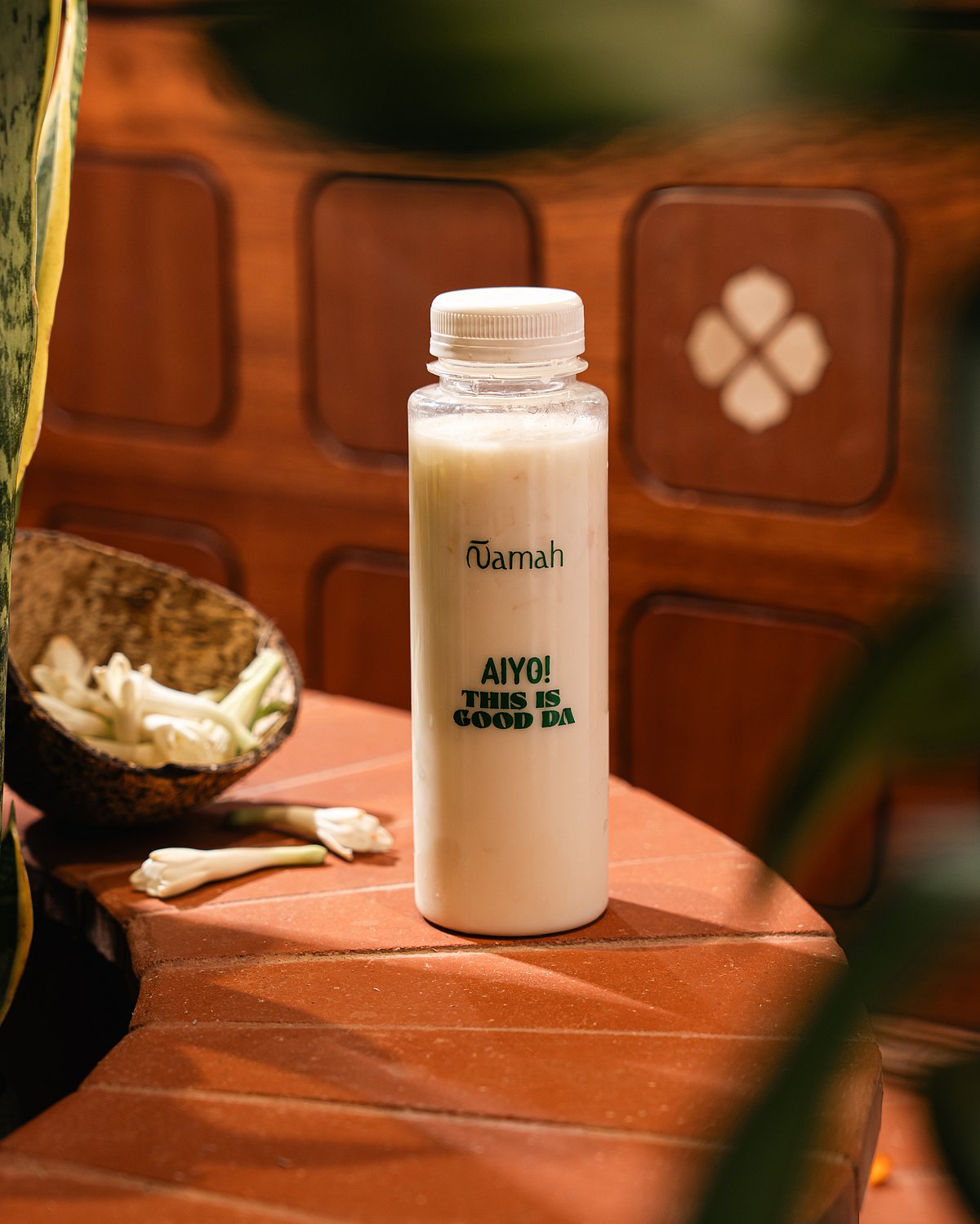
But unexpectedly, the coconut juice completely steals the show. Sweet, creamy, filled with tender coconut chunks, and genuinely refreshing, it’s the drink worth ordering over the more obvious coffee choices.
Desserts that feel nostalgic
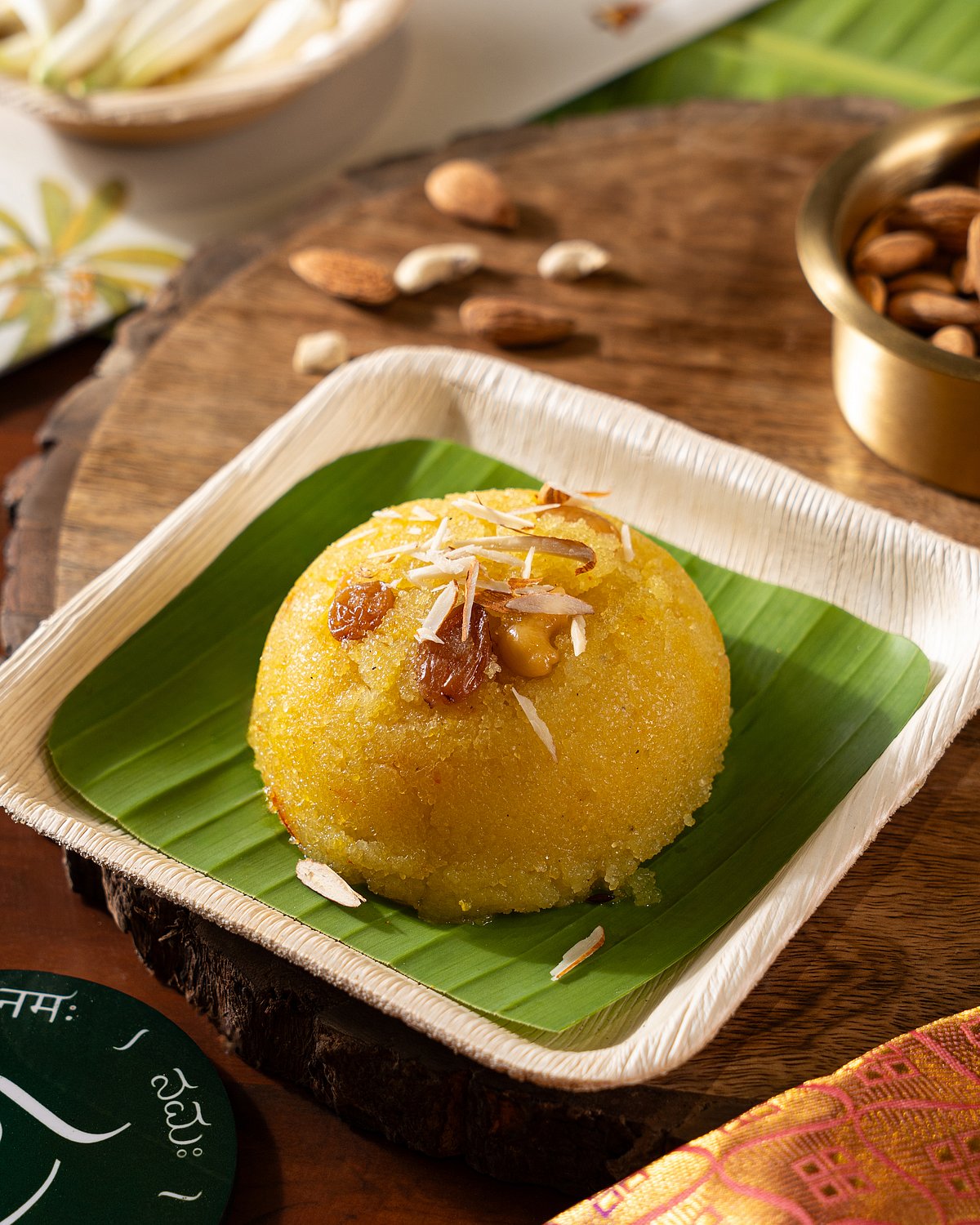
Ending the meal with Mysore Pak feels mandatory. Rich, sweet, and loaded with ghee, it delivers exactly the comfort you expect.
But the dessert section overall deserves more attention. The freshly made Obbattu served with badam milk feels deeply traditional, while Ada Pradhaman, Pineapple Bhaat, and palm jaggery-based Wheat Halwa gives you an array of options to explore.
Final verdict
Namah isn’t perfect. The crowds are intense, peak hours can get chaotic, and finding a seat isn’t always easy. But maybe that’s also proof that the place is doing something right.
Because beneath the viral hype lies a restaurant that genuinely understands comfort food. It isn’t trying to reinvent South Indian cuisine or make it fancy. Instead, it focuses on authenticity, scale, warmth, and accessibility.
And perhaps that’s why people are queueing up. Not just for dosas and filter coffee, but for something Mumbai rarely gets right – the feeling of being fed like you’re at someone’s home, without spending a fortune for it.

