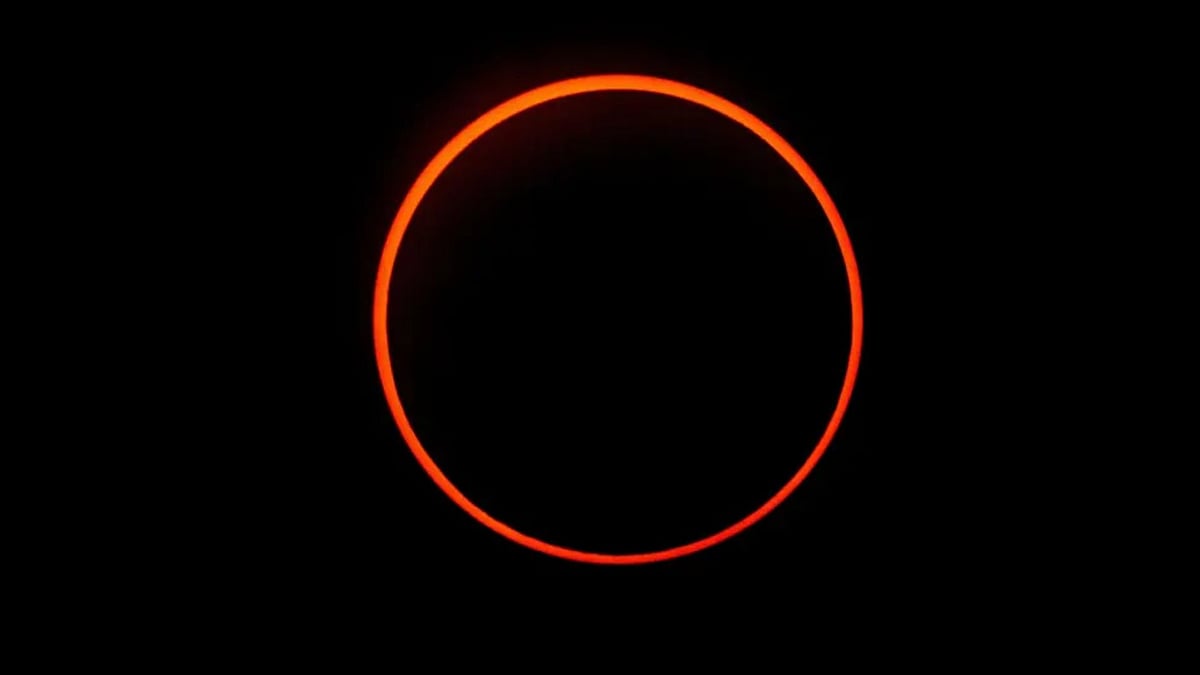
Solar Eclipse, also known as Surya Grahan, occurs when the Moon passes between Earth and the Sun. The first solar eclipse of 2026 is set to occur on February 17, marking a visually striking celestial event known as an annular Solar Eclipse.
During this eclipse, nearly 96 per cent of the Sun’s centre will be covered for a maximum duration of 2 minutes and 20 seconds, which will create a visually striking red-orange effect that astronomers and eclipse chasers eagerly anticipate. Keep on reading to know everything about the first Solar Eclipse of 2026.
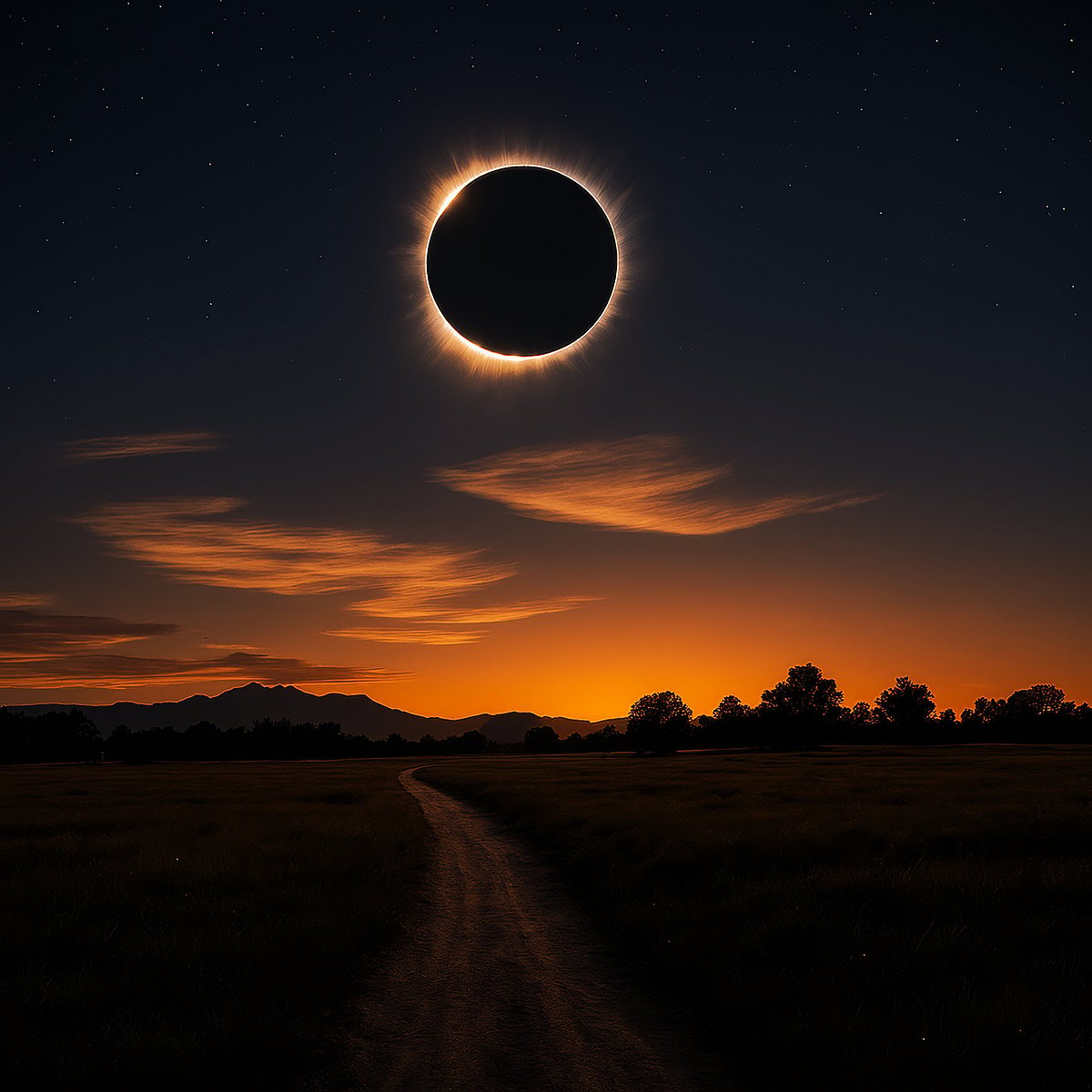
Solar Eclipse | X/ @earthcurated
What is a Solar Eclipse?
A natural occurrence when the Moon comes between the Sun and the Earth, blocking sunlight, is known as a solar eclipse. An annular solar eclipse is different from a total solar eclipse because, in this phenomenon, the Moon only blocks some parts of the Sun's light, which causes a ring of fire.
Solar Eclipse 2026: Will it be visible in India?
The first Solar Eclipse of the year will take place on Tuesday, February 17, 2026. While the Rings of Fire are a visual retreat that will be visible in many parts of the world, unfortunately, it will not be visible in India. The path of the eclipse is predominant in the Southern Hemisphere, which means the shadow of the Moon will not pass over the Indian subcontinent.
No Sutak will be applied
According to Drik Panchang, no Sutak rules will be applied on February 17, 2026. Sutak Kaal is considered before and during the eclipse time; during this time, temples are closed, and no auspicious activities are performed. However, Sutak Kaal rules are only applicable when the eclipse is visible to the naked eye in India and the specific region. That means, on the day of the eclipse, the temple will remain open and daily rituals and pujas can be performed without any restrictions.
Types of Solar Eclipse
There are three types of solar eclipses: partial, annular, and total. A partial solar eclipse occurs when the Moon passes in front of the Sun but does not completely block it out, resulting in a crescent-shaped Sun. It is the most common type of solar eclipse. An annular solar eclipse occurs when the Moon is far from the Earth, and it blocks some parts of the Sun's light, which causes a ring of fire. Meanwhile, a total solar eclipse happens when the Moon comes between the Earth and the Sun, creating a total blockage of sunlight.

