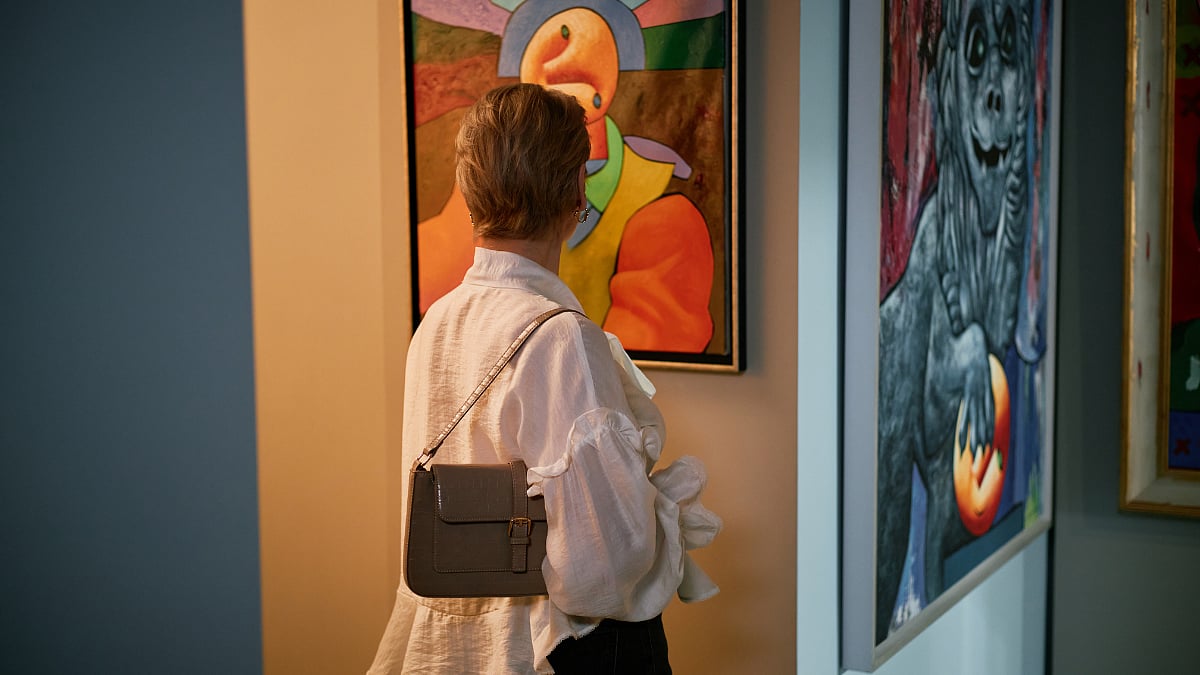
As South Mumbai’s heritage precincts pulse with colour, installations and performances during the ongoing Kala Ghoda Arts Festival, another, quieter shift is becoming increasingly visible. Beyond the crowds and celebratory noise, visitors are drifting into galleries, museums and performance spaces not for spectacle, but for stillness — seeking culture as a form of mental decompression in an otherwise overwhelming world.
Across Indian cities, art galleries, cultural centres and independent spaces are witnessing a steady rise in footfall, particularly for exhibitions and performances that allow audiences to slow down and contemplate. In an age dominated by screens, AI-generated content and constant notifications, culture is being embraced not just as leisure, but as relief.
Immersive culture is drawing people inward
“Immersive cultural experiences have definitely become more attractive over the years,” says Abhay Sardesai, Director, Dr Shantilal K Somaiya School of Art. “They draw generously from several disciplines, media and cultural practices at the same time. Interestingly, this has not resulted in the depletion of audiences in traditional cultural events. Art galleries and playhouses are showing a rising footfall, religious and secular festivals are growing bigger.”
The only space showing contraction, he notes, is cinema halls. “Only cinema houses in the age of streaming services seem to be shrinking, which is one reason why mainstream cinema is seeing success only when it showcases spectacular productions.”
Cultural data from 2025–26 supports this observation. While OTT platforms continue to grow, in-person cultural engagement, exhibitions, talks, workshops and festivals, has rebounded sharply, particularly among younger urban audiences seeking tactile, screen-free experiences. Recent international studies have also linked museum visits and art viewing with reduced stress and improved emotional regulation.
Sreejith CN, Director, Gallery Dotwalk, echoes this shift from an institutional perspective. “In recent times, we have seen a significant change in footfall at galleries, museums, and cultural centres. It is not merely for aesthetic pleasure, but also to pause and reflect, to have meaningful conversations, and sometimes as a break from stressful day-to-day life.
This indicates a growing need for art and cultural activities as a form of mental decompression. In times like today, when we are overexposed to information and digital saturation, people are looking for spaces that help them reconnect with themselves and their surroundings. Art, in this context, becomes less about consumption and more about experience.
Museums as spaces of pause
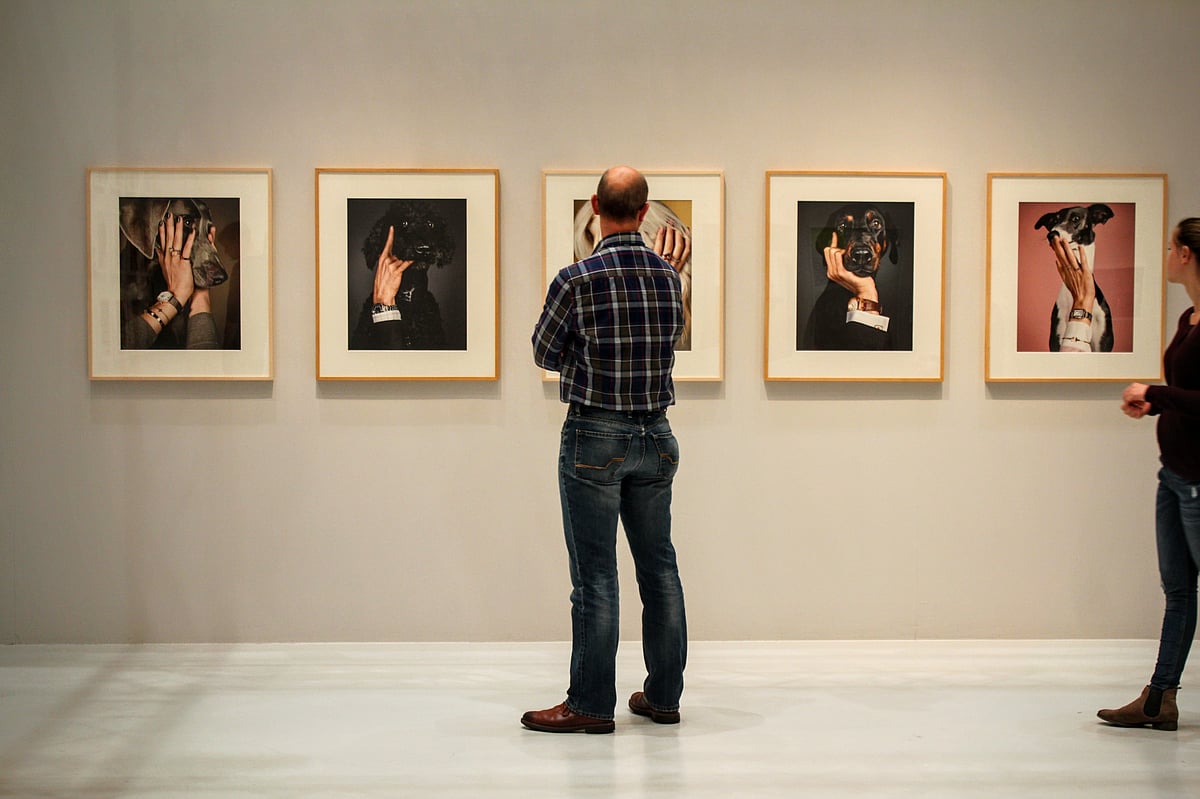
Institutions like Chhatrapati Shivaji Maharaj Vastu Sangrahalaya are at the centre of this renewed engagement. “We currently have an exhibition called Networks of the Past: A Study Gallery of India and the Ancient World,” explains Joyoti Roy, Assistant Director (PR and Projects) and Project Curator, Ancient Sculptures at CSMVS. “Through over 300 antiquities — from prehistoric times 5–6,000 years ago to the 5th century CE — we show that art has always been integral to human life.”
Roy traces this impulse back to early human civilisation. “When we stopped our nomadic life and settled with agriculture, one of the first things this revolution gave us was free time. And in that free time, we made art, pottery, textiles. These activities pushed us forward as a species.”
She believes the instinct remains unchanged. “When you give yourself even a little free time today, you naturally want to do something creative. Visiting an art gallery, a museum, watching a performance or reading a book is fundamental to the creative spirit in all of us.”
In an age of AI and information overload, Roy adds, art’s role in contemplation is critical. “If we lose the ability to critically examine who we are and what we are doing — which is almost impossible without art — we are moving towards a very dangerous state.”
Why people keep coming back
That sentiment resonates with regular visitors like Omkar Gawand, a communications executive and art enthusiast. “I often visit galleries and art exhibitions to experience different forms of creativity,” he says. “Recently, I attended a Himalayan folk art programme at CSMVS, and it reminded me why I keep returning. For me, the museum continues to be a space of learning, inspiration and constant discovery.”
For 30-year-old art enthusiast Mridula Gupta, the pull of galleries lies in their ability to expand perspective. “I visit art galleries as they open my mind,” she says. “I get a sense of history as well as creativity flowing around. I still visit cinema, but I love visiting art festivals more.”
Younger audiences echo this sense of inherited cultural comfort. “My folks are big fans of art festivals, so it has been part of my childhood to be at such cultural spaces,” says Anjali Agarwal, 23, Mumbai. “I thoroughly enjoy them, and my friends do it too.”
Exhibitions responding to the age of AI
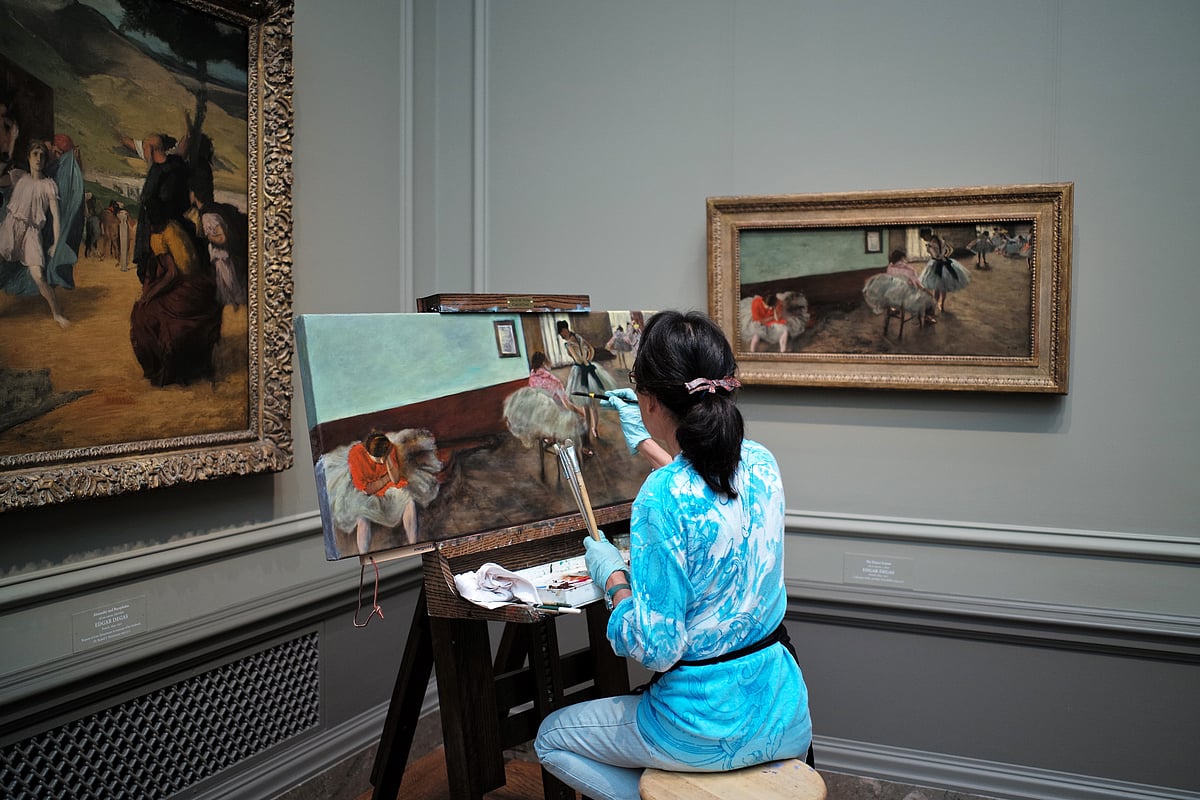
This renewed curiosity is reflected in the excitement around upcoming exhibitions across the country. In Delhi, Dhoomimal Gallery is drawing attention with Print Age, an exhibition that examines printmaking in the era of AI. Featuring works by global masters and Indian modernists, the show invites audiences to pause and consider the value of the handmade at a time when images can be produced instantly.
The enthusiasm around such exhibitions points to a broader cultural question emerging in 2026: what does authenticity, labour and creativity mean in an age of machine-generated content? Viewers aren’t just looking — they’re thinking.
Public art, presence & collective stillness
That search for presence extends beyond gallery walls into festivals like Kala Ghoda, where art enters everyday urban life without intimidation. “What we are seeing today is a quiet but important shift,” says Vibhor Sogani, artist and designer, Studio Vibhor Sogani. “Art galleries, festivals and independent spaces are being visited for reflection and mental breathing room. In a city that is constantly in motion, these spaces offer a slower rhythm.”
On festival stages, this stillness often becomes tangible. International Bharatanatyam artist Apeksha Niranjan, who recently performed at Kala Ghoda, describes sensing a collective calm. “Classical dance does not demand attention loudly,” she says. “Through silence, sound and expression, a suspended moment is created where people experience themselves.”
Cinema’s place within a larger cultural fabric
While cinema attendance has changed, it hasn’t vanished. “I don’t think people are moving away from films and cinemas,” says Mumbai-based art enthusiast Meghna Kochar. “They’re integrating them into a much larger community of festivals.”
Kochar notes that festivals today attract stronger funding and sponsorship than standalone film projects, becoming spaces where cinema, visual art and performance intersect. “Watching cinema as part of a larger cultural experience feels far more meaningful,” she says.
Art as an anchor
Taken together, these shifts suggest a deeper recalibration in how culture functions in public life. In a hyper-connected, fast-moving world, art is no longer just about entertainment or prestige. It is becoming a tool for emotional grounding, collective calm and self-reflection.
In choosing quiet galleries over noise, presence over pace, and contemplation over consumption, audiences may be rediscovering what art has always offered, a way to pause, process and return to ourselves.

