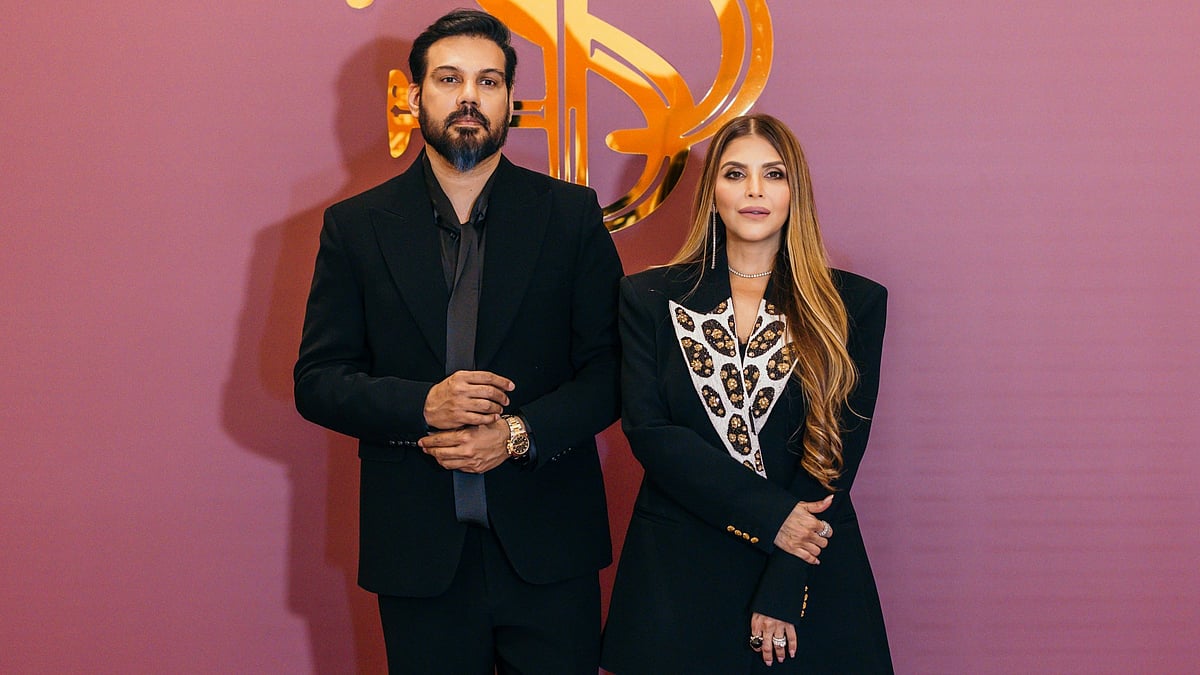
In 2026, fashion is no longer just about collections—it’s about context. As luxury brands return to New York with renewed intent, experiential retail becomes the industry’s new currency, and Indian bridalwear moves beyond excess to signature-led storytelling, the conversation demands voices that have navigated all three worlds with credibility. Enter Falguni and Shane Peacock. With over two decades of global runway presence, a deepening commitment to Indian craft, and a retail universe designed as an experience rather than a transaction, the designer duo embodies the very duality shaping fashion’s next chapter—where global ambition meets rooted storytelling. For more than two decades, they have fused feathers, red-carpet glamour, and edgy silhouettes with bold narratives.
In this wide-ranging conversation, the designer duo tell us why New York is calling luxury brands like Chanel and Gucci back, how the Indian bride is changing, and what it takes to build a fashion house with a strong DNA—without compromise.
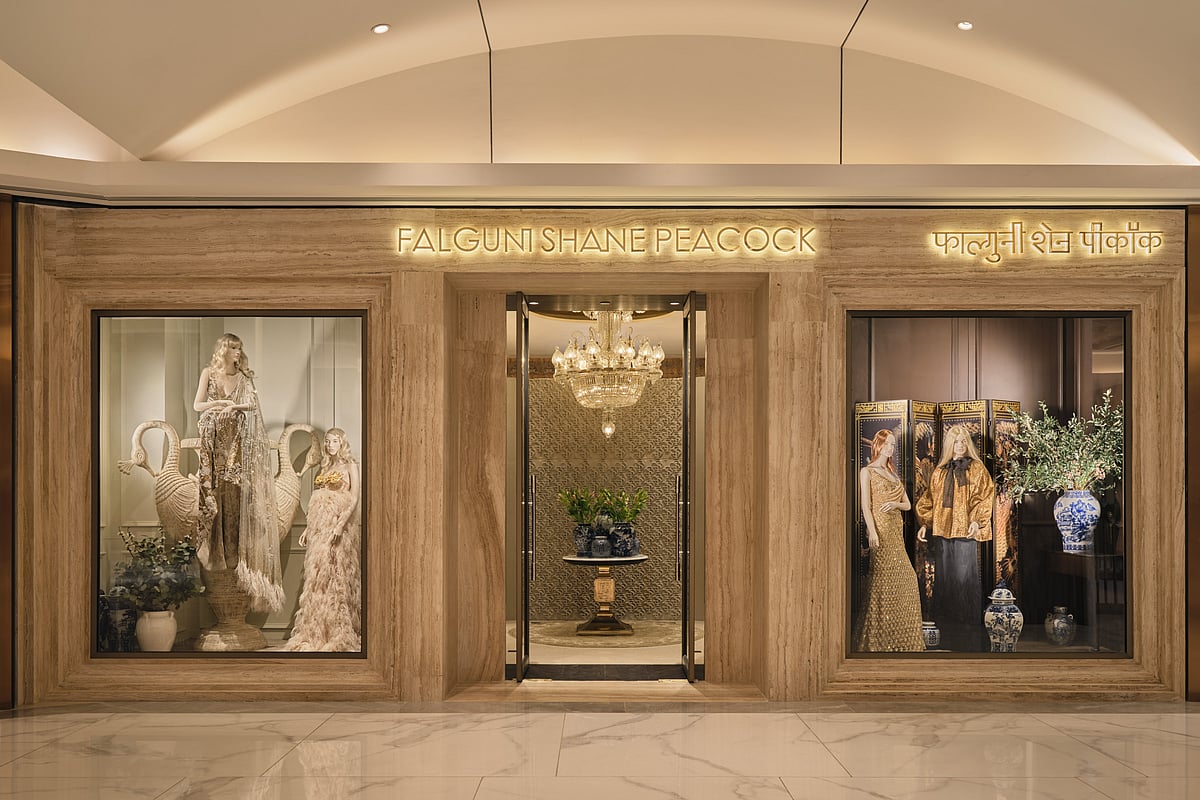
Falguni and Shane Peacock boutique at Jio World Plaza, Mumbai |
Why New York still matters
Having showcased at New York Fashion Week for over a decade, the Peacocks have witnessed the city’s fashion evolution firsthand—its dips, disruptions and now, its decisive return. In an era where luxury brands are reasserting the importance of physical presence and cultural capital cities, New York’s pull feels stronger than ever. The duo points to the influence of Hollywood and the music industry, industries that continue to shape fashion’s visibility and relevance on a global stage. “You know, New York has fashion and it has the business. And it’s got the vibe,” they say. “Back in 2010, 2011, when we started doing our first show there, it was different. And I feel like fashion is to another level now—whether it is ready-to-wear, whether it is couture, whether it is evening wear.” In 2026, as brands recalibrate after years of digital-first strategies, New York once again offers what few cities can: fashion, commerce and cultural impact in one place.
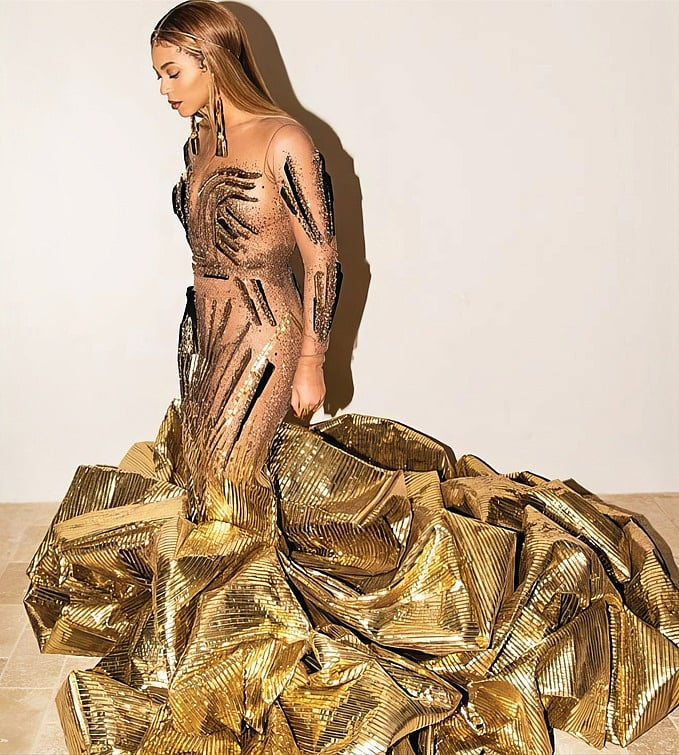
Beyoncé in a fish-tail cut golden gown with a voluminous trail by Falguni Shane Peacock |
Dressing global icons
Global visibility has long been part of the Peacock story. One of their most unforgettable moments came early on. “The first piece that we made for Fergie for FIFA in 2010. Four fully hand-beaded outfits in seven days—from sketch to ready—and sent on the seventh day.” That marked the beginning of the fashion camaraderie with international celebrities. Another milestone followed when Beyoncé selected their creation for an art gala. “They had 50 outfits to select from. When she decided to wear us, we felt really ecstatic.” Their bold use of feathers, sparkling embellishments, and a blend of Indian artistry with avant-garde silhouettes has captivated names like Katy Perry, Jennifer Lopez, Lady Gaga, and Rihanna, who have chosen FSP’s high octane looks for concerts, red carpets, and magazine spreads. Decoding international briefs, they say, is about balance. “Understanding the brief and still giving your voice to it is so important.” Increasingly, global stylists offer broad creative freedom—trust that allows the brand’s voice to shine. Speaking about their collaboration with international stylist Law Roach at New York Fashion Week, the duo shares, “He said bring India, bring a saree, but make it Western. That experience taught us to take more risks. We’re planning something again—very soon. 2026.”
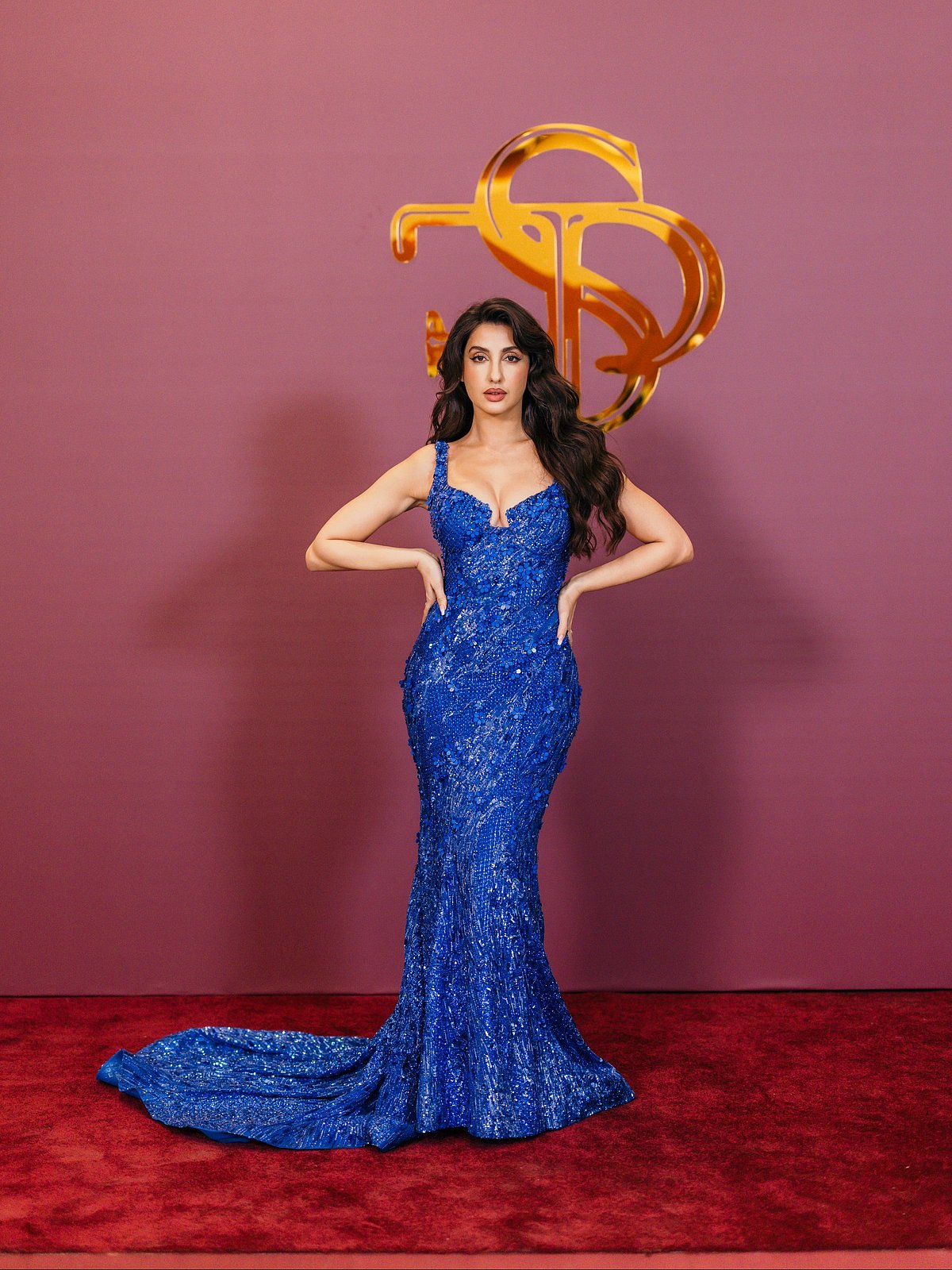
Nora Fatehi |
A design DNA that refuses to compromise
Despite global exposure and constant evolution, certain principles remain non-negotiable for the duo. “Style is non-negotiable. If it’s Western, it has to be edgy. If it’s Indian, then it has to be truly Indian,” they assert. This clarity dates back to their first London Fashion Week in 2009. “We created a full DNA—an A to Z of what FSP stands for. And till today, everything has to play within that. For the first ten years, we focused on creating a signature Western aesthetic internationally as we always knew FSP would be a global brand. But the real balance came when we started merging Western and Indian sensibilities. When you can dress people across the world and still speak to different cultural aesthetics, that’s when you feel like you’ve achieved something.” Today, the label is going deeper into craftsmanship—Indian textiles—but always with their unique voice. The Peacock Foundation works closely with artisans across Banaras, Kanchipuram, and beyond, helping revive crafts that are fading away. The label has multiple lines within the house—western couture, Indian bridal, men’s bridal, ready-to-wear, advanced contemporary which retails across nearly 80 stores in the US.
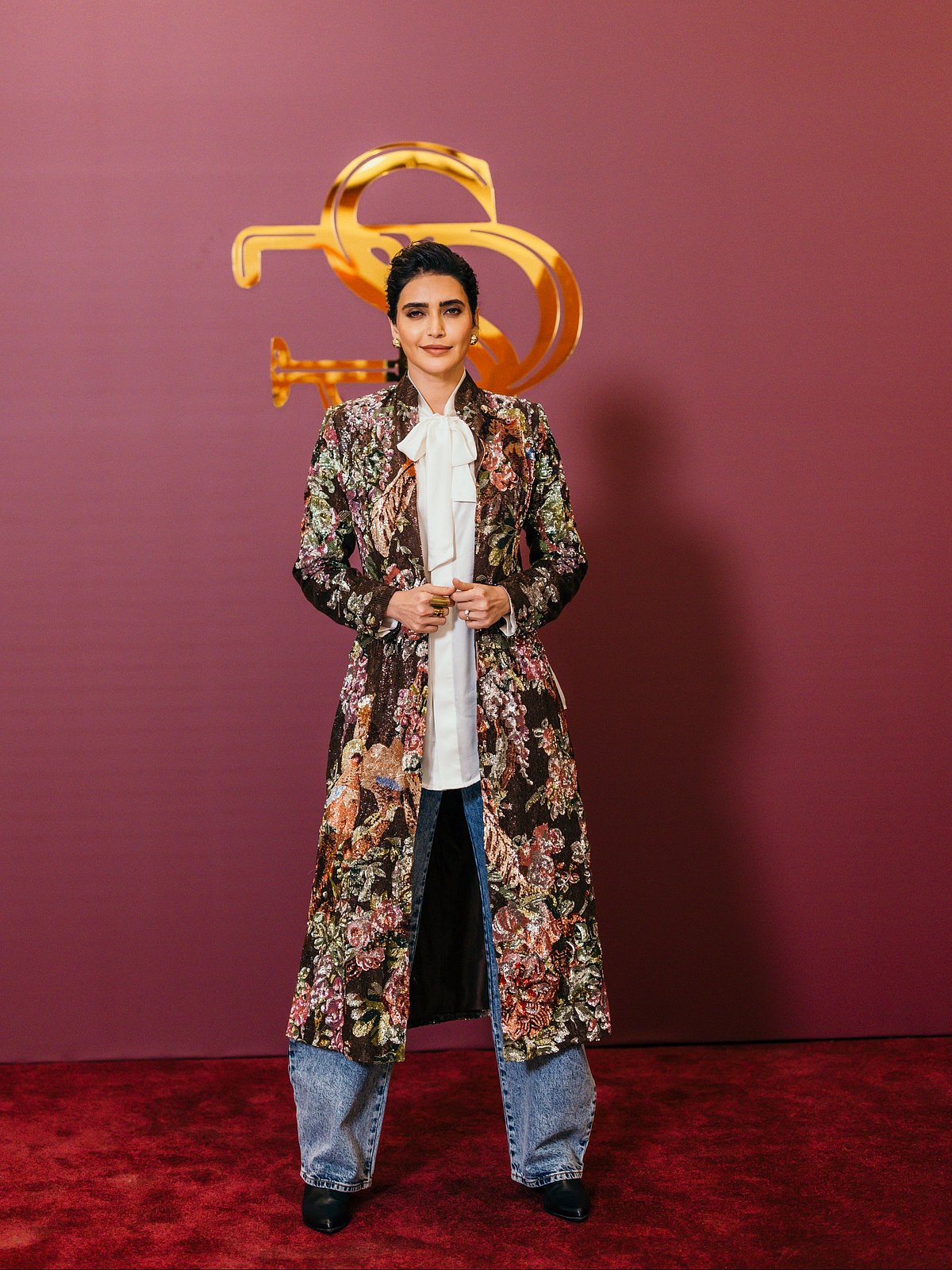
Karishma Tanna |
Experience as the new luxury
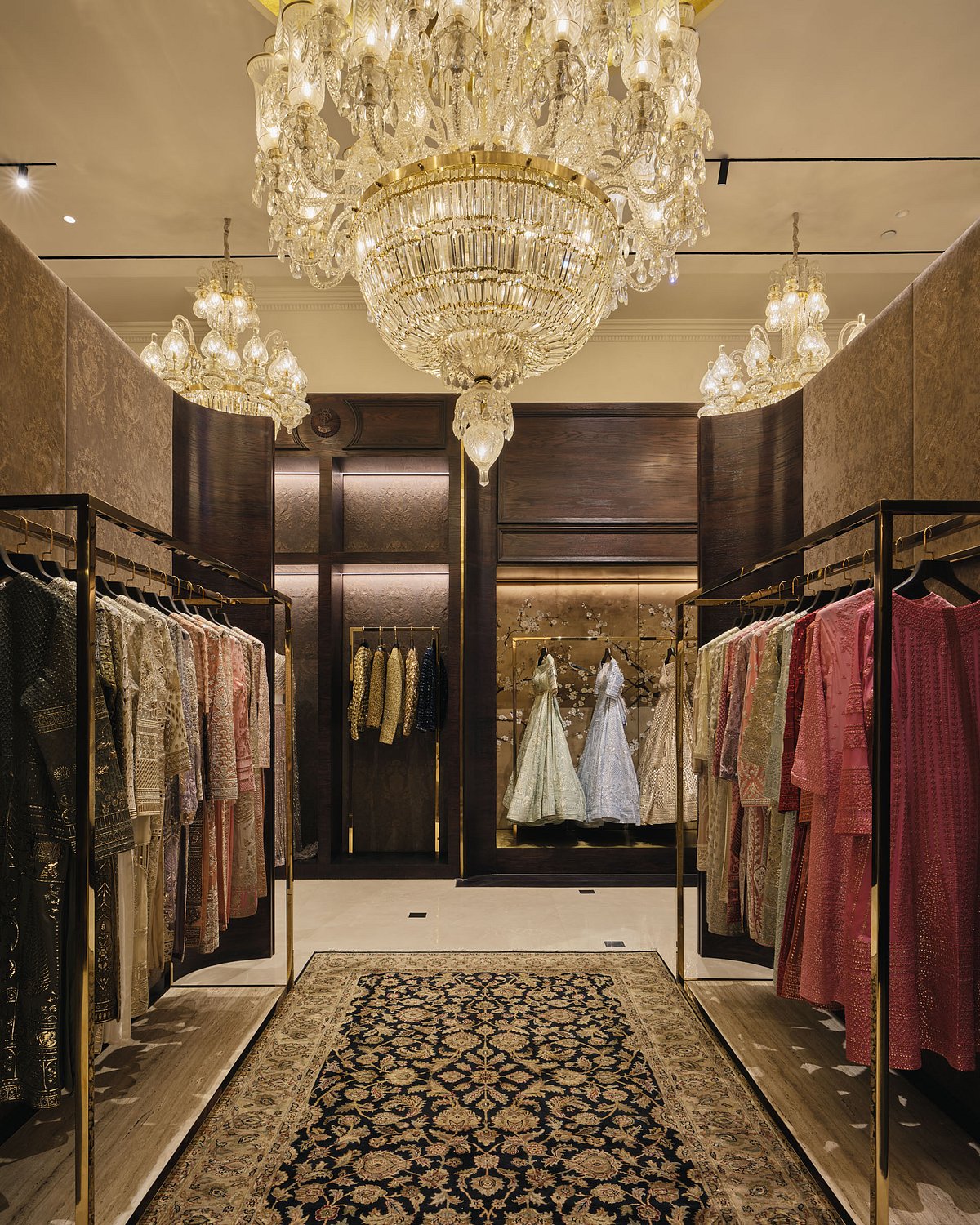
In 2026, experience has become the defining currency of luxury, and the Peacocks are unequivocal about its importance. “Experience is everything,” they say. “Customers are not here to buy. They come here for an experience.” From the greeting at the door to the way conversations unfold, every detail matters. This resonance extends into their newest store in Jio World Plaza, Mumbai. Designed by Gauri Khan as a physical manifestation of the Peacock universe, the store features peacock motifs, hand-painted panels, hand-sketched illustrations and other bespoke elements that hint at the brand’s journey, craft, and artistic roots. “Luxury today goes beyond what we see. It's about how a space, a garment or a moment makes you pause. That intersection is where true modern luxury comes like. For this store, the idea was to create opulence without the noise. I wanted the space to talk all about Falguni and Shane's couture collection and language through warm textures, palettes that feel classic,” shares Khan.
Standing out in India’s bridal boom
While global fashion has brought them visibility, it is in India’s fiercely competitive bridal market that Falguni and Shane Peacock have sharpened their identity. “Finding a signature of your own in the Indian bridal space is what is essential today. If your piece looks like anyone else’s, then it doesn’t make sense.” In a country where bridalwear has exploded into a saturated category, the duo insists that design language and storytelling, and not scale, are the true differentiators. This clarity of vision extended beyond garments into retail itself. “When we decided to get into the Indian bridal line, our vision was very clear—we have to be the best, and we wanted our own signature. Even our stores had to feel like an experience, not just retail spaces. Every store is carefully thought through, from how it looks to how a customer feels when she walks in.”
Looking ahead
For 2026, the Peacock vision remains expansive yet measured: more global stores, restaurants, and new categories—from bags and shoes to beauty and fragrance. “Slow but steady,” they say. “Making sure everything is done the correct way. Because whatever we do affects the main brand.”

