
Knee pain after walking long distances is common, especially when the knees are subjected to prolonged stress or the muscles surrounding them are weak. While the pain may be temporary and caused by overuse, recurring or persistent discomfort could indicate an underlying knee problem. Consult a doctor if the pain persists despite rest and self-care.
Symptoms
Pain in or around the knee after prolonged walking.
Stiffness, especially after sitting or resting.
Mild swelling or a feeling of heaviness in the knee.
Difficulty climbing stairs or getting up from a chair
Pain that improves with rest but returns after walking.
Causes
Walking for longer than your usual capacity.
Weak thigh and hip muscles, which increase stress on the knee.
Improper walking posture or gait.
Unsupportive or worn-out footwear.
Sudden increase in walking, exercise, or physical activity.
Previous knee injury.
Excess body weight, which increases the load on the knee joint.
Age-related changes such as osteoarthritis.
Home remedies
Reduce walking temporarily and give the knee adequate rest.
Apply a cold pack for 15–20 minutes if there is pain or swelling after activity.
If the knee feels stiff rather than swollen, gentle warmth may provide comfort.
Wear comfortable footwear with good cushioning and support.
Avoid suddenly increasing your walking distance. Increase it gradually.
Gentle strengthening of the thigh and hip muscles can help support the knee.
Maintain a healthy body weight to reduce pressure on the knee.
Do not continue an activity if it significantly increases pain.
Sujok Therapy
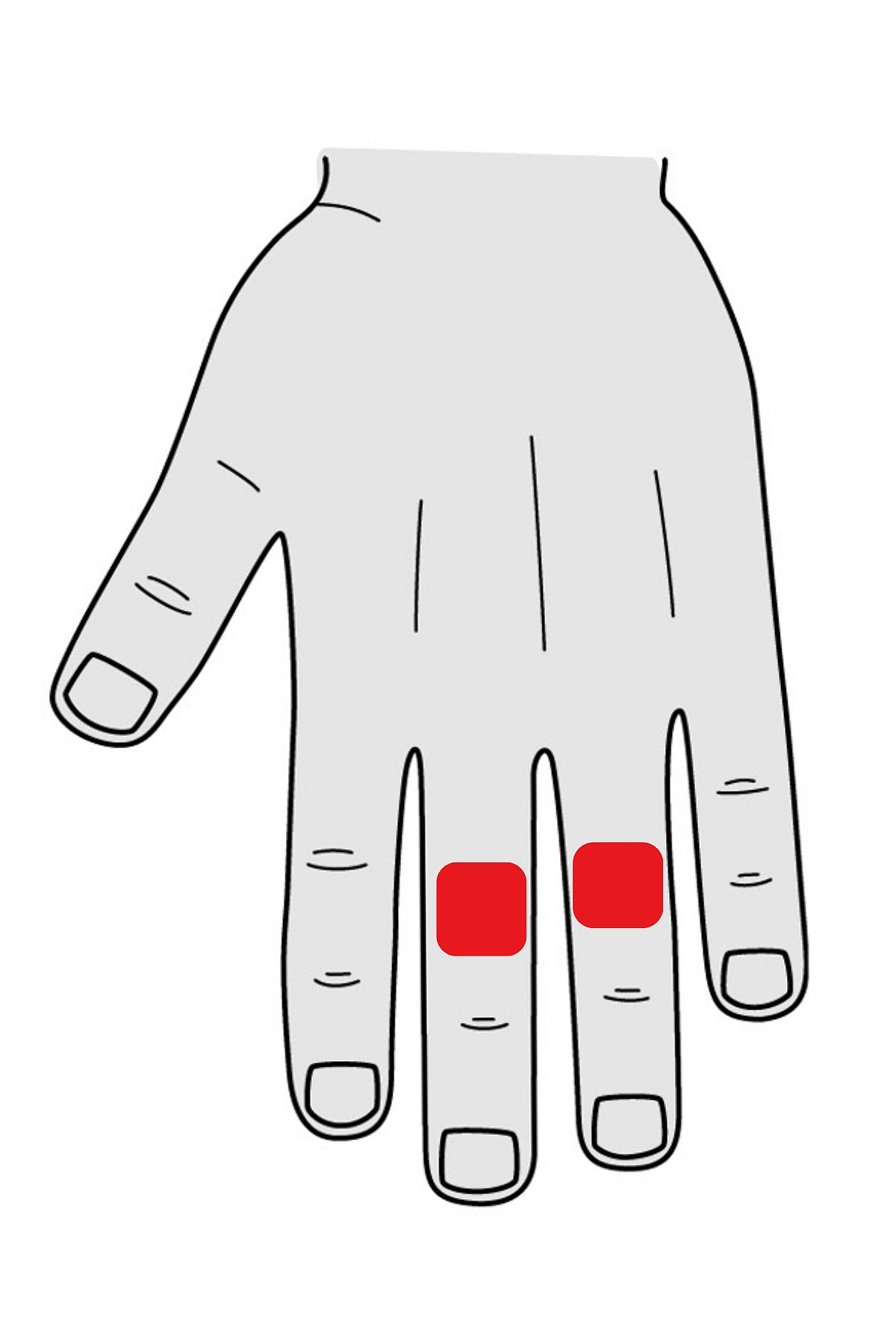
The highlighted points (see figure) correspond to the knee. When experiencing pain, press these points for five to 10 minutes. You can then place moong or methi seeds on the same points and leave them in place for three to four hours. You can also apply the seeds before standing for long periods or going for a walk.

