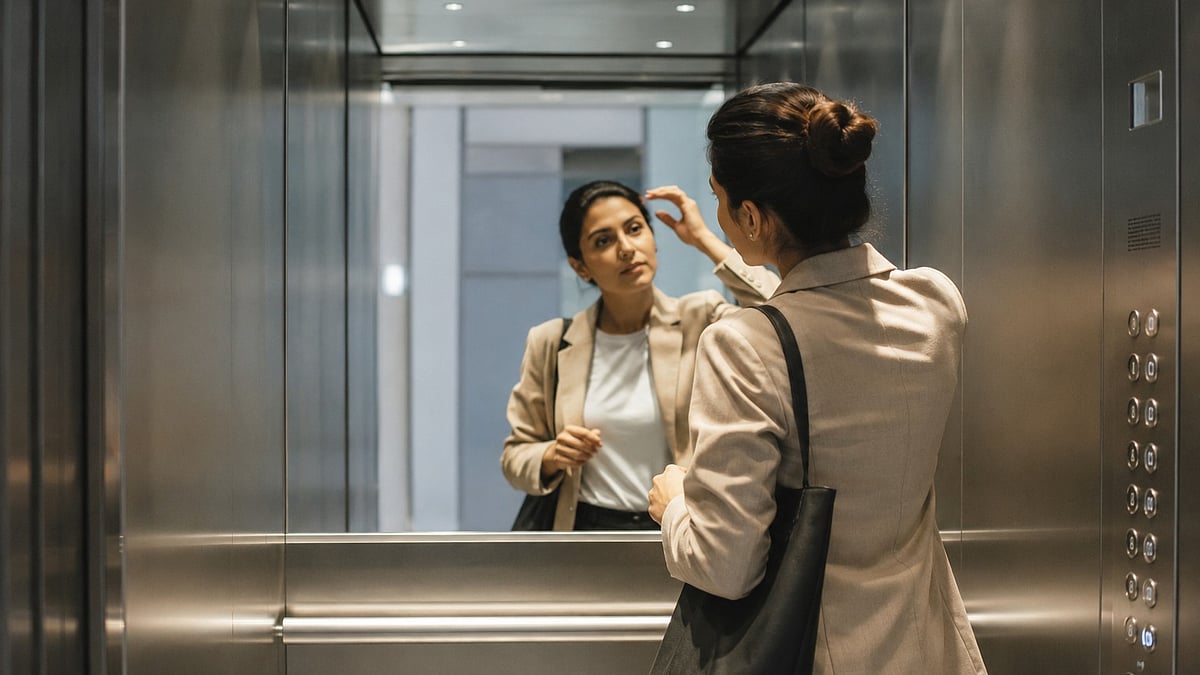
Step into an elevator and chances are you'll see a mirror. Most of us use it without giving it much thought – perhaps to check our hair, adjust our clothes, or simply glance at ourselves before reaching the next floor. But elevator mirrors are not there just for appearance. They serve several practical and psychological purposes that can make a short elevator ride feel more comfortable.
Here are five clever reasons why mirrors have become such a common feature in elevators.
Welcome distraction
Waiting inside an elevator can feel surprisingly awkward. You may be standing silently with strangers, watching the floor numbers change and waiting for the doors to open. A mirror gives people a reason to focus on something. Instead of staring at the doors or wondering where to look, passengers can check their appearance, look around, or simply occupy themselves. This small distraction can make the ride feel less uncomfortable.
Ekta Dharia, Clinical Psychologist and Psychotherapist, shares, “Mirrors give passengers something to focus on during an otherwise uneventful elevator ride. They can reduce the awkwardness of standing silently with strangers, while also offering a moment of comfort, control, and personal awareness.”
Making the wait shorter
Time can feel slower when we have nothing to do. A few seconds spent waiting can seem much longer when we are simply standing still. A mirror provides visual stimulation and gives passengers something to engage with. By shifting attention away from the passing seconds, it can make the elevator journey feel shorter. The actual ride hasn't changed, but our perception of it can.
Easing social awkwardness
Elevators bring people into a very small space, often with very little personal distance. Looking directly at strangers can feel uncomfortable, but staring at the floor or door can feel equally awkward. Mirrors offer a socially acceptable place to look. People can glance at their reflection or the space around them without making direct eye contact with another passenger. In this way, mirrors can make crowded elevator rides feel a little more comfortable.
Sushil Mistry, Founder of Rashi Clever Interior Designs, explains, “An elevator may be a compact and enclosed space, so good design should make people feel comfortable without making them overly conscious of the limited space around them. Mirrors can help create a greater sense of personal space by reflecting light, movement, and the surrounding environment. They also give passengers a natural visual point to focus on, making the experience of sharing a confined space with strangers feel less awkward. For me, effective interior design is ultimately about creating spaces that feel effortless, comfortable, and human-centric.”
Creates spacious illusion
Elevators can be small and enclosed, which may make some people feel uncomfortable or even slightly claustrophobic. Mirrors can create the visual impression that the space is larger than it actually is. By reflecting the interior, a mirror adds depth and makes the elevator appear more open. This doesn't physically increase the space, but the visual effect can make the environment feel less cramped.
Tinaaz Wadia, Real Estate Asset Strategist, shares, “A mirror is a relatively small investment, but it can have a significant impact on how an elevator is perceived. By creating an optical illusion of greater space, it can make a standard cabin feel more premium and sophisticated. In commercial and luxury residential properties, that perception of spaciousness can contribute to the overall sense of quality and value.”
Quick appearance check
There is also a very simple reason: people like to check how they look.
An elevator ride gives passengers a few seconds to adjust their hair, straighten their clothes, check their face, or make sure everything looks presentable before they step out. For someone heading into an office, meeting, restaurant, or event, that quick check can be useful. It also gives people a moment to reset themselves before entering their destination. A quick glance in the mirror can act as a small transition between one part of the day and the next.

Ar. Aparna Mohan Rao of Staging Spaces Design, shares, “Mirrors can make sharing a small elevator with strangers feel more comfortable by improving visibility and awareness of the people around us. They also offer passengers a natural point of focus, reducing the awkwardness of direct eye contact. Beyond aesthetics, mirrors can contribute to comfort, safety, and a better overall experience within the space.”
Elevator mirrors are more than a simple design feature. They can make enclosed spaces feel larger, reduce the awkwardness of standing close to strangers, and give passengers something to focus on while waiting. They also make a short ride feel more comfortable and less confined. So, the next time you check your reflection before the doors open, remember that the mirror may be doing more than helping you fix your hair – it is quietly shaping how you experience the space.

