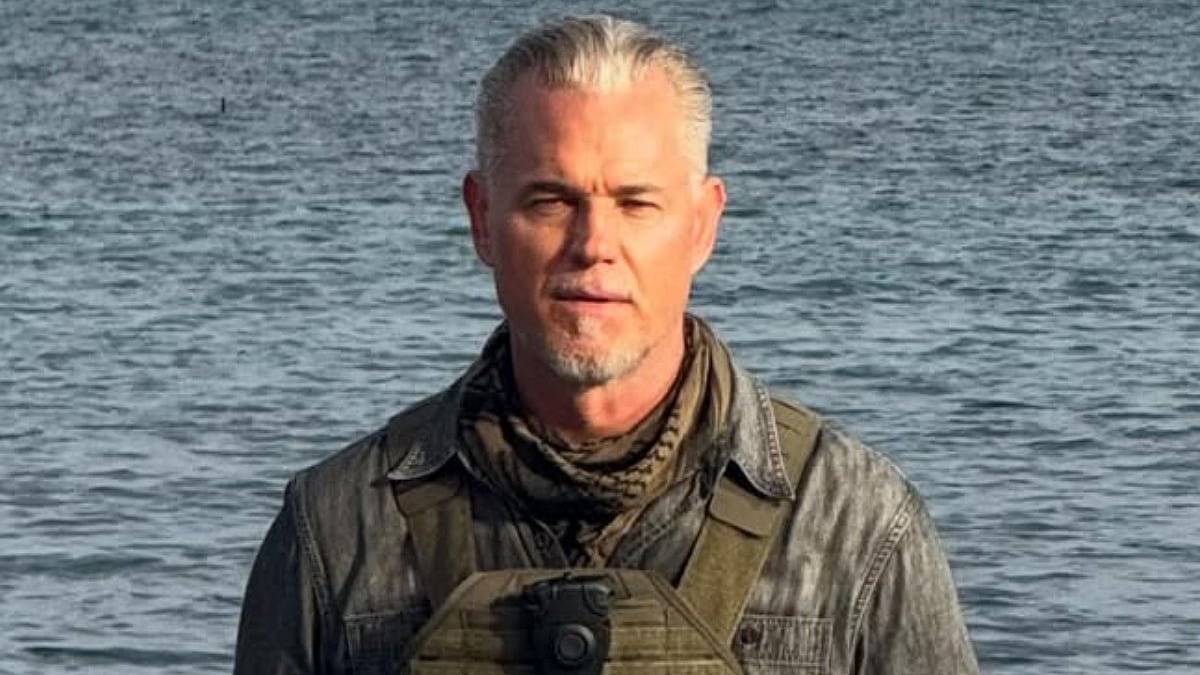
Hollywood is mourning the loss of actor Eric Dane, who passed away on Thursday, February 19, 2026, at the age of 53. Best known for his iconic portrayal of Dr Mark "McSteamy" Sloan on Grey’s Anatomy and his more recent turn as Cal Jacobs on Euphoria, Dane’s death follows a short but remarkably public battle with Amyotrophic Lateral Sclerosis (ALS).
The actor had gone public with his diagnosis in April 2025, just ten months before his passing and quickly became a visible face for the ALS community.
Despite the rapid progression of the disease, Dane dedicated his final months to advocacy, famously appearing at a news conference in Washington D.C. to lobby for health insurance reforms for terminal patients. His commitment to the cause was recognised in late 2025 when the ALS Network named him Advocate of the Year.
He also chose to bring his real-life struggle to the screen one last time, guest-starring in the series Brilliant Minds as a firefighter grappling with an ALS diagnosis.
Free Press Journal spoke with Dr Arjun Shah, Consultant Neurologist/Neurophysician, Saifee Hospital, Mumbai to know more about ALS, how deadly it can be and if India has necessary infrastructure to deal with such cases. Edited excerpts:
What is ALS and how is it detected?
ALS is a progressive neurodegenerative disorder that affects the motor neurons, which means, nerve cells in the brain and spinal cord responsible for controlling voluntary muscle movements.
ALS is primarily a clinical diagnosis, which means it is identified based on a detailed medical history and a thorough neurological examination conducted by a specialist.
Doctors assess muscle strength, reflexes, coordination and signs of muscle wasting or twitching. While there is no single test that can definitively confirm ALS, investigations such as electromyography (EMG), nerve conduction studies and MRI scans are used to support the diagnosis and, importantly, to rule out other treatable neurological conditions that may mimic ALS.
Are there different types of ALS?
Yes, ALS is broadly classified into sporadic and familial types. Sporadic ALS is the most common form and occurs randomly without any clear family history. Familial ALS, on the other hand, is inherited and linked to specific genetic mutations, though this form is much rarer. The symptoms and progression pattern may appear similar in both types, but the underlying cause differs.
Is it hereditary?
In the majority of cases, ALS is not hereditary. Around 90–95% of patients have sporadic ALS, which means there is no genetic transmission within the family. Only about 5% of cases are familial, where the disease runs in families due to inherited gene mutations.
Is ALS a random occurrence?
For most patients, ALS is a random occurrence and does not significantly increase the risk for children or siblings. Unless there is a confirmed familial pattern with identified genetic mutations, the likelihood of direct transmission is very low. Even in familial cases, not every family member necessarily develops the condition.
How is ALS treated?
Currently, there is no cure for ALS anywhere in the world. Treatment is mainly supportive and focuses on slowing disease progression, managing symptoms, and maintaining quality of life. This includes medications that may modestly delay progression, physiotherapy to preserve mobility, speech and swallowing support, nutritional management, respiratory care when needed, and psychological support. A multidisciplinary approach is essential in managing the disease effectively.
How life-threatening is ALS?
ALS is a serious and progressive neurodegenerative disorder that gradually weakens muscles, eventually affecting speech, swallowing and breathing. It is considered life-limiting, and many patients survive only a few years after diagnosis, although the rate of progression varies from person to person. Some individuals may live longer with comprehensive supportive care.
What is the ALS scene in India?
ALS is a very rare disease in India, similar to global statistics. Despite its rarity, it remains in public awareness due to high-profile cases and initiatives like the ALS Ice Bucket Challenge, as well as the long survival of individuals such as Stephen Hawking. However, statistically, it is uncommon, and most cases of muscle weakness or twitching are not ALS.
Do we have sufficient facilities and expertise in India to treat ALS?
Yes, India has adequate facilities and expertise to diagnose and manage ALS. Major hospitals have experienced neurologists, EMG and nerve conduction testing facilities, rehabilitation services, and multidisciplinary teams to provide supportive care. While a definitive cure does not exist globally, the standard of supportive treatment available internationally can also be provided in India.

