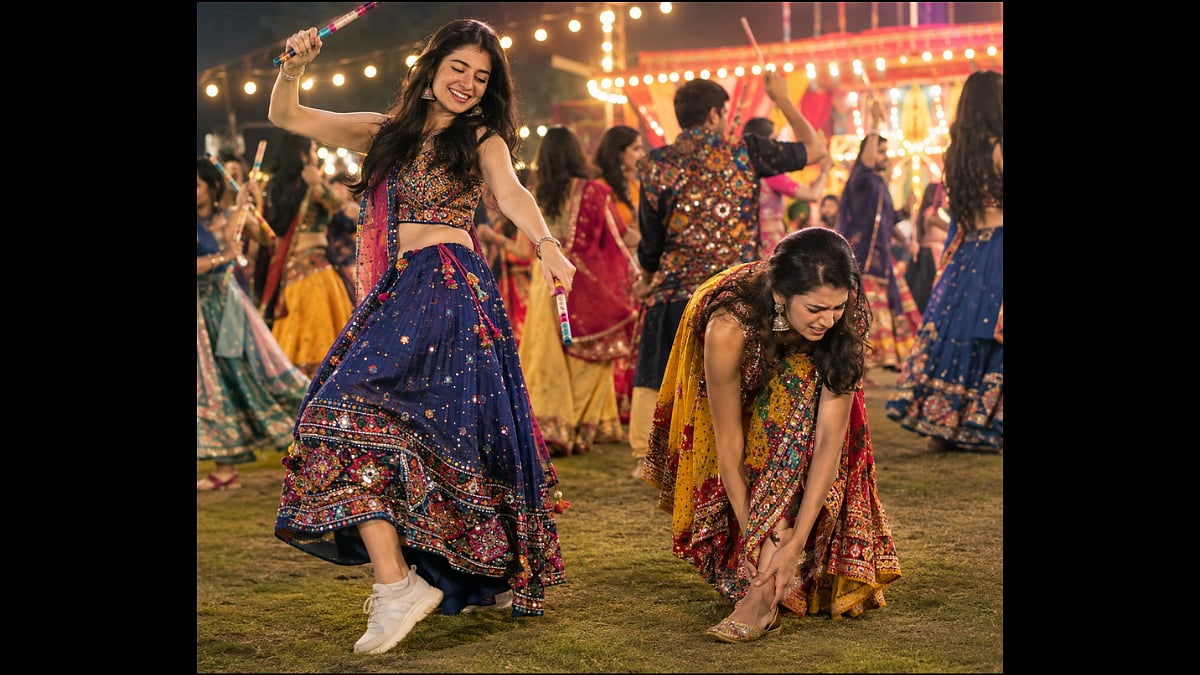
For nine nights, the dhol is non-negotiable. But your body might have other plans. With Garba and Dandiya going from 30-minute community circles to 3-hour high-intensity workouts in sneakers and lehengas, physiotherapy clinics in Mumbai see a 30-40% spike in ankle twists, patellar tendinitis and lower back strains every October.
The problem isn’t the dance. It’s the sudden jump from desk to dandiya. “Most people go straight from the car to the dance floor,” says Dr Minakshi Fullara, Chief, Physiotherapy & Rehabilitation, Aakash Healthcare. Her top three injuries every Navratri week tell the story.
Number one is the ankle sprain. “Garba is all about quick turns on uneven ground, and in a crowd you can’t always see where you are stepping. One awkward landing and the ankle rolls,” she says. Second is knee pain. Spinning on a planted foot twists the knee, and repeated deep, bouncy steps overload it. “People feel it as a dull ache around or behind the kneecap, or a sharp twinge when they turn.” Third is heel and forefoot pain - hours on hard ground in thin footwear irritate the heel and the ball of the foot. “Many people only notice it the next morning, when the first steps out of bed hurt.”
Barefoot, jutti or sneaker?
The outfit is half the festivity, but it comes with a cost. Heavy chaniya-cholis and lehengas restrict movement and shift your centre of gravity, forcing the lower back and knees to compensate. “Any activity that requires a part of the body to overdo, needs proper support,” says Dr Mustansir Abbasi, leading orthopaedic surgeon from Mumbai. “In case of dancing, the whole body that gyrates and the legs and feet that move rapidly needs to be assisted by loose, light, comfortable clothes and soft, proper sized, well cushioned shoes. Anything other than these will make the body parts strain more than required and result in early strain and injury.”
Dr Fullara ranks them clearly. Light sports shoes or dance sneakers are the safest for most people. Pick a pair with cushioning and a flexible sole. “Very grippy soles can be a problem, because your foot sticks while your body spins and the twist goes into the knee. Moderate grip is ideal,” she explains.
Barefoot feels natural, and it works on a clean, smooth, well-maintained floor for short stretches. But on hard ground, or where there are stones and sand, it’s risky. It is also hard on people with flat feet or heel pain, and there is no protection if someone steps on you. Juttis, she says, “look the part, but they are flat and thin, with almost no arch support or cushioning. They are fine for a photo or an hour of dancing, but not for four hours.”
5-minute warm-up
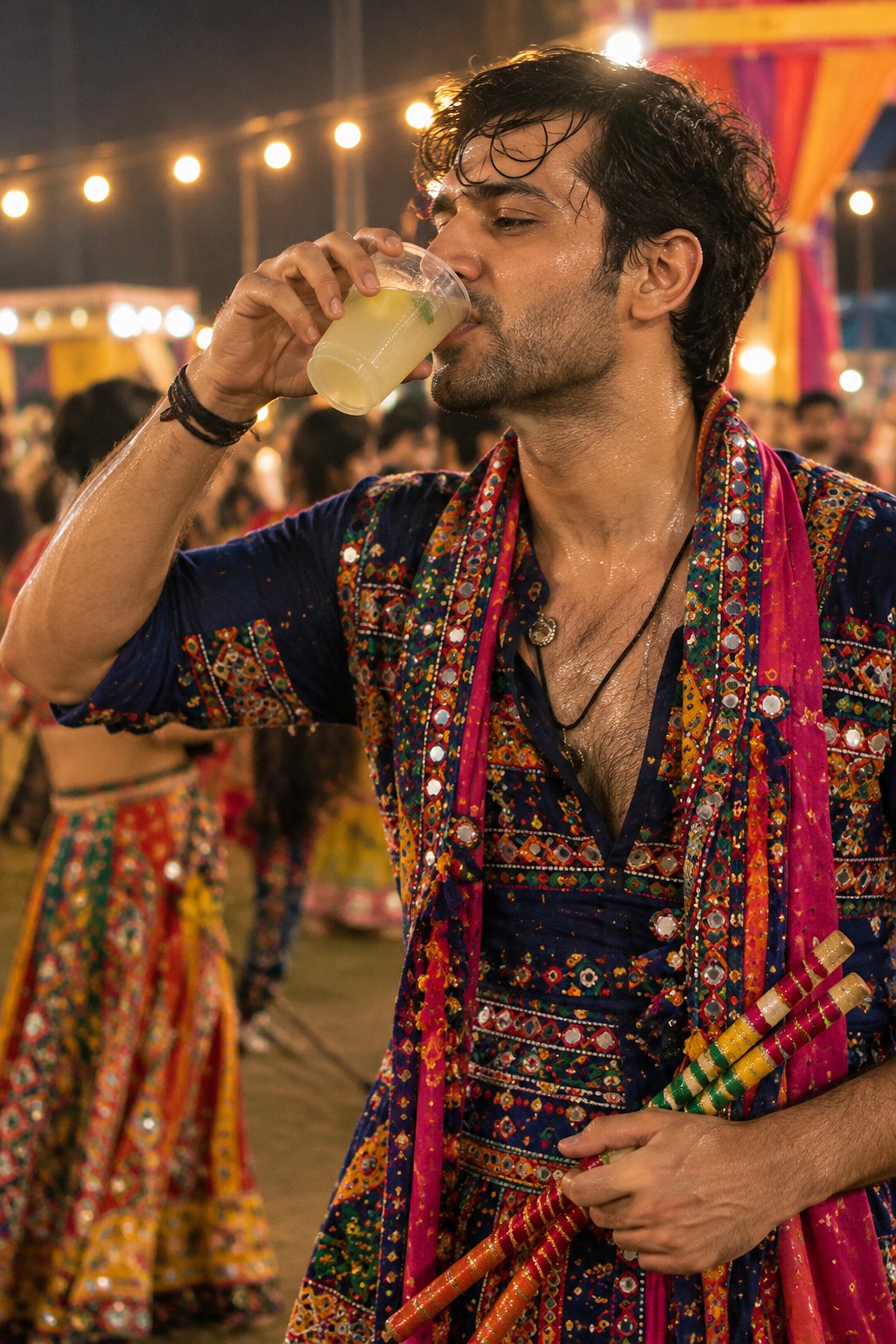
You wouldn't run a marathon without warming up, but we do exactly that for Garba. Physiotherapists say a 10-minute prep at home, or even 5 minutes at the venue, can save your week.
Minute 1: Get warm
March on the spot, gradually lifting your knees, and swing your arms.
Minute 2: Wake up the ankles and calves
Rotate each ankle 10 times each way, then do 15 slow heel raises.
Minute 3: Open the hips
Do front-to-back and side-to-side leg swings, 10 per leg, holding a wall or a friend's shoulder.
Minute 4: Load the legs
Do 10 bodyweight squats and 5 gentle lunges per side. Keep your knees pointing over your toes.
Minute 5: Rehearse the dance
Do your clap-step-turn at half speed, with small spins in both directions. If you play Dandiya, roll your shoulders and circle your wrists.
Red flag vs regular soreness
A dull ache the next day is normal. A sharp, localised pain with swelling is not. Dr Abbasi differentiates it sharply: “Normal muscle soreness will present as a dull ache, that is more generalised over an area, which is bearable but impairs further activity, whilst a ligament injury of the ankle or the knee, will initiate a severe pain and swelling, might be associated with a snap sound with the fall, and is more localised to a spot.”
His red flags to stop dancing and rush to the ER -- severe pain, rapid swelling, a pop or snap at the time of fall, inability to bear weight, and pain on touching the spot. “These injuries warrant immediate attention. Treatment initiated immediately guarantees a faster, proper and complete recovery,” he says. First aid till then: Rest and ice compression. Normal soreness gets better with light massage, ligament injuries become very painful on touching.
Who should skip
If you have had a sprain, knee pain, flat feet or low back pain in the last three weeks, don’t jump in. “Most ligamentous injuries of the back, knee and ankle need three weeks to heal, hence any recent injury of less than three weeks will get aggravated,” says Dr Abbasi. Get an orthopaedic check-up before you go. If cleared, taping, strapping or a knee cap / ankle brace can protect the healing joint.
Eat, drink, dance, repeat
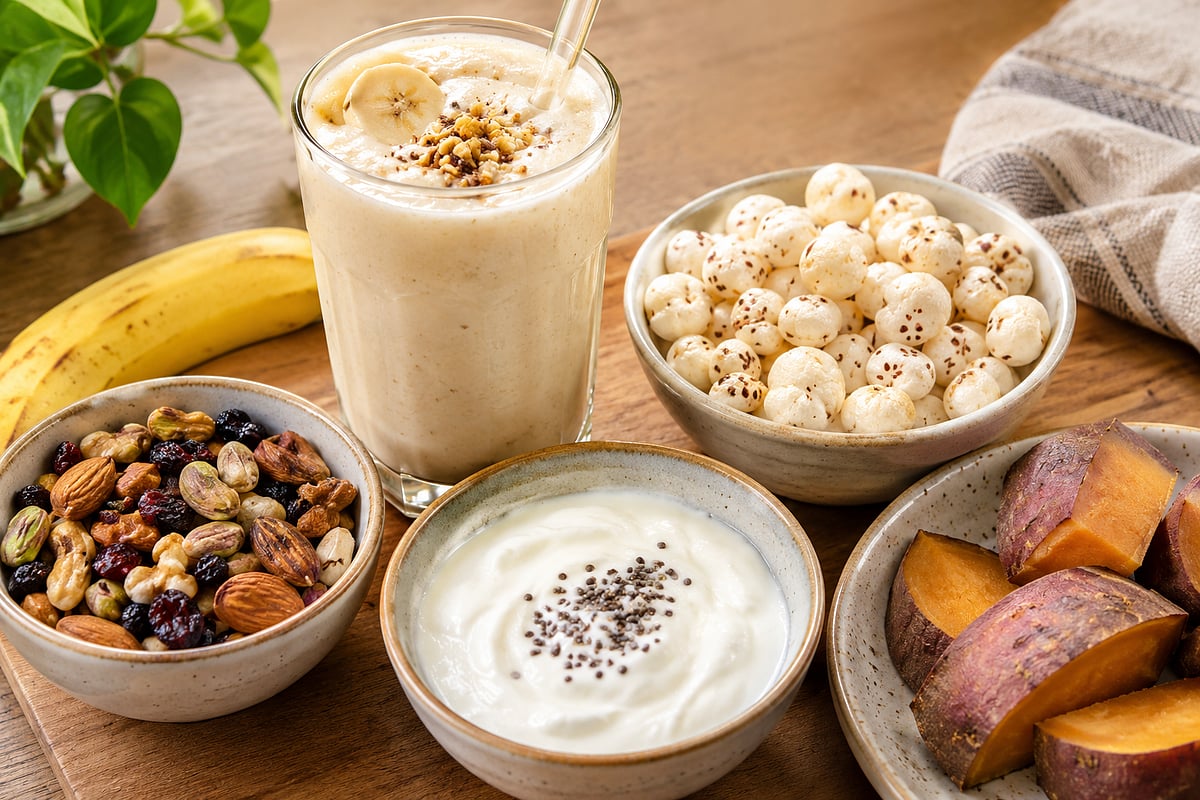
Fasting and then dancing all night is a recipe for cramps and fainting. Clinical nutritionist Dr Nupur Krishnan says the key is eat right, eat smart.
Before Garba (one-two hours prior): Don’t go empty stomach. Have a banana or banana smoothie with a fistful of mixed dry fruits, or yogurt with honey for potassium, magnesium and calcium. Add complex carbs like oats, makhana, sweet potato or samak chawal for sustained energy.
During garba: Hydration is non-negotiable. “Stay hydrated to avoid fainting and loss of body electrolyte or muscle cramps,” says Dr Krishnan. Sip nimbu pani with rock or pink salt, coconut water with pink salt, or ORS. Avoid Red Bull, Monster, Diet Coke and chilled water. For light snacking in between: makhana bhel, cut fruit chaat with little salt, kale chips or quinoa puffs - easy to digest.
After garba: Your recovery meal should be warm and light. Moong dal khichdi or vegetable soup, a small portion of paneer or boiled chole salad or sprouts for protein, chaas or coconut water to replenish minerals, and ginger or fennel tea to soothe tight muscles.
The Cool Down
What you do in the hour after matters. The post-Garba protocol:
1) Walk slowly for 5 minutes, don’t stop suddenly.
2) Stretch calves, quads, hamstrings, hip flexors and glutes for 30 seconds each, no bouncing.
3) Rehydrate with electrolytes.
4) Roll the sole of each foot over a ball or water bottle. Put your legs up for 10-15 minutes.
5) Sleep.

