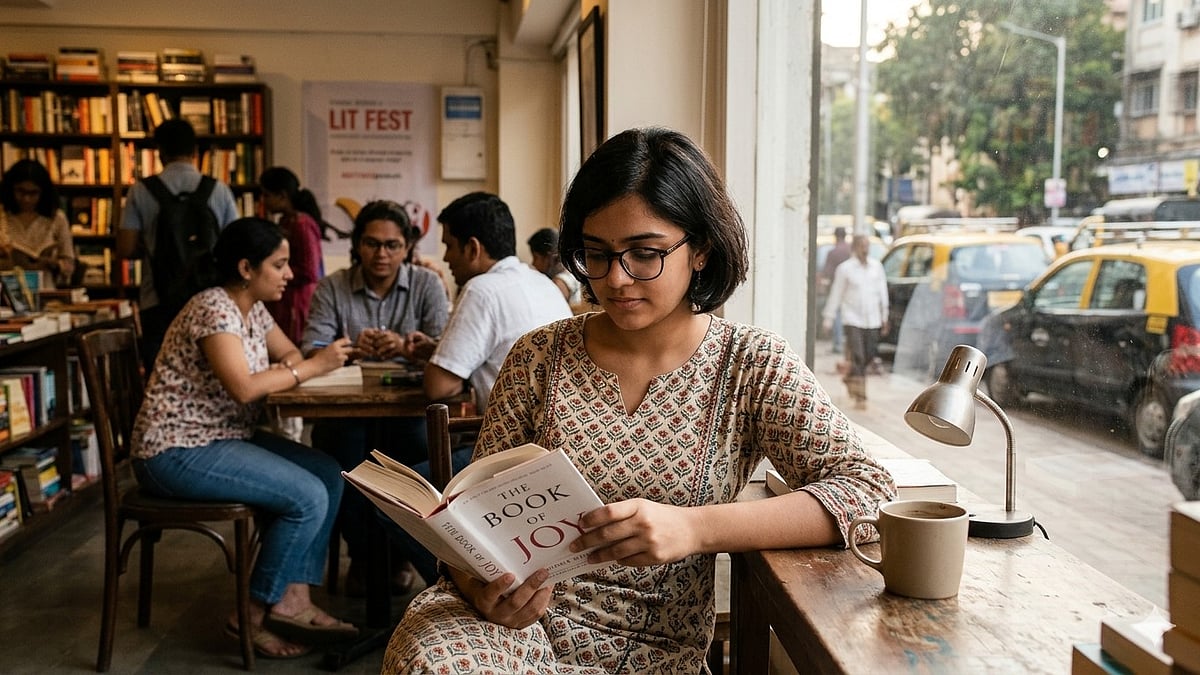
A recent article in an international publication sent the Indian readers into a tizzy and stirred a debate: does India read for pleasure, or are we merely a country of exam-takers who rarely buy books for fun? While the claim seems harsh, especially given our packed literary festivals and bustling bookstores, the reality of India’s reading culture is far more nuanced.
Exams and enjoyment
For many, the habit of reading is often tied to a specific goal rather than pure relaxation. Bhavna Faizullabhoy, Library Educator, notes that the motivation for picking up a book is rarely black or white. “I believe that it's a mix. It depends on the context, in the context of schools and educational institutions, I think there is an emphasis on reading for academics and to get ahead, at least after a certain age. I feel that reading for pleasure needs to be encouraged even when a child crosses a certain grade in school as it's at this point when the reading joy diminishes, in the quest for reading to achieve and it becomes a chore.”
Despite the pressure of grades, new social environments are helping to reclaim reading as a leisure activity. Faizullabhoy points to a growing trend of community-driven reading. “However I believe there are spaces where reading for pleasure is encouraged and there has been a surge of spaces that facilitate that in the recent years. In addition to Book Clubs which have been around for ages, there is reading in parks and open spaces, book stores, singles mixers.”
Her observation are offer a key insight: India reads, but often with purpose. Pleasure reading exists, but competes with academic performance.
Shifting ecosystem
From a bookseller’s perspective, the idea that India doesn’t read at all feels reductive. Nidhi Gupta, Director, Crossword Bookstore, argues that the culture is evolving rather than disappearing.
“India has a deeply rooted literary culture with vibrant engagement across languages and formats. Reading here has always been cultural, multilingual and community-driven — from mythology and regional classics to contemporary fiction and self-development. What’s changing is not the appetite for stories, but the format. Print continues to thrive in genres like mythology, romance, thrillers and self-help, while digital platforms and audiobooks are expanding access and discovery,” she explains. “To suggest that India doesn’t read for pleasure oversimplifies a far more dynamic and layered reality. The scale and success of our literature festivals, which draw thousands of passionate readers, clearly reflect a vibrant reading ecosystem.”
Even the physical bookstore has survived the digital age by transforming into a community hub. Gupta observes that the desire for a physical connection to books has actually strengthened recently. “During and post-pandemic there was a significant dip in footfall as people were more inclined towards online buying. However, gradually the end of the pandemic people returned to bookstores seeking tactile, immersive experiences that online retail simply cannot replicate. Today, footfall has stabilized and in many locations, even grown, particularly in metro cities. Bookstores have re-emerged as cultural spaces, places to discover, linger, attend events and connect. The pandemic reminded readers of the comfort and companionship that books provide,” Gupta adds.
What India is actually reading
When Indians do buy books, their choices tend to lean toward relatability and practical value. Highlighting the genres currently leading the market, Gupta shares, “Commercial fiction, including mythology, romance, thrillers, children’s books and self-help, continues to dominate sales. These genres offer either escapism or practical value, which resonates with a broad readership. Critically acclaimed literary fiction, while often more niche, gains traction through award recognition, reviews and festival visibility.”
Role of community
Reading in India is rarely a solitary act. Book clubs, festivals, and now social media communities are playing a major role in shaping habits. “Book clubs and literary festivals spark conversation, and conversation drives curiosity and sales. When readers engage with authors or discuss books collectively, their connection to reading deepens,” Gupta explains.
Faizullabhoy adds that the freedom to choose is what truly transforms a student into a lifelong reader. “Running a library means providing that elusive element of choice and agency which is what ultimately creates memorable experiences around books and reading.”
Reader’s reality
For many enthusiasts, the joy of reading is an essential part of their personal identity. For readers like Abhishek Vissapragada, the idea that Indians don’t read simply doesn’t resonate.
“I would disagree with this sentiment. When it comes to reading books beyond the academic purpose, I love reading them as it helps explore a new world of knowledge and imagination,” Vissapragada avers.
And like many Indian readers, Vissapragada’s reading journey began at home. “My parents and siblings would often read books from varied authors. Mimicking their behaviours and interest, I also started reading books and slowly found interest in the genre of books that I prefer reading,” he shares.
Luxury or necessity
The debate often turns to economics: can the average Indian afford to read for fun? “Books may feel aspirational, but they are not a luxury. For many households, they are seen as investments in knowledge, imagination and personal growth. That said, price sensitivity is real in India. A diverse range of price points and formats, from affordable paperbacks to regional editions, is essential to keep reading accessible,” Gupta says.
However, Vissapragada warns that the real barrier isn't just money, but a cultural focus on utility that might push younger generations toward digital distractions. “More than a luxury purchase, books are most likely seen from the perspective of academic purposes amongst youngsters. Parents are not actively encouraging their children or allowing them to pursue reading habits beyond this purpose. This in turn will restrain the next generation of readers to a few genres and also push more Indians awa from reading habits and more towards screen watching and scrolling,” he adds.
So, does India read?
The answer is not a simple yes or no. India reads, but differently. It reads across languages, across formats, and often in fragments of time. It reads for exams, for self-improvement, for escape, and sometimes, purely for joy. The challenge is not the absence of reading, but the competition for attention and the way reading is introduced early in life. As Faizullabhoy concludes by referencing Margaret Atwood: “I read for pleasure and that is the moment I learn the most.”

