The Kingdom of Jordan is a fascinating country. Home to an ancient lost city, the dead sea, a red sea, an ancient desert where the sand burns a bright orange brown hue and a civilization that dates back to the Nabateans. Jordan has a shared history with its neighbouring countries along which it makes up the Levantine region and while history and geography is similar, so it their cuisine. Jordanian food has many familiar faces that even a novice traveller can recognise. Bowls of smooth creamy hummus and moutabel. Fresh Fattoush salad with lettuce tomato, cucumber and crisp pita chips dusted with sumac. Then the infamous Shawarma that can be found on every street corner. They’re all familiar dishes but get labelled as either Lebanese or Arabic food.
The truth is Levantine cuisine is just that – food shared across the Levant which consists of Syria, Lebanon, Palestine, Israel, Egypt even and Jordan. While Jordanian cuisine has a lot of shared favourites, there are some dishes that are in essence truly Jordanian. It’s dishes they pride themselves on and are always eager to introduce them to travellers. My first impressions about local cuisine were that it’s going to be a week of being fed various mezze platter of hummus and falafel, although delicious, I was slightly disappointed hoping to experience more. Thankfully all my time exploring the country cemented my belief that Jordanian food goes beyond the usual suspects and includes some deeply flavourful dishes.
Mansaf
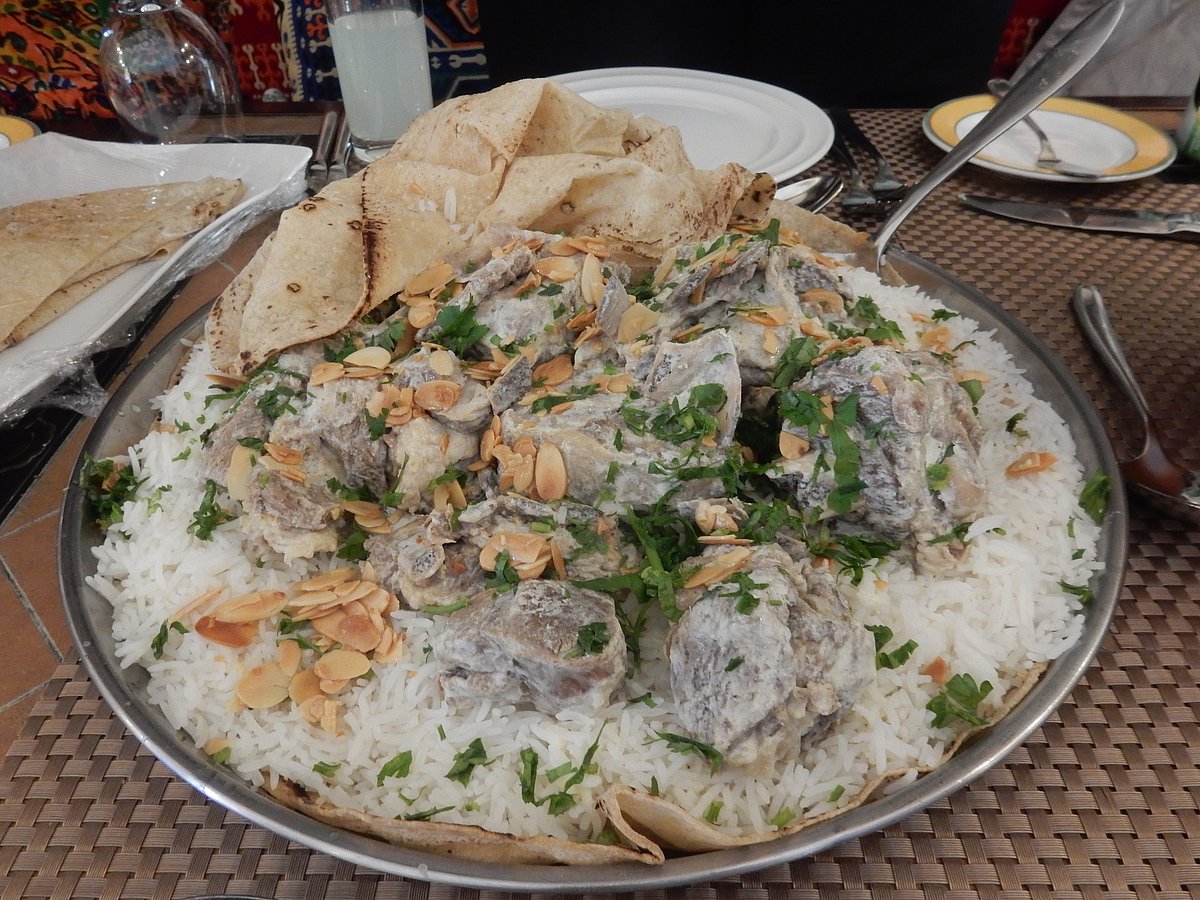
Jordan’s national dish and one that is relished with much joy by every Jordanian. I was first told of the wonders of Mansaf by a very chatty air hostess on my Royal Jordanian flight into Amman, who insisted ( to the point where her eyes sparkled with excitement) that if there is one dish I shouldn’t miss, it’s Mansaf! I realised how revered this humble rice and meat plate is when my local tour guide lit up with delight on me asking where I can get this famous mansaf. I later discovered that Mansaf to the Jordanian is as special as our beloved Biryani is to us Indians, however it’s a very different preparation. The dish is a light rice and meat preparation where the meat and rice are cooked in fermented goat milk adding a unique mildly sour tang to it. The meat is soft and perfectly cooked and the dish is meant to be eaten with a drizzle of that milk on the top like a raita without the onion or cucumber in it. Often accompanied by a simple tomato cucumber salad and the dish is covered with a thin roti like bread on top which you’re encouraged to eat with the rice. This isn’t a meal for the faint hearted and best shared with a group.
Maqluba
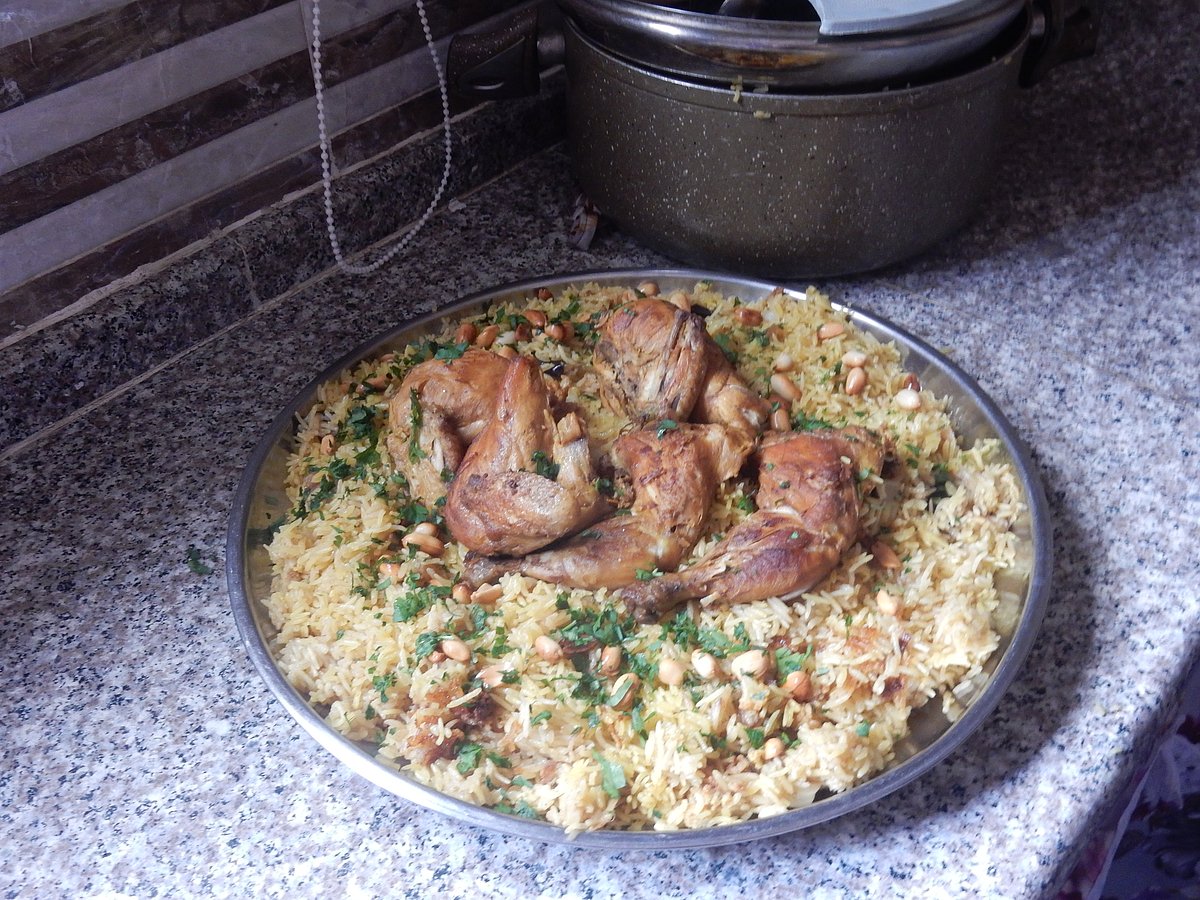
While most people are familiar with upside down pineapple cakes, there’s something to be said about an upside-down rice bowl. Maqluba is a traditional Jordanian dish where potatoes and aubergine are cooked together and layered at the bottom of a pan and then topped with rice. It’s cooked well and then emptied upside down on a plate so the meat potatoes and vegetable are perched on top of the mound of rice. Like most rice dishes, it’s sometimes garnished with nuts and it is eaten with a side salad of diced cucumber and tomato and even sometimes a side of thick yogurt as an accompaniment. Though both the salad and yogurt are optional and even without it, the Maqluba is fabulous with simple spices shining through and tender soft meat with fluffy rice cooked perfectly.
Zarb
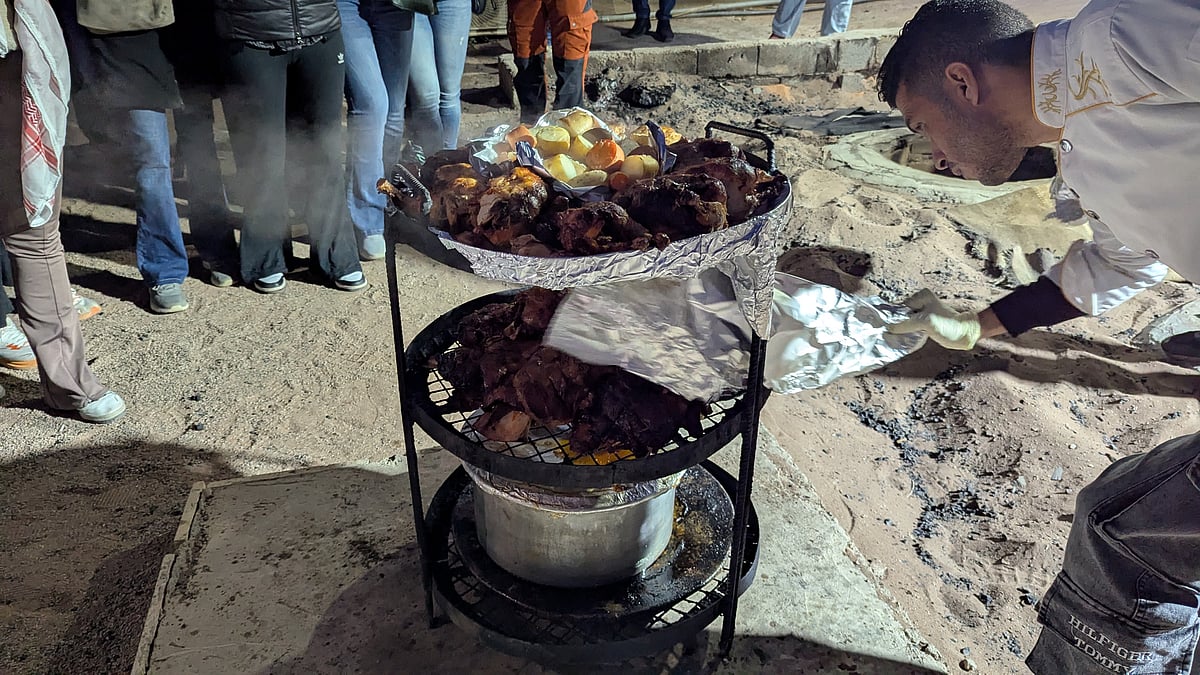
This isn’t a dish easily found across Jordan unless of course you’re at a specialty restaurant as this is a typical Bedouin delicacy. If you travel to the desert of Wadi Rum and spend a night at any of their desert camps, you’ll be sure to experience a Zarb or the as it’s often called – The Bedouin Barbeque. A stack of meat (usually lamb but also chicken), rice, potatoes and vegetables are all cooked underground in a pit, covered with hot coal and cooked for 3 hours resulting in the most delicious barbeque experience. Once pulled out of the pit, it’s served on a platter with the rice and vegetables and the meat shredded so that it can be enjoyed family style with enough food to feed everyone.

Kibbeh Bi Laban
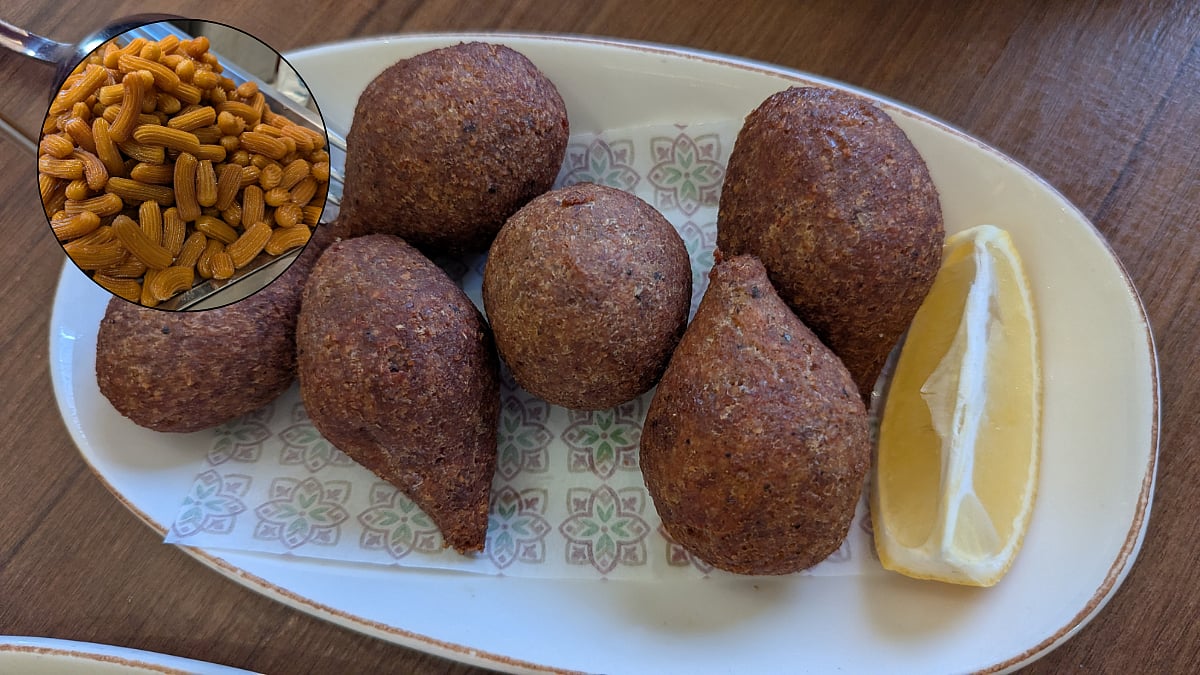
Kibbeh is dish often seen in mezze platters. It’s a fat nugget of minced meat (often beef or lamb) with chopped onions and spices wrapped in a layer of bulgur wheat and then fried to form a crisp outer covering. This is a traditional Kibbeh eaten plain or with hummus or any other dips in a typical mezze platter. When the Kibbeh is then added into a creamy yogurt sauce it transforms into the Kibbeh Bi Laban elevating it from a mezze appetizer to a main course dish, completely changing its taste and texture. The crisp Kibbeh looses its crunch and morphs into a softer dumpling in a creamy sauce.
Qatayef
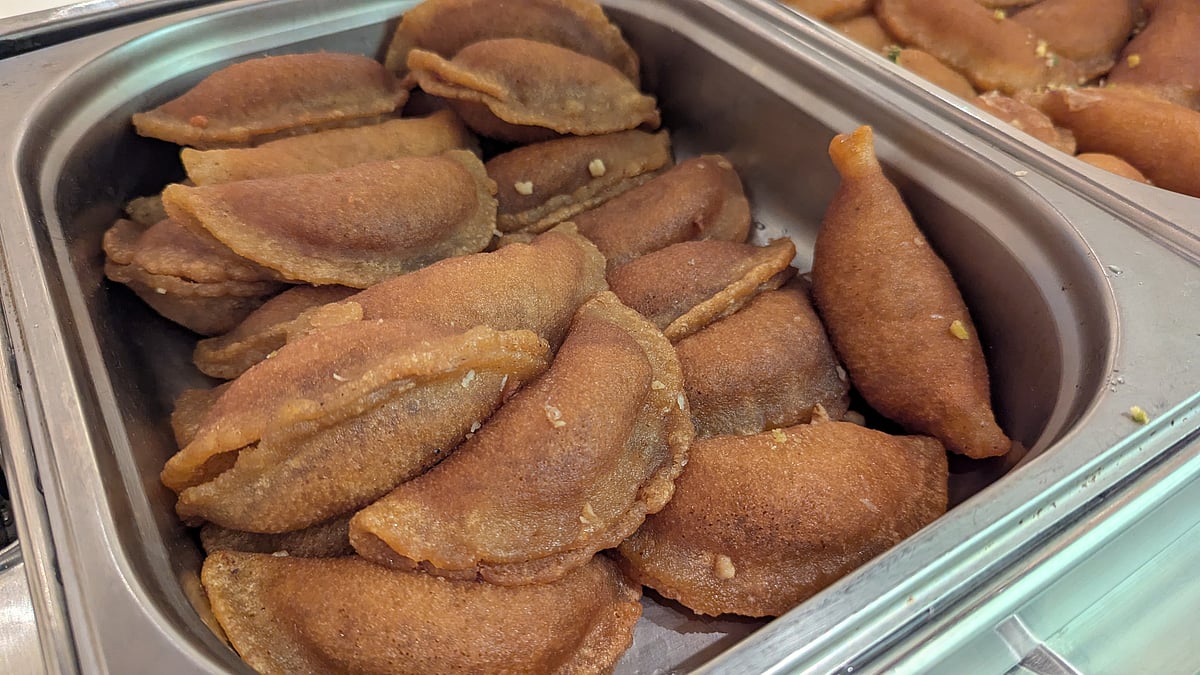
This dessert reminds you a small pancake, almost a mini version which is stuffed with cream and nuts and folded almost like a roll up pancake sandwich and drizzled with honey for that additional sweetness. Sometimes it’s eaten plain without the stuffing and is a popular addition to the Iftar table during Ramadan. You’ll find another version of Qatayef where the pancake is slightly larger in side, stuffed with pistachio or walnuts and folded to form a crescent like shape again drizzled with honey. I kept calling it the Jordanian gujiya because of the shape but it’s still very much made from the same semolina pancake, just a different size and shape.
Karabeej Halab
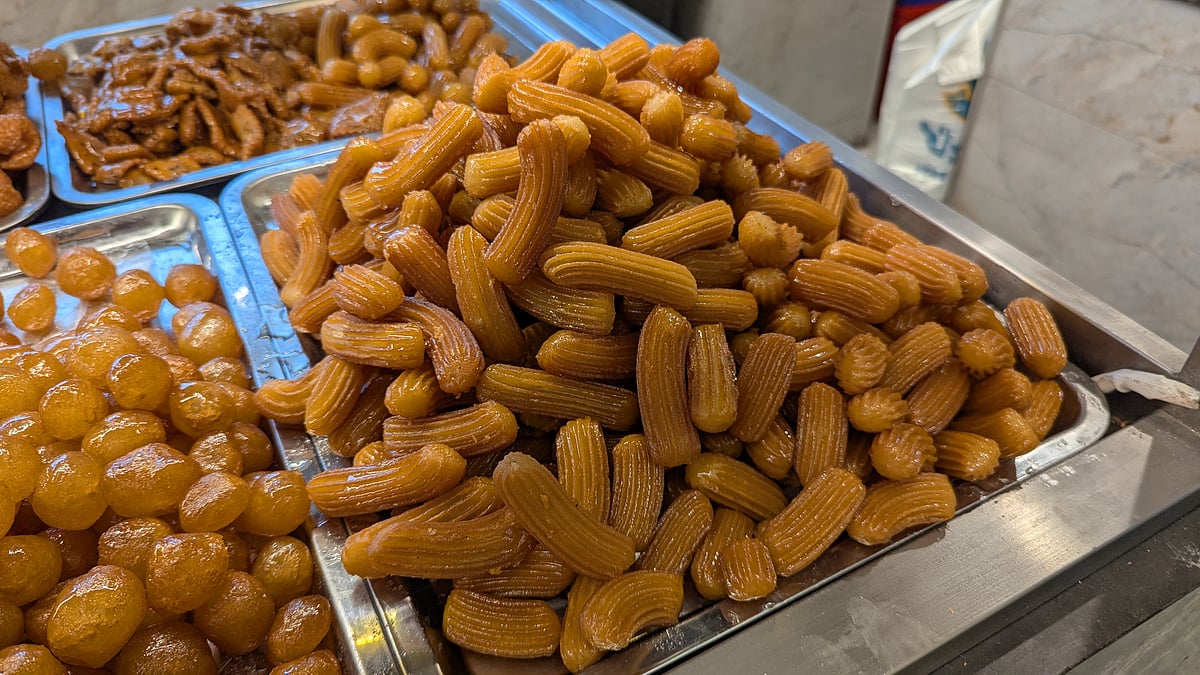
The simplest way to explain what this sweet treat is about is to call it the Jordanian version of the Spanish churros. It’s shaped exactly like a churro covered in a sugar syrup glaze and best eaten hot off the stove. Crispy on the outside warm and soft inside, it’s made from semolina dough deep fried and sometimes garnished with chopped pistachio. This sweet sticky gooey goodness comes in all shapes; the mini version is the most popular and a hit with anyone with a sweet tooth.

