In one of his podcast conversations, Robert Greene says something striking about legacy. He does not speak about fame, influence, or intellectual dominance. He says he wants to leave behind more courageous people, people who have explored the full extent of their potential.
Not people who were merely unconventional. Not people who flirted with rebellion when it was fashionable. But people brave enough to endure inconvenience in order to build something for the future.
That distinction feels urgent in this moment.
There is a growing sentiment, sometimes whispered and sometimes declared outright, that this world is doomed. The social institutions that once sustained our relational lives are eroding. Communities have thinned. Extended families have fragmented. Even the nuclear family, once treated as the final stable unit, feels precarious. And now, at the smallest dyad, a couple, the strain is unmistakable.
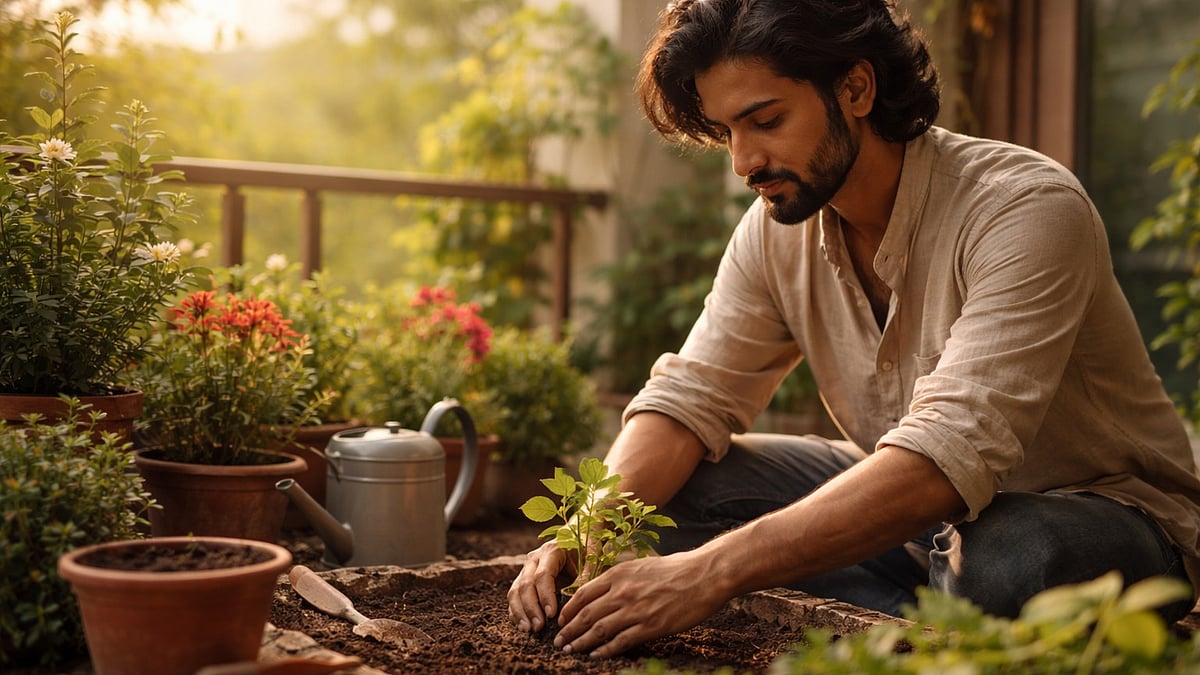
The gardener is gone.
For centuries, relational structures were maintained through the brute force of patriarchy and rigid hierarchy. Roles were defined. Power was centralized. Continuity was enforced. The system was not necessarily humane, but it was durable. Stability was imposed from above.
With the rise of egalitarianism and individual consciousness, that external scaffolding has weakened. No one is obligated to stay in roles that diminish them. No one is bound by the same economic or social compulsions. Freedom has expanded.
But freedom has exposed our incompetence.
In the old order, endurance was compulsory. In the new one, it is voluntary. And voluntary endurance requires skills such as emotional regulation, conflict literacy, and self-awareness that most of us were never taught.
Today, two individuals enter a relationship and are expected to build a micro-society. They must be emotionally intimate, financially coordinated, sexually compatible, psychologically supportive, and ideologically aligned. They must replace the functions that once belonged to entire communities. They must do the housekeeping not only of a shared home but of shared inner worlds.
Two unhealed individuals are tasked with constructing stability without coercion.
It is no surprise that people feel scattered. The collapse we sense may not simply be institutional. It may be developmental. We are attempting to live in post-patriarchal, egalitarian structures without having cultivated the inner competence those structures demand.
This is where Greene’s idea of courage intersects with our relational crisis.
Radical bravery today is not merely about defying conventions. It is about enduring inconvenience for the sake of something that does not yet exist. It is about developing the discipline required to build new forms of living together when old ones no longer hold.
That begins with isolation, but not alienation.
Isolation, in this sense, is apprenticeship. It is a period of introspection where one confronts inherited patterns such as entitlement, control, fear of abandonment, and avoidance of responsibility. It is the slow work of becoming whole enough not to demand that another person compensate for one’s fractures.
Without healing in solitude, attempts at collective redesign will collapse under the weight of unresolved wounds.
We cannot reinvent the human space if we have not first stabilized the human within.
And yet, isolation must not become permanent retreat. The purpose is not self-sufficiency that rejects connection, but self-sufficiency that can re-enter connection without domination or dependency.
The broader backdrop intensifies the urgency. Technological acceleration, automation, and the specter of AI takeover create existential unease. If machines increasingly handle production, calculation, and even creativity, what remains distinctly human? If labor is redefined and relevance feels threatened, relational life may become the primary site of meaning.
But relational life cannot thrive without courage.
Courage to delay gratification.
Courage to stay in discomfort.
Courage to practice competence before demanding compatibility.
The world may feel doomed because the old scaffolds are falling faster than new ones are rising. But transitional eras always look like collapse from within them. What appears as decay may also be demolition before redesign.
The radicals and mavericks of this era will not merely criticize the dying institutions. They will prototype new ones. They will experiment with alternative living arrangements, conscious partnerships, and community formats that distribute emotional labor more realistically. They will endure the inconvenience of trial and error.

Staying ahead of the curve will not mean chasing technological trends. It will mean developing psychological depth faster than the world fragments. It will mean building inner architecture strong enough to support outer innovation.
Perhaps the world is not doomed.
Perhaps it is under reconstruction, and reconstruction requires a different kind of bravery than revolution did.
If the gardener who once imposed order is gone, then the responsibility is diffused. Each of us must cultivate our own soil before we attempt to plant anything with another.
A legacy of courage, then, is not about heroic gestures. It is about multiplying individuals who are competent, whole, and willing to endure inconvenience in order to create durable futures.
The future of human space will not be secured by force.
It will be built by those brave enough to become capable and patient enough to grow what has never existed before.
(The writer is a mental health and behavioural sciences columnist, conducts art therapy workshops and provides personality development sessions for young adults. She can be found @the_millennial_pilgrim on Instagram and Twitter)

