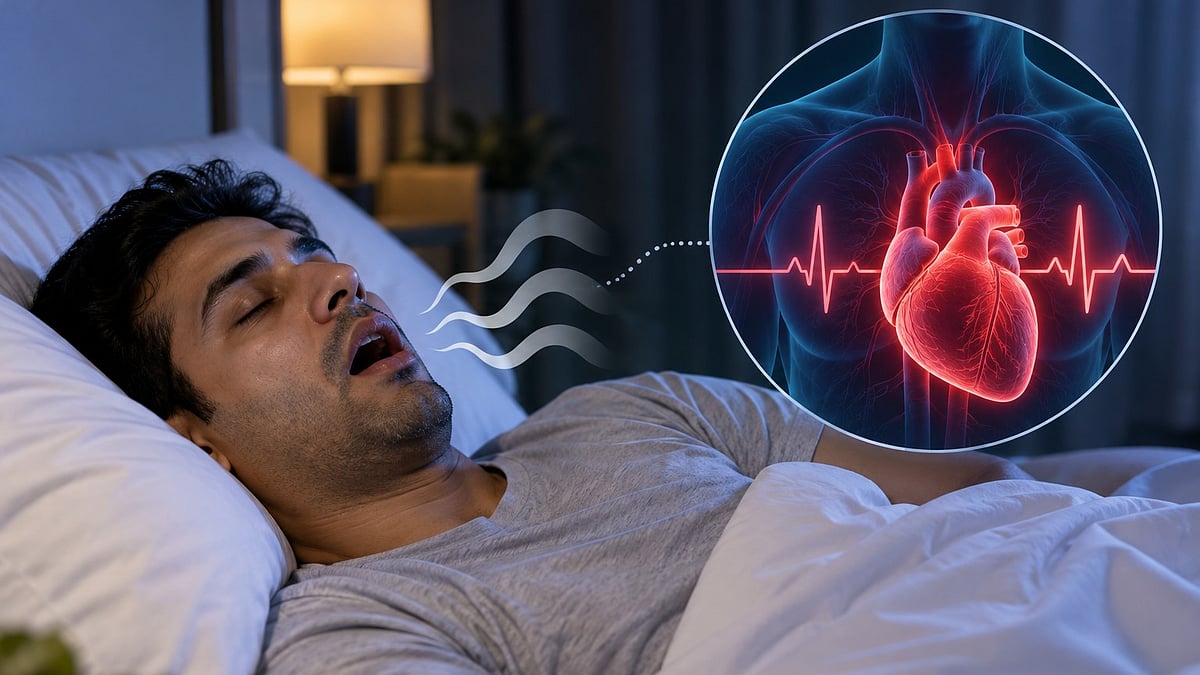
Every health issue can have an impact on the health of your body organs. Sleep apnoea is a major health concern and is known to also impact your heart health. Understanding this along with ways to manage sleep apnoea.
What is sleep apnoea?
Dr Janhvi Siroya Shah (ENT, Sleep Specialist) calls sleep apnoea a sleep-related breathing disorder where a person’s breathing repeatedly stops and starts during sleep. “The most common type is obstructive sleep apnoea (OSA), which happens when the muscles and soft tissues in the throat relax and temporarily block the airway. Common warning signs include loud, persistent snoring, choking or gasping during sleep, pauses in breathing noticed by others, morning headaches, dry mouth, poor concentration, and excessive daytime sleepiness.”
The concerning aspect is the repeated stops in breathing that lower blood oxygen levels and disrupt regular sleep. Someone might not fully wake or recall them, but the body experiences stress all night.
Dr Murarji Ghadge, Senior Consultant ENT Surgeon and Sleep Disorder Specialist at Ruby Hall Clinic, Pune, warns that untreated sleep apnoea impacts more than sleep quality. “It may cause excessive daytime sleepiness, morning headaches, poor concentration, mood changes and fatigue. Over time, untreated sleep apnoea increases the risk of high blood pressure, heart disease, abnormal heart rhythms, stroke and metabolic problems. It also increases the risk of accidents because of excessive daytime drowsiness.”
Impact on heart
Dr Ghadge does see sleep apnoea as putting constant stress on the heart. “Every time breathing stops, oxygen levels can fall, and the body responds by releasing stress hormones. This can cause a temporary rise in heart rate and blood pressure and place additional strain on the heart. When these episodes occur repeatedly, the constant fluctuations in oxygen and blood pressure contributes to inflammation and changes in blood vessels.”
In the long run, this increases the chances of persistent hypertension, coronary artery disease, and atrial fibrillation. In fact, those already suffering from heart disease must be especially observant of the sleep apnoea symptoms, such as loud snoring, noticeable pauses in breathing, choking or gasping while sleeping and too much daytime drowsiness.
Dr Shah adds, “Sleep apnoea may also increase the risk of developing irregular heart rhythms, commonly known as arrhythmias, and can contribute to a higher risk of heart disease and stroke.”
Doctors see the concerns more among those already suffering from conditions such as high blood pressure, diabetes, obesity or existing heart conditions. Sleep apnoea needs to be identified and treated earlier to improve sleep quality and long-term heart health.
Tips to manage sleep apnoea
Don’t ignore constant snoring: Dr Shah wants everyone to medically evaluate loud snoring, choking, gasping during sleep or pauses in breathing.
Maintain a healthy weight: “Excess weight can increase pressure around the airway and worsen obstructive sleep apnoea," mentions Dr Shah.
Avoid smoking: Dr Ghadge advises avoiding smoking since it can increase airway inflammation and deteriorate breathing problems during sleep.

Sleep on your side: If you are someone who ends up sleeping on your back, avoiding that may help keep the airway more open.
Avoid alcohol and sedatives before bedtime: Dr Shah mentions they relax the throat muscles, which, in turn, worsens breathing obstruction.
Follow prescribed treatment: “Depending on severity, treatment may include CPAP therapy, oral appliances or, in selected cases, surgery. CPAP should be used consistently if prescribed,” Dr Ghadge says.
Manage a regular sleep routine: Having a proper sleeping routine and getting a good amount of consistent sleep helps boost overall sleep health.
Deal with related conditions: It is essential that you keep blood pressure, diabetes and other cardiovascular risk factors closely controlled.
Treating nasal or throat-related issues: “Issues like nasal blockage or structural issues in the airway should be checked by an ENT specialist," suggests Dr Shah.
Don't overlook symptoms: Early diagnosis and appropriate treatment can significantly improve sleep quality and reduce health risks.
While ignoring sleep apnoea can be costly for overall health and the heart, following medical advice and following these simple rules go a long way in treating and controlling it.

