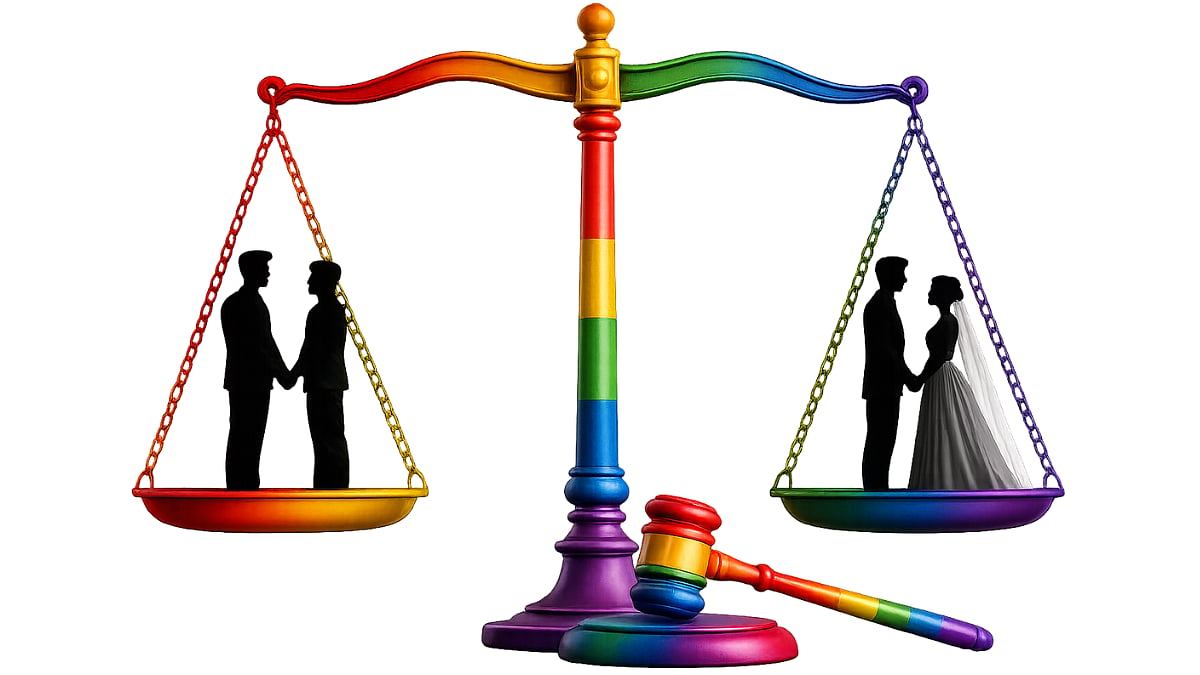
Since the repealing of Section 377 in 2023 decriminalised same-sex relationships in India, many believed marriage equality would be the next step. Yet, nearly three years after the Supreme Court's landmark 2023 verdict, the fundamental question whether queer couples are entitled to the same legal rights as everyone else remains. Satya Tirtharaj Ghosal moderates a debate on why same sex marriage has not been legalised in India
Sridhar Rangayan, Filmmaker & Founder Festival Director of KASHISH, Pride Film Festival
The debate remains relevant because the need has not disappeared. Many LGBTQ+ couples, including me and Saagar Gupta, continue to build lives together without the legal protections and recognition that heterosexual couples enjoy. The verdict may have closed one legal pathway, but it did not end the conversation. At its core, this is about whether queer citizens are entitled to the same rights and dignity as everyone else.
It is both a legal and social issue. The Constitution guarantees equality, dignity, and non-discrimination, but marriage equality is also about family acceptance and social recognition. When a partner is in critical care, the other should have the right to make decisions. Legal change and social change must move together.
Ideally, all institutions should play a role. The judiciary has been crucial in advancing LGBTQ+ rights, while Parliament has a responsibility to ensure equal protections. What matters most is that progress is not indefinitely delayed.
Any framework that grants rights deserves consideration. However, creating a separate category for LGBTQ+ couples risks institutionalising inequality. Civil unions should be a genuine step towards equality, not a substitute for it.
The lack of legal recognition affects inheritance, healthcare decisions, insurance, pensions, adoption, housing, and financial security. During crises, partners can effectively become strangers in the eyes of the law. These are not abstract concerns but everyday realities.
India's social fabric is not so fragile that equality would weaken it. Extending marriage rights to same-sex couples takes nothing away from existing families. Inclusion strengthens society by allowing more people to participate fully in it.
Legal recognition often shapes social acceptance. Without it, families, employers, and institutions can dismiss LGBTQ+ relationships more easily. The issue extends beyond marriage to dignity, security, and belonging.
Acceptance is growing beyond metropolitan cities. Through KASHISH and outreach programs, we have seen increasing visibility and support in smaller towns. Social media and cinema have helped create conversations that were once difficult to have.
Love, family, and the desire for security are not Western ideas. LGBTQ+ people exist across every region and community in India. The immediate priority is securing rights and protections while continuing to build a more equal and inclusive society.
Priya Ghosal, Advocate at Calcutta High Court
The Supreme Court's 2023 judgment did not close the possibility of marriage equality in India, it simply held that creating such a framework is primarily the responsibility of Parliament. While the Court recognised the dignity and legitimacy of queer relationships, it felt that extending marriage rights would require changes across several interconnected laws. The judgment, therefore, left the constitutional conversation open while emphasising the need for legislative engagement. Marriage equality is rooted in constitutional principles of equality, dignity, and personal liberty. However, because marriage affects multiple legal areas, legislative action remains necessary to translate these principles into enforceable rights. Constitutional values and statutory reforms must ultimately work together to ensure meaningful equality.
At present, same-sex couples are denied several benefits available to married heterosexual couples, including inheritance rights, adoption, pension benefits, insurance coverage, tax advantages, and medical decision-making authority. This lack of recognition often leaves queer couples legally vulnerable despite their long-term commitments and shared responsibilities. Civil unions could provide important legal protections relating to inheritance, healthcare, and financial benefits. However, if they create a separate legal category exclusively for same-sex couples, questions remain about whether they truly deliver equality or merely offer a parallel system.
Supporters of marriage equality argue that excluding same-sex couples violates constitutional guarantees of equality and non-discrimination. Opponents contend that existing marriage laws were framed around heterosexual unions and that any changes should come through legislative debate rather than judicial intervention.
Legal recognition would require amendments to laws governing adoption, succession, guardianship, taxation, pensions, and insurance. While this would be a significant undertaking, legal systems routinely adapt to evolving social realities and changing understandings of rights.

International experiences have informed discussions in India, though foreign precedents serve only as persuasive guidance and cannot be directly transplanted into the Indian context. Every society must find solutions that align with its own constitutional framework and social realities.
Ultimately, the debate is far from over. Future progress will likely depend on legislative action, public awareness, continued advocacy, and evolving social attitudes. Whether marriage equality arrives sooner or later, it is likely to remain an important constitutional, social, and political question in India.

