For many women, completing breast cancer treatment brings relief, but it also introduces a new set of anxieties. One of the most common questions I encounter in clinical practice is surprisingly simple: “Doctor, what should I eat now so that my cancer does not return?”
he question reflects something deeper than nutritional curiosity. After months of surgery, chemotherapy, radiation or hormonal treatment, patients understandably want to regain some control over their health.
Unfortunately, this is also when they encounter conflicting advice: eliminate sugar, avoid dairy, stop eating soy, follow an alkaline diet or consume expensive supplements. The scientific reality is less dramatic but far more reassuring: there is no single food that prevents breast cancer recurrence, and no special diet that guarantees protection.
What matters is the overall dietary pattern, nutritional recovery and long-term metabolic health.
Recover before restricting
The first nutritional priority after breast cancer treatment is not weight loss or detoxification. It is rebuilding strength.
Chemotherapy, surgery and prolonged inactivity can contribute to muscle loss, fatigue and changes in appetite. Some women gain weight during treatment, while others lose considerable muscle despite maintaining the same body weight.
Adequate protein becomes particularly important during recovery. Indian diets can provide good sources through dal, chickpeas, rajma, paneer, curd, milk, soy products and, for non-vegetarians, eggs, fish or lean poultry.
Rather than concentrating on the weighing scale alone, patients should focus on restoring muscle, improving physical stamina and meeting their nutritional requirements.
Does sugar feed breast cancer?
This is perhaps the most persistent misconception.
Cancer cells use glucose for energy, but so do normal cells. Eliminating sugar does not selectively starve cancer cells, and there is no convincing clinical evidence that avoiding all sugar prevents breast cancer recurrence.
However, excessive consumption of sugary beverages, sweets and highly processed foods can contribute to weight gain and metabolic problems.
The distinction matters. A patient need not fear an occasional dessert, nor should she eliminate fruits because they contain natural sugars.
The goal is to reduce excessive added sugar, not create fear around everyday food.
Soy, dairy and hormones
Women with hormone receptor-positive breast cancer often worry that soy contains plant oestrogens and may stimulate cancer growth.
Current evidence does not support routinely avoiding traditional soy foods. Moderate consumption of tofu, soybeans and other whole soy foods is generally considered safe for breast cancer survivors, including those with hormone receptor-positive disease.
Concentrated soy-isoflavone supplements, however, should not be treated as equivalent to ordinary dietary soy.
Similarly, there is insufficient evidence to recommend eliminating milk, curd or paneer solely because of a breast cancer diagnosis.
For women receiving endocrine therapy, bone health also becomes important. Adequate calcium, vitamin D where indicated, protein and regular physical activity deserve attention.
Weight, metabolism and muscle
Research increasingly highlights the relationship between excess body fat, metabolic health and outcomes after breast cancer.
Higher body fat levels after diagnosis are associated with poorer long-term outcomes, although deliberately losing weight has not been conclusively shown to prevent recurrence.
This is particularly relevant for women experiencing treatment-induced menopause or receiving long-term hormonal therapy, when changes in body composition may occur.
The practical approach is sustainable weight management without crash dieting.
A balanced Indian meal containing vegetables, whole grains, protein and healthy fats is often more beneficial than a restrictive diet that is difficult to maintain.
Do you need supplements?
The supplement industry frequently promotes antioxidants, high-dose vitamins, herbal preparations and immunity boosters to cancer survivors.
However, no routine nutritional supplement has been proven to prevent breast cancer recurrence.
Supplements may be appropriate for documented deficiencies, poor dietary intake or specific clinical indications. Vitamin D and calcium, for example, may be necessary in selected patients at risk of bone loss.
But taking supplements without medical guidance can be unnecessary and occasionally harmful. Some products may also interact with ongoing cancer treatment.
Natural does not automatically mean safe.
Building a balanced plate
For most women, the answer is not an expensive imported superfood but a balanced, familiar meal.
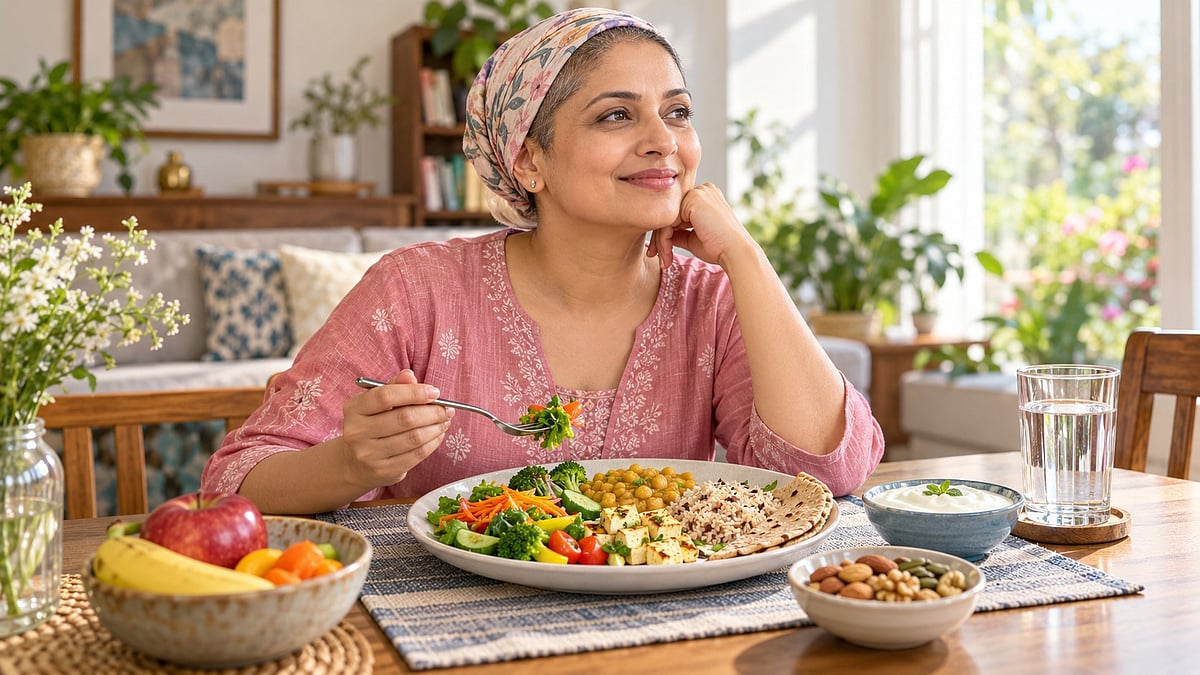
A practical approach is to fill approximately half the plate with vegetables, one-quarter with protein-rich foods and the remaining quarter with whole grains or other fibre-rich carbohydrates.
Seasonal fruits, nuts, seeds and appropriate quantities of healthy oils can complement this pattern. Highly processed foods, processed meats and alcohol should be limited or avoided.
Dietary changes should also be accompanied by regular physical activity, including strength training when medically appropriate. Exercise helps preserve muscle, improve fatigue and support metabolic and bone health.
Importantly, women experiencing persistent nausea, swallowing difficulties, weight loss or other treatment-related complications may require individualised nutritional advice rather than standard dietary restrictions.
Beyond fear of food
Perhaps the most important conversation after breast cancer treatment is about restoring a normal relationship with food.
I have seen patients become so concerned about eating the wrong thing that meals turn into another source of anxiety. Every family gathering, restaurant visit or occasional indulgence becomes associated with fear of recurrence.
That is not what cancer survivorship should look like.
Healthy eating matters, but it is one component of survivorship alongside appropriate follow-up, prescribed treatment, exercise, sleep and emotional well-being.
A breast cancer survivor does not need to spend the rest of her life following a “cancer diet.” She needs a sustainable way of eating that helps her regain strength, protect long-term health and enjoy life beyond treatment. The objective is not to make every meal a defence against cancer, but to make good nutrition a foundation for living well.
(Dr. Raman Narang, MOC Cancer Care, New Delhi)

