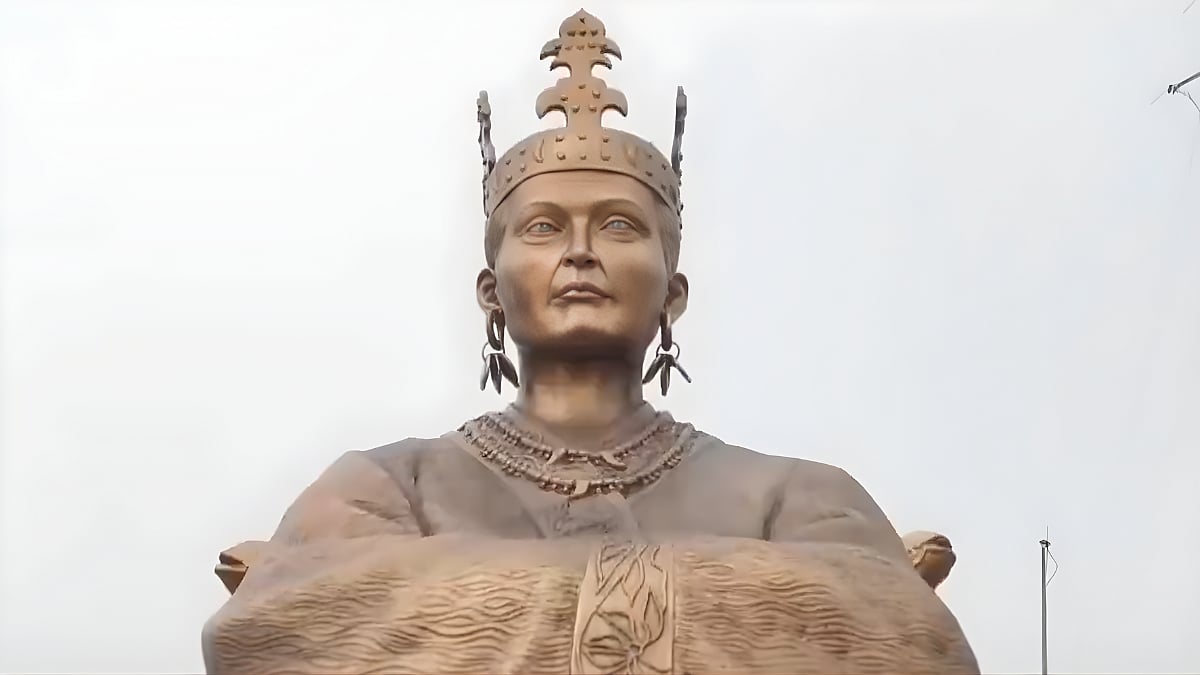
Ayodhya has added a new chapter to its historic scripts, one that stretches far beyond India's borders. A bronze statue of Korean Queen Heo Hwang-ok has been unveiled in the city, honouring a legend that connects this temple town to Korea's past and to millions of people who believe they descend from her.
Check it out below:
The princess who became a Korean queen
For many South Koreans, Ayodhya is not just associated with mythology; it is believed to be the birthplace of Princess Suriratna, who, according to historical folklore, sailed to Korea around 48 AD and married King Kim Suro, the founder of the ancient Gaya kingdom. She is remembered as Queen Heo Hwang-ok and is credited with carrying elements of Indian culture and Buddhism across the seas.
The story appears in Samguk Yusa (Memorabilia of the Three Kingdoms), a well-known Korean compilation of legends and history, which refers to her homeland as "Ayuta." As reported by the BBC, some Chinese-language records say the king of Ayodhya dreamt that his daughter must wed King Suro and thus sent the young princess on an ocean journey.
The royal couple, legend says, lived long, ruled wisely, and became the ancestors of the Karak clan, whose members still trace lineage to her. Anthropologist Kim Byung-mo once argued that "Ayuta" may indeed be Ayodhya, though historians note there is no definitive proof the princess truly existed.
A memorial that bridges two cultures
This statue is not Ayodhya's first tribute. A memorial dedicated to Queen Heo Hwang-ok was established in 2001 through a partnership between Uttar Pradesh and Korea's Gimhae city and later redeveloped in 2015. Each year, members of the Karak clan visit, treating the space as a symbolic meeting point between India and Korea and a reminder of how stories, faith and migration have woven cultures together across centuries.

