
It is fair to say that the novel The Memory Wars by Rajesh Seshadri cannot be comfortably confined into a mere thriller because it starts off as one but quickly becomes much more than that. Not only is it fast-paced and tension-filled, but it is also a book that makes readers think about memory, about its importance and significance, and how fine the line is between past and present.
The main character, Vedansh Raina, is a mnemonist with a unique and somewhat troublesome gift. Vedansh is not a person who merely remembers the events he witnesses. On the contrary, Ved remembers everything that he witnesses through the process of chronesthesia — a unique ability that lets Ved relive and re-experience every event. A marketplace that existed a hundred years ago ceases to be a mere image and becomes real to him — an image complete with sensations such as the sound of voices and the scent of food.
From the very beginning, Seshadri makes no effort to conceal the mounting stakes. The initial focus on Ved’s peculiar psyche soon evolves into an increasingly suspenseful chase storyline as Ved finds himself recalling memories from other lives, dating back a hundred years. This break in time not only indicates a hidden genealogical history but a deadly conflict as well. Cue the Chronos Collective, the sinister organisation that hopes to harness the power of memory for their own dark ends. Here, the speculative elements blend with a fascinating concept of bending reality by manipulating the past.
In spite of the rather complicated premise, Seshadri manages to maintain a steady pace and keeps the narrative consistently moving forward. There are assassinations, riddles, and hairpin escapes, but above all, what makes The Memory Wars stand out among other thrillers is its insistence on not sacrificing character depth for action. The protagonist’s struggle to cope with the burden of excessive memory informs even those moments where the story gets particularly suspenseful.
Another one of the most remarkable aspects of the book is the way that Seshadri writes about the city of Mumbai. As it happens, Seshadri, like Ved, considers Mumbai to be his repository of memories. The Mumbai that he writes about is no ordinary city with the typical stereotypical imagery; Seshadri’s version of Mumbai is layered and multi-faceted. Streets, in Seshadri’s Mumbai, become timelines, while buildings turn into repositories of collective memories. All in all, Mumbai turns into a palimpsest, a place where the past continually tries to rewrite itself, but cannot manage to erase everything that came before it.
Some of these places include locations such as Banganga and Elephanta caves. Unlike other settings used throughout the book, they seem to serve more as plot devices than anything else. By doing so, Seshadri manages to anchor certain more fantastical elements in something concrete and based in real-world history and culture.
No less interesting is the author's treatment of the subject of memory not as an intellectual process. In most science fiction books, memory is considered information which can be kept, removed, or edited by means of advanced technology. However, Seshadri takes another course. For Ved, memory is something much closer to life, sensual, emotional, and even spiritual. And the difference matters a lot because, according to the protagonist, memory is much more than a mere recollection of facts: it is the very experience of living one's life.
The association of Ved with the sceptical neurologist brings a nice balance to this book. While Ved symbolises the intuitive side of memory, the neurologist serves as its opposite side — the scientific and critical one. Thus, the conflict can be considered a dialogue between science and spirit, bringing credibility and depth to the story. Plus, the presence of such character helps make it more humane, warm, and humorous.
The author’s prose style can also be highlighted as a strong point of The Memory Wars. On the one hand, it is rich in descriptive details and metaphors; on the other hand, it is concise enough not to become excessive or cumbersome. Noteworthy are depictions of memories, which successfully convey the chaotic intertwining of temporal lines. In some moments, the prose acquires features of poetry as the author focuses on the nuances of the process under discussion.
Nevertheless, there is also an element of danger associated with such an ambitious project as The Memory Wars. Namely, philosophical concepts and ideas can overshadow the plot, resulting in a sluggish narration. Indeed, the novel goes here at times, especially during lengthy philosophical digressions. Nevertheless, Seshadri manages to strike an adequate balance between the two aspects, thus producing an engaging piece of work.
In terms of thematic content, the novel is firmly rooted in what would seem to be a refreshingly naive concept: The future can only be protected when people accept their true emotions and feelings instead of trying to manipulate and control everything around them. While this is definitely a somewhat unrealistic idea in the context of a modern techno-thriller, in Seshadri's vision, the most honest and reliable thing in the world is human feeling. When all history and all information can be altered or falsified, Ved discovers the truth: Human emotions are unchangeable.
The climactic conclusion of the book, therefore, can be viewed as both philosophically and psychologically profound. As the protagonist tries to figure out the difference between reality and distorted memories and fights with his hunters, he faces a much more complex challenge – to understand the gift he was born with and decide whether to keep it. The climax of the novel goes beyond any clever plot twist because the reader realises the depth of Ved's thoughts.
As a piece of fiction written in recent times, The Memory Wars is unique in the way that it combines different genres in order to produce a single coherent work. The fact that it blends elements of thrillers, speculative fiction, and the notion of cultural memory creates something truly remarkable and worth considering. The author chooses to incorporate Indian culture into her creation of this story, thereby providing readers with an interesting option to explore a world that is very much different from that of many other contemporary authors.

Thus, one could conclude that the most notable element that makes The Memory Wars unique is the protagonist's inner struggle. Ved's fight for survival may seem rather straightforward, but in essence, it represents something much more significant and profound than that. In particular, he does not battle with an opponent; on the contrary, he fights his own memories and attempts to save himself from the very same past that he desperately tries to remember.
The Memory Wars can be described as a tense and engaging read that appeals both to casual readers and those who are ready to engage into deeper analysis.
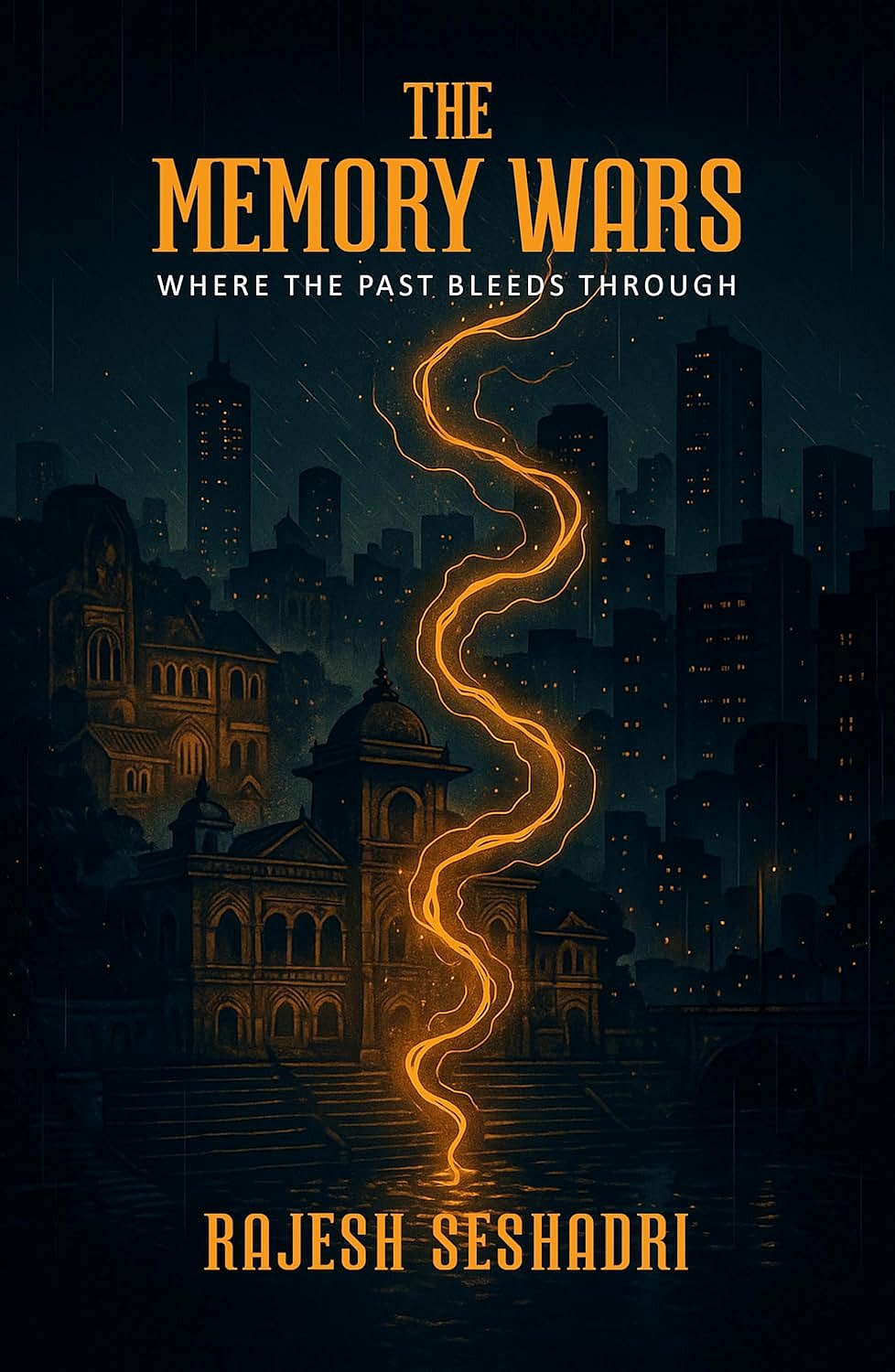
Book: The Memory Wars: Where The Past Bleeds Through
Author: Rajesh Seshadri
Publisher: APK Publishers
Price: Rs 299
Pages: 236

