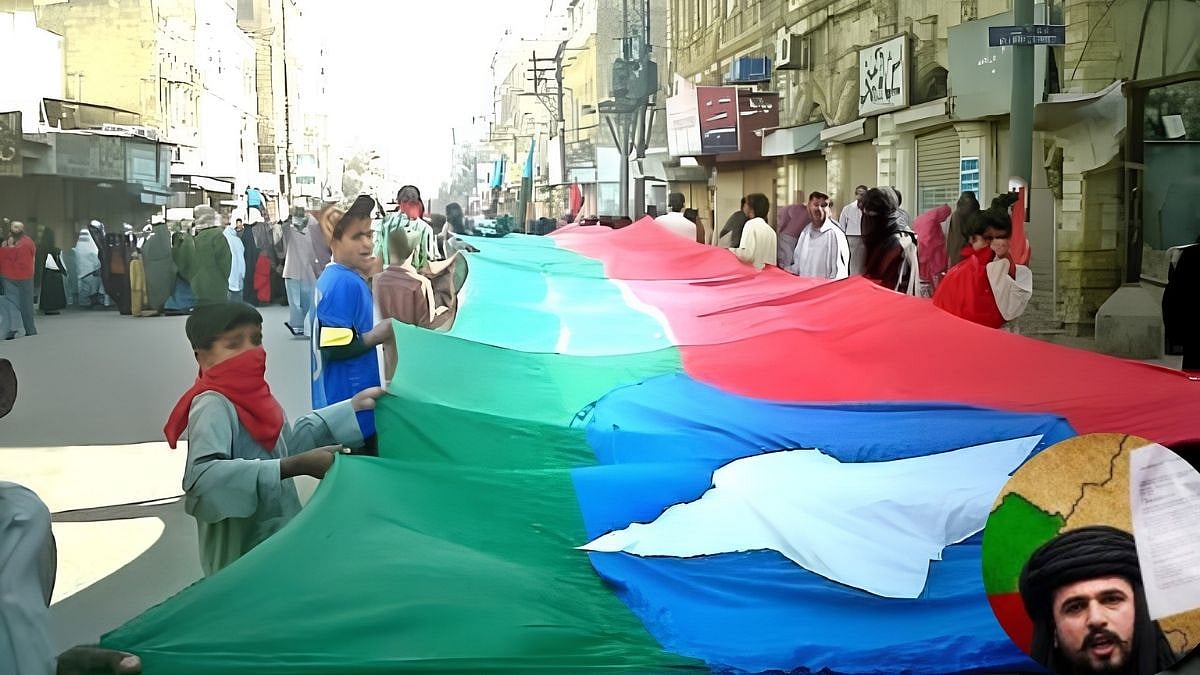
The self-proclaimed Republic of Balochistan has renewed its independence campaign by declaring August 11 as Balochistan's Independence Day and calling on the international community to recognise it as a sovereign state. It is a date that holds deep historical significance for many Baloch nationalists. The observance is linked to events that took place in 1947, when the princely State of Kalat, which covered much of present-day Balochistan, declared itself independent following the end of British colonial rule in the Indian subcontinent. Let's decode the symbolic significance of August 11.
Balochistan declares Independence Day
The self-proclaimed "Republic of Balochistan" has declared August 11 as its "Independence Day", three days before Pakistan celebrates its Independence Day on August 14. The news of the declaration of independence comes weeks after it declared independence from Pakistan, urging Baloch communities worldwide to mark the occasion.
Every year on August 11, Baloch nationalist groups and activists observe the day as a symbol of what they describe as Balochistan's brief period of sovereignty before its integration into Pakistan in 1948. While Pakistan considers Balochistan an integral part of the country.
Symbolic significance of August 11
On August 11, 1947, the Khan of Kalat declared the state's independence after the British withdrew. Kalat maintained that it had a treaty relationship with the British Crown rather than being a directly administered province of British India. Following the declaration, Kalat functioned as a separate entity for several months.
However, the political situation changed in 1948. On March 27, 1948, the Khan of Kalat signed the Instrument of Accession to Pakistan, leading to the integration of Kalat into the newly formed country. Pakistan maintains that the accession was legal and final. In contrast, many Baloch nationalist groups argue that the accession was carried out under pressure and continue to view August 11 as the true day of Balochistan's independence.
Autonomy demands continue
The differing interpretations of these historical events remain at the heart of the long-running Baloch nationalist movement. Over the decades, some groups have demanded greater provincial autonomy, while others have sought complete independence. The region has also witnessed periods of insurgency, military operations, and political unrest.
Today, August 11 is commemorated by several Baloch organisations and activists through rallies, public meetings, and campaigns to highlight their historical narrative.
What is the Khan of Kalat?
The Khan of Kalat is the historical title of the former Brahui-Baloch rulers of the Khanate of Kalat. It is a princely state that was founded in 1666 in the modern-day Balochistan province of Pakistan. Mir Ahmad Yar Khan was the final official ruler, serving until the state was dissolved.

