
Have you noticed that you feel that it was January was last month and somehow, it’s already June. If you've ever caught yourself saying, “Where did this year go?”, you're not alone. One of the most common experiences of adulthood is the feeling that time is speeding up. The good news? The clock isn't actually moving faster. The strange sensation comes from the way our brains perceive time.
It’s a first
One reason childhood feels so long is that children are constantly encountering new experiences. Think about it. Your first day of school, first sleepover, first crush, first family vacation — everything is fresh and exciting. Because these experiences are new, the brain pays close attention and stores them as detailed memories. Those memories create the impression of a long, eventful period. There were so many milestones that time feels stretched out.
As adults, however, life often becomes more predictable. We wake up, go to work or college, meet the same people, follow similar routines, and visit familiar places. Since fewer experiences stand out as unique, the brain records fewer memorable details.
The result? Entire weeks or months can seem to fly by. Without registering each day as unique. Therefore, your brain refuses to store the time that doesn’t offer you new experiences.
On autopilot
Have you ever reached your destination and barely remembered the journey? Or finished an entire meal but didn’t remember what you ate because you were scrolling your phone? That's your brain operating on autopilot.
Our brains are designed to save energy. Once we learn a task, we stop paying close attention to it. This is useful for everyday life, but it comes with a side effect: routine days often blend together.
When every Monday looks like the previous Monday, there are fewer mental markers helping us track the passage of time. Looking back, those days merge into one large blur. In a strange way, routine makes life easier while simultaneously making it feel shorter.
“It is a very typical aging syndrome,” says Dr. Divyangana, counsellor, Ranchi. “Our brain is wired to record newer stuff. As we age, what we don’t find new or enjoy, gets pushed back. In the process, the time is blurred as well.”
Mathematics
There is also a fascinating theory involving simple proportions. When you're ten years old, one year represents ten percent of your entire life. That's a significant amount of time. By the time you're twenty, a year accounts for only five percent of your life. At forty, it's just two and a half percent.
Each passing year becomes a smaller fraction of your total life experience. Some psychologists believe this is one reason years seem to pass more quickly as we age. It's similar to adding one spoonful of water to a glass versus adding it to a swimming pool. The amount is the same, but its relative impact feels very different.
Social media
Modern technology may also be affecting our perception of time. Social media platforms are designed to keep our attention. One short video becomes ten. One quick check of messages turns into forty-five minutes of scrolling. Because this activity is often passive, the brain doesn't create strong memories of it. Later, when we try to recall how we spent our time, there isn't much to remember. That's why an evening spent endlessly scrolling can feel like it disappeared, while an evening spent trying something new often feels longer and more meaningful.
Can you slow time down?
Not literally. But you can make it feel slower. The secret is novelty. Learning a skill, travelling somewhere unfamiliar, meeting new people, reading different kinds of books, or simply changing your daily routine can make the brain pay more attention. Attention creates memories, and memories shape our perception of time.
Dr. Rajendra Barve, psychiatrist and soft-skill coach, Mumbai, says, “As we age, the nervous system slows down. And the time perception becomes reversely proportional. Because the elasticity of the brain and the ability to store also goes down. If you learn a new skill, or do something that’s out of the box, then your brain cells and the connections are charged. They make you feel that you been occupied for a long time.”
He adds, “It can happen to youngsters too. When they say ‘I have had a long day’ usually means that they have spent it productively doing things that needed attention and focus. Therefore, it seemed long.”
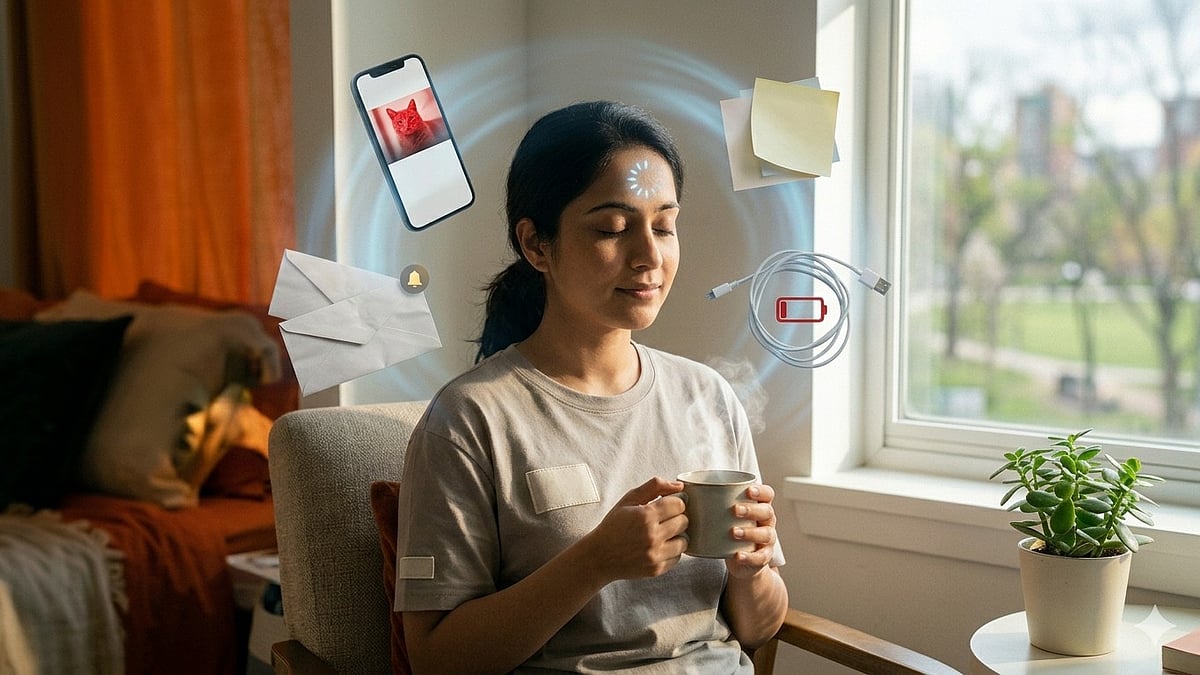
Perhaps time doesn't speed up as we get older. Perhaps we simply stop noticing it. The moments that feel longest are usually the ones we're fully present for—not multitasking, not scrolling, not rushing to the next thing.
Secret to slow down time is to be present in the moment and do one thing at a time. Slow down your mind and the time will slow down for you.
So, if this year already feels like it's flying by, try giving your brain something new to remember. While none of us can slow the clock, we can make our days richer, more interesting, and far more memorable. And sometimes, that's the closest thing to slowing time down.

