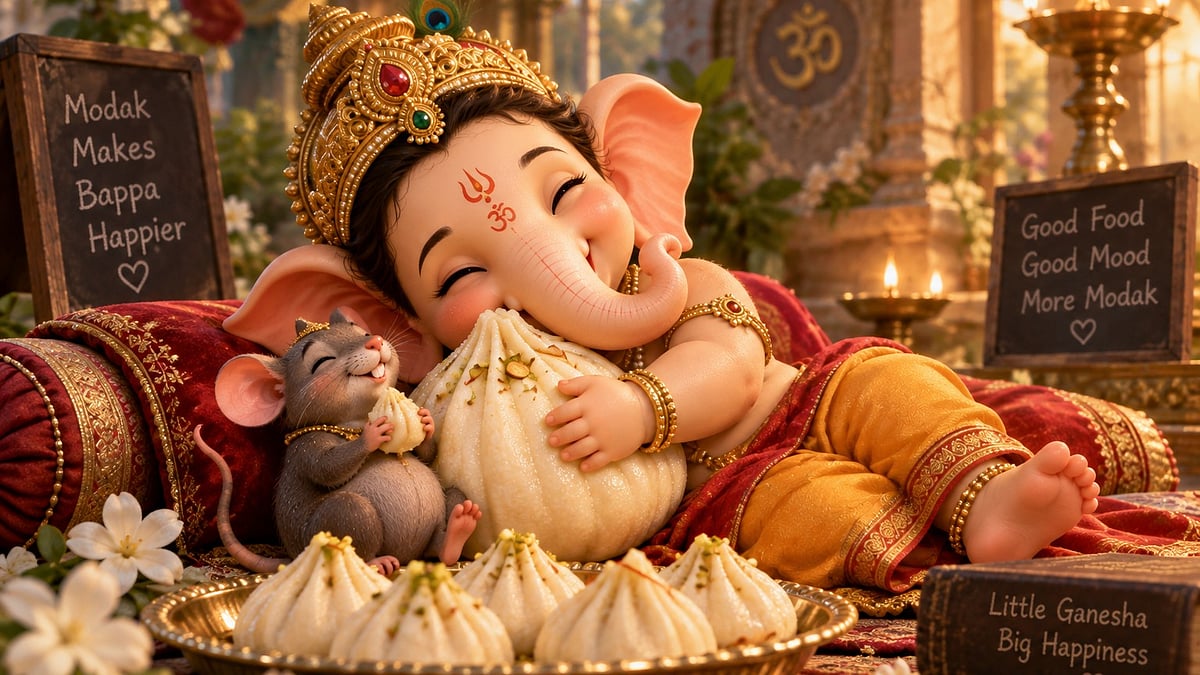
Legend of Anasuya's Feast
According to Hindu mythology, Lord Shiva, Goddess Parvati, and young Ganesha visited the hermitage of Sage Atri and his wife, Anasuya. Anasuya served feast after feast, but Ganesha's immense appetite remained unappeased. Finally, she served a small, sweet dumpling—the modak. Upon eating a single modak, Ganesha burped with satisfaction, signaling he was completely full, which in turn satiated Lord Shiva as well.
Symbol of Divine Knowledge
Etymologically, "Moda" means joy, bliss, or happiness, while "Ka" means a small part or piece. Spiritually, the modak represents spiritual wisdom (Gyana). Its pointed top symbolizes the focused pursuit of higher knowledge, while the outer shell hides the sweet inner filling (coconut and jaggery), representing the hidden bliss of self-realization.
Broken Tusk Legend
Another popular tale narrates that after Ganesha broke his tusk to write the epic Mahabharata (or during his duel with Parashurama), he could no longer chew hard foods easily. Soft, steamed sweet dumplings (Ukadiche Modak) became his favorite effortless delicacy.

