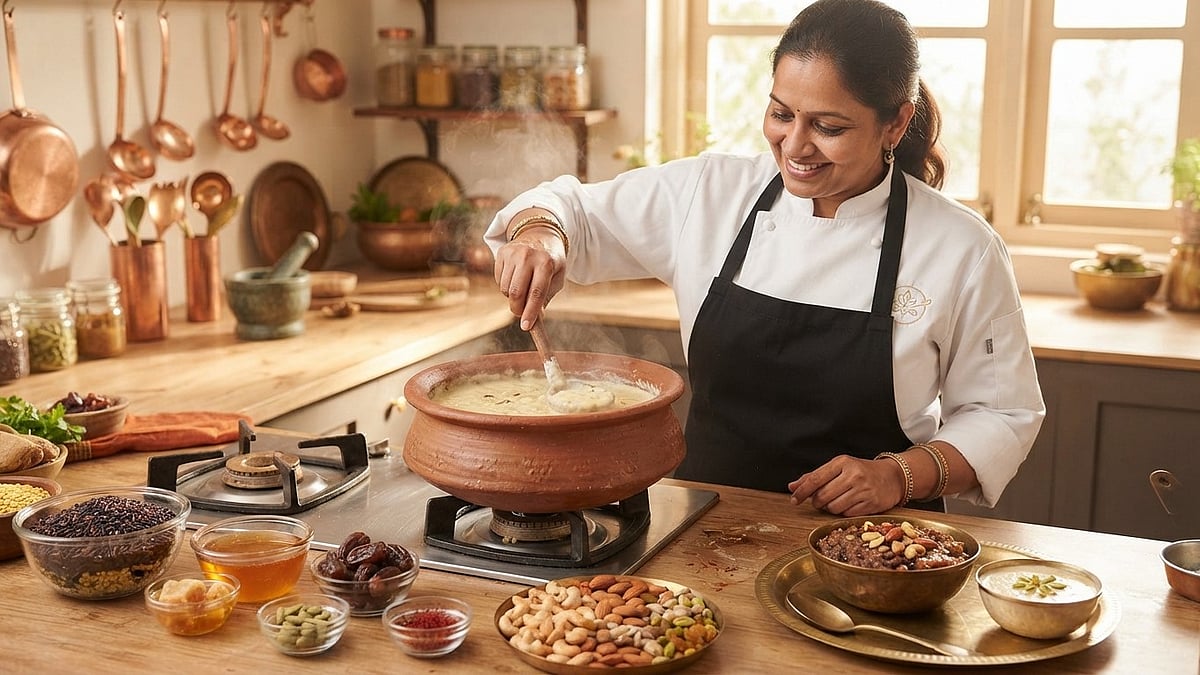
Festivals are incomplete without the aroma of rice simmering in milk. But between blood sugar spikes and heavy creams, most of us end up skipping the very desserts we grew up on.
This festive season, we’re changing that. We got chefs from across India to create lighter, healthier versions of six star Indian rice desserts — from North India’s Phirni and Kheer to South India’s Sakkarai Pongal and Ven Pongal, and West India’s Doodhpak.
Bonus: it’s a good time to celebrate them. TasteAtlas just ranked 6 Indian rice puddings in its Top 32 globally. So go ahead, serve seconds. These versions are festive, flavorful, and made to be relished guilt-free. Read on:
Phirni (rank 3)
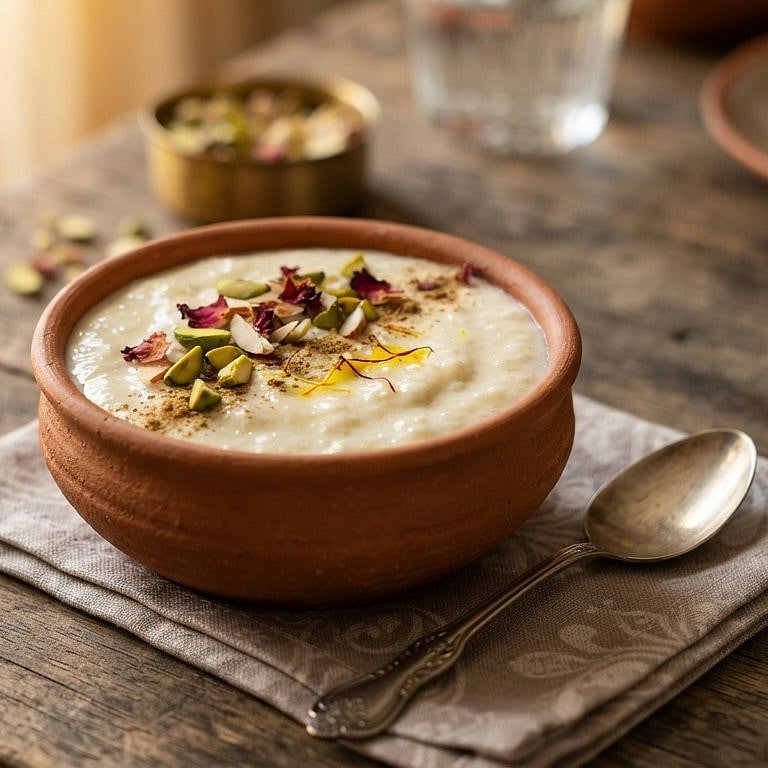
A classic North Indian rice pudding known for its thick, creamy and grainy texture, phirni is made by slow-cooking coarsely ground basmati rice in full-fat milk. Sharing how phirni can be given a healthy twist, Rohit Dubey, Executive Chef, Pilibhit House, IHCL SeleQtions Haridwar, says, “One can try Jhingore ki Phirni, a dessert inspired by the traditional flavours of Uttarakhand. Made with jhingora (barnyard millet), this preparation reflects the simplicity and nourishment of Himalayan cuisine. A staple in local diets for generations, jhingora is naturally gluten-free, light, and sustainably grown in the hills. Slow-cooked in milk until creamy, delicately sweetened, and infused with cardamom, the phirni is finished with a garnish of nuts, offering a smooth texture with a subtle earthy flavour.”
Kheer (rank 7)
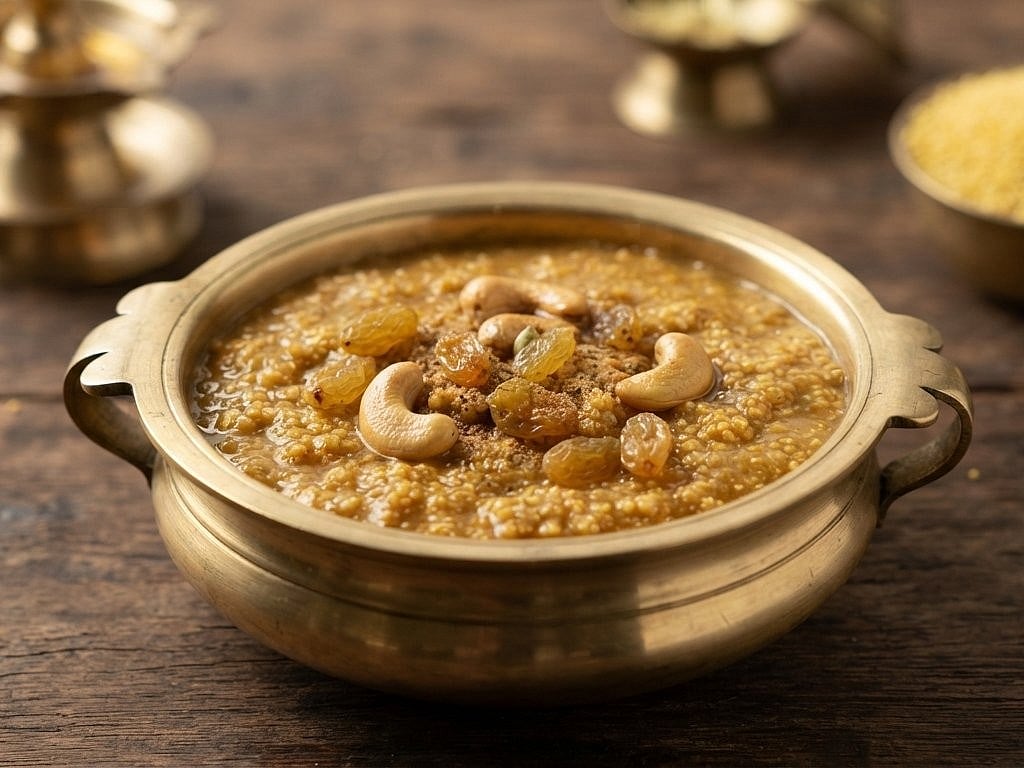
Kheer, also known as Payasam in South India, is believed to be one of the oldest desserts in the Indian subcontinent. Historians trace its origins back more than 2,000 years, where rice and milk were slowly cooked together in ancient Indian kitchens and temples. Over centuries, the dish evolved across different regions of India, each adding its own local touch – rice in the north, millets in Tamil Nadu, vermicelli in festive homes, and jaggery-based variations in the south. To give your regular kheer a healthy twist, Chef Suresh, Head Chef, Marriott Executive Apartments Hyderabad, suggests trying the Thinai Payasam: “It’s a beautiful example of how ancient culinary wisdom can be adapted for today’s lifestyle. By replacing conventional ingredients with nutrient-dense alternatives, we preserve the soul of the traditional kheer while making it lighter, more balanced, and aligned with modern wellness choices. Unlike conventional kheer made with polished rice and refined sugar, this version uses foxtail millet, lending the dessert a nutty texture and superior nutritional profile. To make nutritious foxtail millet (thinai) pudding, rinse half a cup of millet, dry roast it for a few minutes until fragrant. Cook the millet in 1.5 cups of water until it reaches a soft, mushy consistency. Once cooked, pour in 1.5 cups of thin coconut milk and let it simmer. For sweetness, stir in half a cup of date paste. You can optionally add 100 ml low-fat milk to balance the richness. Season with cardamom powder, a pinch of dry ginger and a handful of roasted cashews and raisins.”
Sakkarai Pongal (rank 15)
Pic: Wikimedia Commons
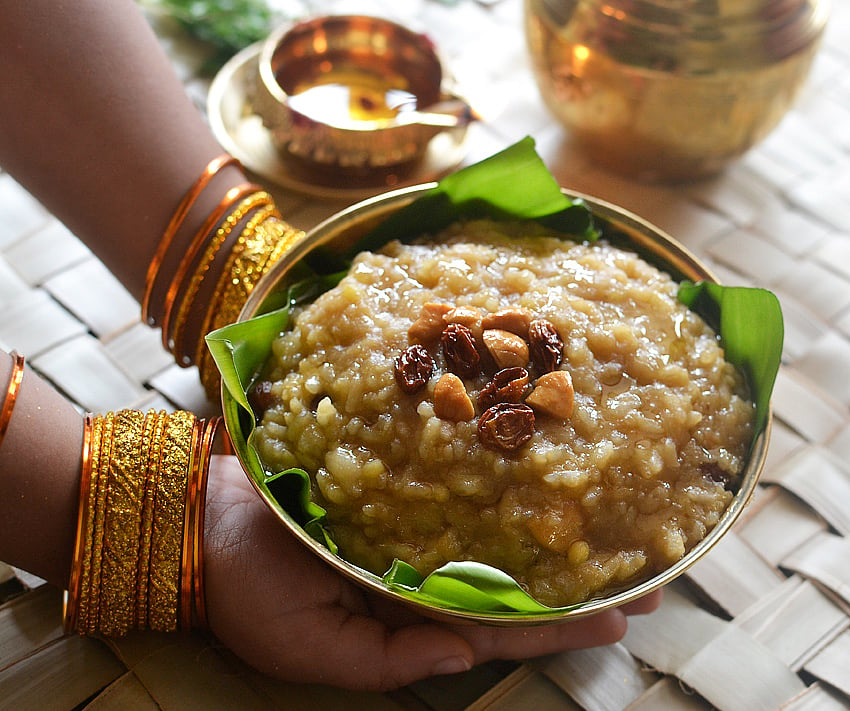
The traditional Sakkarai Pongal in Tamil Nadu is typically made with regular raw rice, moong dal, jaggery, ghee, and cardamom. However, substituting organic black rice is a wonderful upgrade. Black rice, known as an antioxidant powerhouse with high fibre content, more protein and low glycemic index, imparts a delightful nutty flavour and a pleasantly chewy texture. It takes longer to cook than white rice, so it’s best to soak it overnight. “Use 1 cup black rice and 4 tbsp moong dal. Soak the rice overnight. Pressure cook with 4-5 cups of water for 6-7 whistles. Once cooked, add the jaggery syrup, ghee, cardamom, roasted cashews, and raisins as usual. The result is a darker, nuttier and a delicious version of the classic Sakkarai Pongal,” says Chef Pankaj Singh, Executive Chef, Fateh Vilas by Fateh Collection, Udaipur.
Pongal (Rank 19)
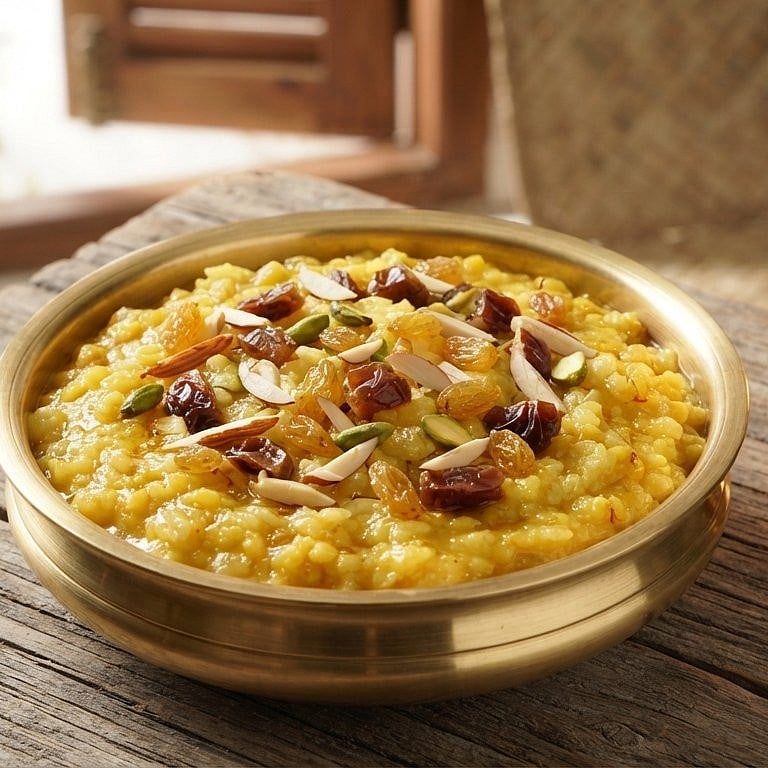
The rich history of Pongal lies in its simplicity and connection to local ingredients. Traditionally made with newly harvested rice, ghee, jaggery and cardamom, it reflects the spirit of seasonal eating and mindful cooking that Indian cuisine has always embraced. “To give Pongal a healthier and more contemporary twist, there are beautiful natural alternatives to refined sugar. Using jaggery instead of white sugar makes the dessert richer in minerals and deeper in flavour. Adding dates not only enhances sweetness naturally, but also introduces fibre and nutrients, reducing the need for excess sweeteners,” says Chef Ravi Partani, La Estoria IHCL SeleQtions, Goa. He adds, “Dry roast 4 tbsp moong dal lightly until aromatic. Pressure cook half cup rice and the roasted dal with water until mushy. In a separate pan, heat jaggery (12 tbsp) with ¼ cup water until dissolved. Add 6-8 chopped dates to the jaggery syrup and simmer for 2–3 minutes. Mix the jaggery-date syrup into the cooked rice and dal mixture. Cook on low heat for 5–7 minutes, stirring continuously. Add cardamom powder, saffron, and a spoon of ghee for extra flavour and garnish with roasted dry fruits.”
Ven Pongal (rank 26)
Pic: Pinterest
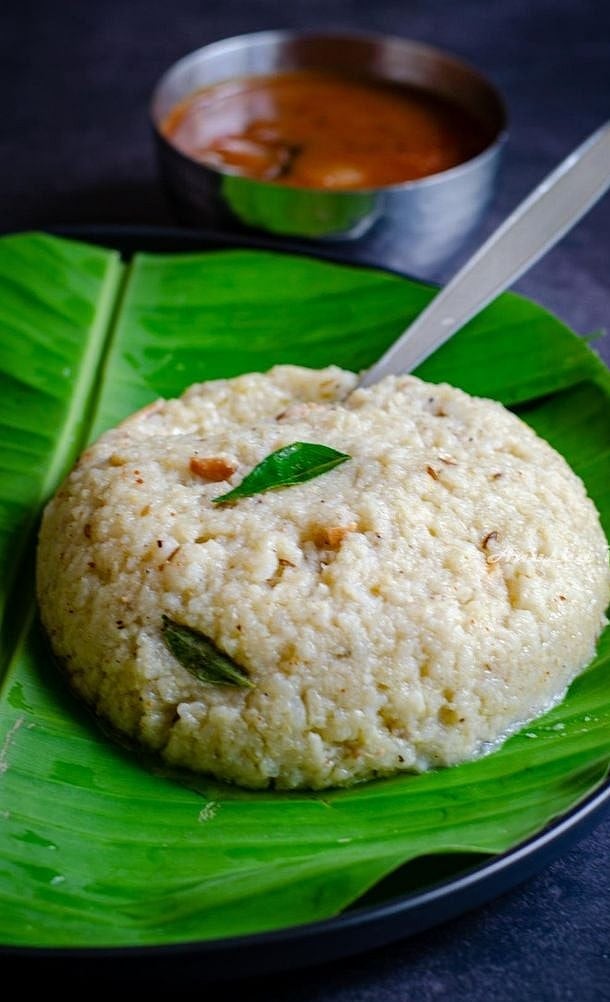
Ven Pongal is comfort food at its finest. With a few mindful changes, it can easily become both gluten-free and vegan without losing its soul. The traditional dish is naturally gluten-free, as it uses rice and moong dal, but the real twist lies in replacing ghee with cold-pressed coconut oil or vegan butter. This not only keeps the dish plant-based, but also adds a subtle layer of flavour. Adding crushed pepper, ginger, cumin, and curry leaves enhances warmth and digestion, making the dish wholesome and nourishing. Chef Madhusudhan Marupilli, Gateway Goa Palolem, says, “To make healthy Ven Pongal, roast half cup moong dal lightly and cook with 1 cup rice in 4 cups of water, until soft. Heat coconut oil (2 tbsp), add 10 cashews, cumin (1 tsp), pepper (1 tsp, crushed), ginger (1 inch, chopped), and curry leaves. Mix the tempering into the cooked rice and dal, add salt, simmer briefly, and serve hot.”
Doodhpak (rank 24)
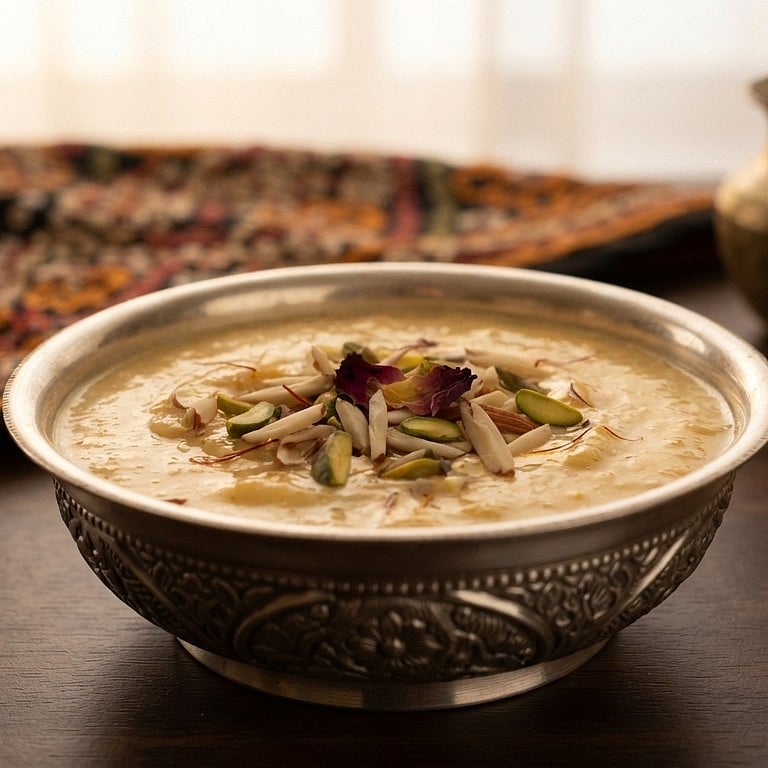
Rooted in Gujarati celebrations, Doodhpak symbolises comfort and togetherness, slowly simmered milk carrying generations of memories. “To make a healthier, yet authentic doodh pak, I begin by heating a mix of low-fat or almond milk in a heavy-bottomed pan, bringing it to a gentle boil before adding a small amount of pre-soaked basmati rice and a touch of millets for a wholesome, fibrous edge. I let it cook gently over low heat, allowing the millets and rice to soften into a creamy texture, stirring frequently to prevent sticking, which lets the milk thicken naturally. Respecting its soul, I avoid white sugar and instead sweeten it with organic jaggery or pureed dates added only towards the end, finished with aromatic saffron, cardamom, and just a hint of nutmeg. The final, lighter version is thickened, fragrant, and garnished with finely chopped nuts, which can be served warm or chilled,” says Amit Rohilla, Executive Chef, The Leela Gandhinagar.

