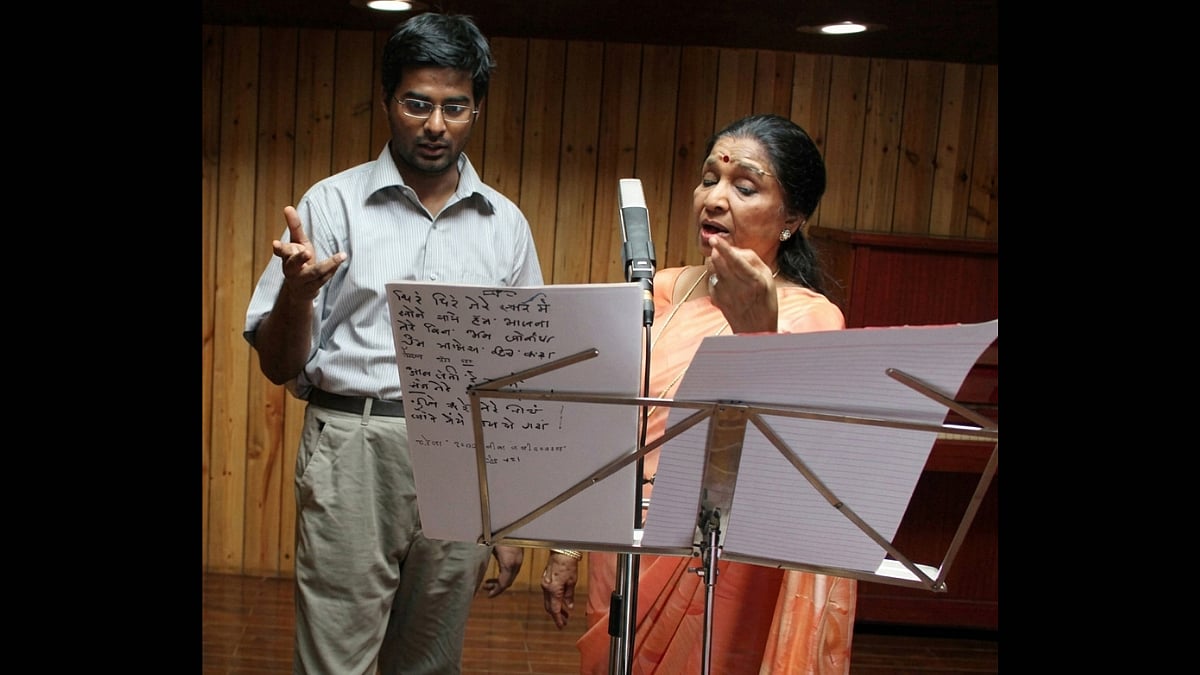
The lens of a camera often acts as a shield, a glass barrier between the director and the subject. But when that subject is Asha Bhosle, the glass doesn’t just shatter; it dissolves into a warm, aromatic invitation to join her world. Looking back at the frames we composed together over thirty-five years, it isn't the technical perfection or the chart-topping success that hits me hardest—it is the silence of her absence and the vibrant noise of the memories she left behind. To the world, she was the Queen of Indipop and a playback phenomenon; to me, she was my first muse, a collaborator who possessed the rare alchemy of being a global titan with zero ego.
My journey with Ashatai began as a rookie journalist, but it evolved into a creative partnership that defined my career as a filmmaker. Directing her was never just about "lights, camera, action." It was an education in grace. I remember the ambitious days of the Asha and Friends album for the music company MAUJ. We were bringing together worlds that rarely collided: the gritty charm of Sanjay Dutt, the lightning-fast pace of Australian pacer Brett Lee, and the ethereal screen presence of Urmila Matondkar.
The logistics were a nightmare, but Ashatai was the anchor. I remember the exact moment on set when the choreography needed to happen. There I was, a young director, standing just out of frame, "shadowing" the dance steps for her. I wasn't just directing; I was moving with her, beat for beat. To see a legend who had worked with the likes of O.P. Nayyar and R.D. Burman look to me for her cues—to mirror my movements with such earnest trust—was the ultimate badge of honor. We were in sync, not just in movement, but in spirit.
The Architect of a Global Vision
One of our most significant collaborations was the song for the Precious Platinum album, which eventually reached No. 37 on the world charts—a staggering feat for Indian independent music at the time. I shot that video for Sa Re Gama, featuring boxer Akhil Kumar and model Ankeeta Mukherjee. Even amidst the high-pressure environment of a global production, Ashatai remained the most grounded person in the room.
She had a way of elevating everyone around her. She didn't just perform; she advocated for her team. I remember her sitting before a bank of microphones, that evergreen smile in place, telling the world that I was the one who brought the vision to life. She didn't have to do that. She was Asha Bhosle; she owned the sunlight. Yet, she chose to step aside and shine the spotlight on me, publicly crediting me for bringing together "friends" like Sanju and Brett Lee.
Speaking of Sanju, the stories from those recording sessions are etched in my mind. When we first called Sanjay Dutt to tell him Ashaji wanted to collaborate, he thought it was a call from the actress Asha Parekh regarding a Cine Artists Association meeting! When he realized it was the legendary singer, he nearly fell off his chair. Ashatai, sensing his nerves, immediately put him at ease by reminiscing about how she had sung with his father, the legendary Sunil Dutt. She did the same for Brett Lee, who was initially worried about being "linked" to a lady while his wife was expecting. Ashatai, then 72, laughed it off, pointing out the 43-year age gap and playfully suggesting that if he had a son, he should name him "Sachin"—not after S.D. Burman, but after her favorite cricketer, Sachin Tendulkar.
Beyond the Recording Booth
What truly stays with me isn't just the music, but the woman behind the microphone. Ashatai treated every member of the crew like family. It wasn't uncommon for her to arrive for a 6:00 AM shoot at Mukesh Mills with homemade breakfast in hand. She made sure "her boys"—the technicians, the light men, the assistants—were fed before the cameras rolled.
As a vegetarian, I was often the subject of her playful teasing. Both she and her sister, the late Lata Mangeshkar, were formidable cooks. I remember the warmth of their home and the "punishment" of smelling their incredible non-vegetarian dishes while being unable to taste them. There was a domesticity to her greatness that made the legend feel human.
Even the way she navigated her professional "rivalry" with Lata Didi was handled with a sharp, practical wit. She once told me, "We sang 80 songs together. How can she be a competitor? How can one have two Taj Mahals?" That realization is what drove her to become the rebel. While Lata Didi was the voice of the soul, Ashatai became the voice of the spirit—the one who took on the "bold" tracks, the Westernized modulations, and the experimental arrangements that others feared.
The Final Symmetry
As the years passed, her brilliance never dimmed. Even at 92, she was collaborating with modern icons like Damon Albarn and the Gorillaz for The Shadowy Light. It was a testament to her technical range that she could reproduce the same psychedelic magic in 2026 that she had mastered with Panchamda in the 70s.
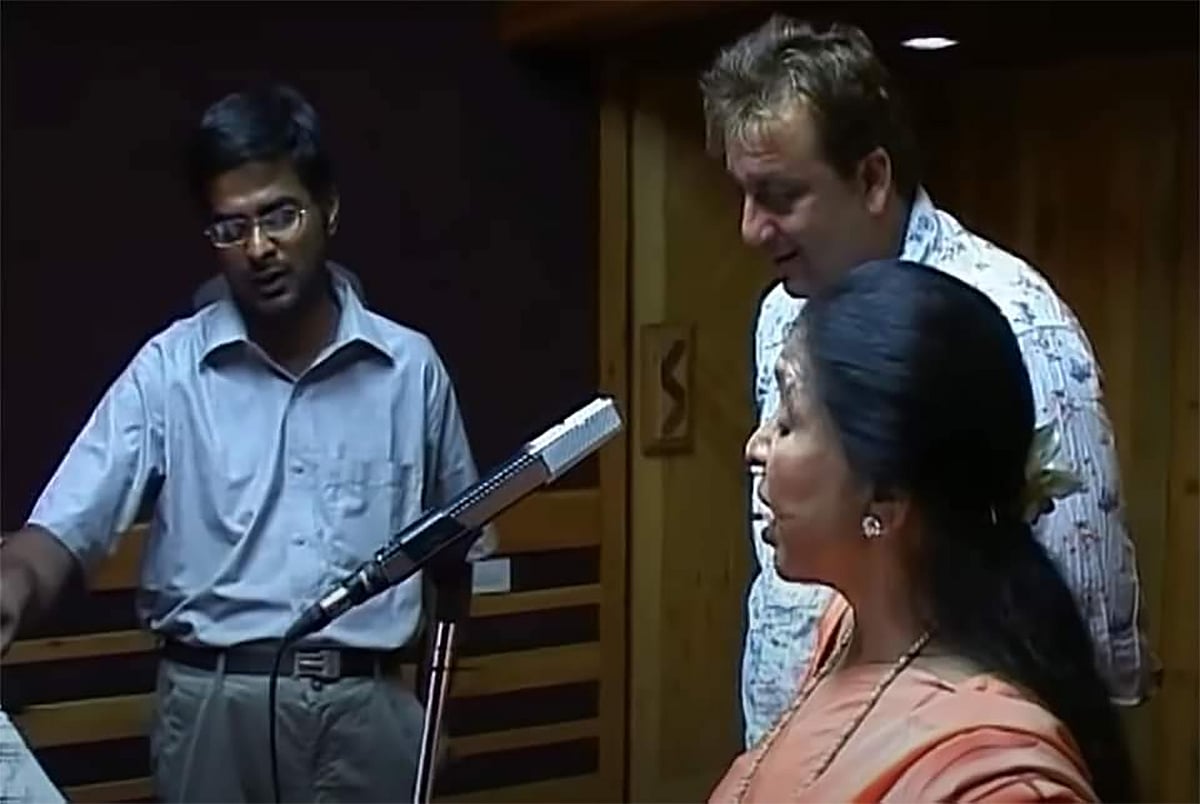
Her life was one of defiance and discipline. From walking out of her home at 16 to feed her children to becoming a global culinary and musical brand, she navigated every controversy with a "rebel" heart. Whether she was confronting industry standards or charming a French audience in Paris who clapped in a 2+3 rhythm for an encore, she remained authentically herself.
The symmetry of her end is perhaps the most poetic part of her story. Both she and Lata Didi passed away at the age of 92, four years apart, mirroring their four-year age difference. Both left us on a Sunday at Breach Candy Hospital. It is as if fate itself decided that their final notes should be in perfect harmony.
As I watch the clips of our old shoots today, a specific line from her song feels like a permanent ache: Abhi na jao chhodkar... The world lost a singer who could sing anything from a bhajan to a cabaret, but I lost the woman who taught me that the greatest artists are also the kindest souls.
She may be gone, but every time I see a camera move or hear a beat we once shared, I feel her right there, "shadowing" my heart just as I once shadowed her dance. Ashatai didn't just provide the soundtrack to our lives; she provided the blueprint for how to live with courage, laughter, and an unwavering loyalty to one's craft. The "Shadowy Light" she leaves behind will never truly fade.
(S Ramachandran is a journalist, filmmaker, author and educationist)

