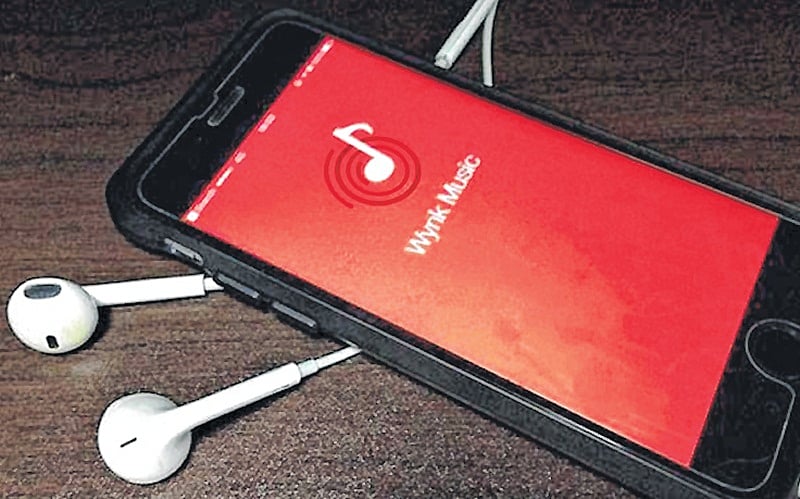
Mumbai: Compulsory licences can be claimed to play copyrighted songs only over traditional platforms like television, radio etc. and not over the internet, ruled the Bombay High Court.
A division bench of Justices Gautam Patel and Gauri Godse said that the provision for compulsory statutory licences under Section 31D (compulsory licencing) of the Copyright Act is restricted only to traditional non-internet-based broadcasting services like radio, television and stage performances and not internet-based services.
The judgment was passed on October 20, 2022, but uploaded on the High Court website on September 29, 2023.

Appeal filed by Bharati Airtel & its digital music app Wynk
The HC was hearing an appeal filed by Bharati Airtel and its digital music app Wynk Limited challenging the ruling of the single judge which said that they cannot store or use music owned by Tips Industries without its consent, merely by claiming the shield of statutory broadcasting rights under Section 31D of the Copyright Act.
In certain circumstances, Section 31D allows anyone wanting to broadcast content publicly to do so upon informing the copyright holder of the same (notice) and after payment of royalties prescribed by the Copyright Appellate Board.
The division bench opined that services like radio and television provide content where the user could only tune in to access the content and had no control over the same. Whereas, internet-based services like Wynk provide for downloading digital audio files without purchasing them, though this feature was available only to users who paid additional fees to purchase the application.
Making an audio file available offline (through downloads) fit the definition of commercial rental, the bench said.
April 2017 negotiations between Wynk and Tips
Hence, the statutory licences under Section 31D would have no application to any internet-based service. “We affirm the finding that statutory licences under Section 31D are restricted to traditional non-internet based radio and television broadcasting and performances alone. Section 31D has no application to any internet-based offering,” the bench said in its 58-page judgment.
In April 2017, negotiations between Wynk and Tips, for the use of copyrighted songs on Wynk’s portal failed.
Tips, therefore, demanded that Wynk stop using songs whose copyright lay with Tips. It also issues a cease and desist notice demanding that Wynk deactivate these songs from its portal from May 10, 2017 onwards.
However, the music app did not comply with this and allegedly exploited these songs for 10 more months.
Tips then demanded a royalty of Rs 2.83 crore in November 2017 for exploitation of its copyright.
Wynk then invoked its rights as a ‘broadcaster’ under Section 31D and unilaterally decided that the royalty payable for the period between September 2016 to November 2017 was only Rs 1.41 crore.
Tips approached the HC seeking direction to restrain Wynk from hosting its songs.
Justice SJ Kathawala (as he was then) ruled in Tips’ favour which was challenged by Wynk before the division bench.

