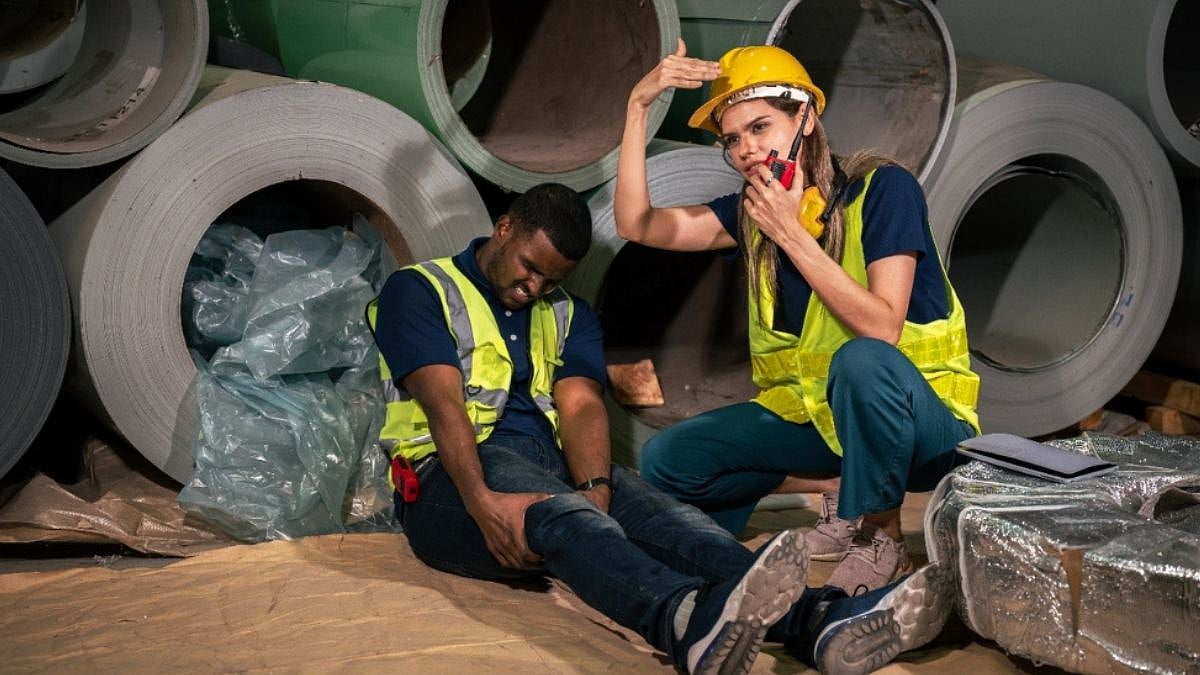
As modern businesses adopt flexible models, people are hired as needed for specific tasks, and the issue of liability in the event of physical injuries is becoming increasingly relevant. There is clarity when it comes to an employee. They fall under employer statutory protection. But when an independent contractor gets injured while working for a company, who is responsible for the payment?
Is it the company hiring the contractor? The contractor themselves or the contracting agency that supplied this worker? Understanding this helps businesses build compliance clarity and also select the right protection tools, such as workmen's compensation policy online, to avoid legal and financial shocks.
Who is an Independent Contractor?
An independent contractor is an individual or entity hired to perform a job, task, or project for consideration but not under direct employment. They are hired under a contract for service, not a contract of service. Unlike employees, they typically choose how to perform the work, decide execution methods and often use their own tools and resources.
An employee works under direct employer supervision, follows employer rules and is legally entitled to statutory protection. But an independent contractor is seen as a separate business entity in the eyes of the law, even if they are a single person.
Legal Liability Basics When Independent Contractors Get Injured
Workers’ Compensation Insurance is meant for employees. Therefore, most standard WC policies normally do not cover independent contractors. That means if a contractor gets hurt, the liability structure is not automatically straightforward because the statutory labour insurance policy protections are typically tied to employer-employee relationships. The biggest complexity in the real world is identifying at which point a contractor’s injury becomes the organisation’s legal risk.
When Can Employers Be Liable for a Contractor’s Injury?
. If the contractor is misclassified
If an individual is working, behaving and functioning like a regular employee but has simply been labelled as a “contractor” because it is cheaper or easier, regulators treat this as misclassification. In such cases, liability resembles that of an employee.
. If unsafe site conditions caused injury
If the work environment, including plant, warehouse, site or equipment, was unsafe and that caused the injury, liability can rest on the site owner or employer.
. Negligence in providing safety equipment
If the employer failed to provide safety instructions, training, PPE or hazard communication necessary to perform the job safely, they can be held liable.
When is the Contractor Themselves Responsible for Their Injury?
If the contractor is a registered entity, supervises their own work methods, uses their own tools and has their own cover or occupational cover, the responsibility typically falls on the contractor.
Especially in project industries such as electrical repairs, fabrication, civil work, and specialised installations, independent contractors usually accept their own risk and responsibility through their commercial agreements.
Importance of Contract Terms or Indemnity Clause
The clarity of liability starts with paperwork, not during the claim. Contractors must clearly define who bears the risk, which party has their own cover, whether the contractor is required to carry the personal accidental insurance and who pays if a claim arises. Indemnity clauses, disclaimers, equipment usage terms and hazard communication clauses reduce disputes and avoid ambiguity later.
Reduce the Liability Uncertainties with TATA AIG
Independent contractor injury liability is complex, and courts always analyse real work conditions, not just titles. The safer approach for organisations is to rely on robust risk transfer mechanisms. TATA AIG enables companies to secure workforce protection smartly, including evaluating risk and selecting suitable coverage structures like a workmen’s compensation policy online. Their expertise helps businesses protect against financial shocks and maintain compliance preparedness, while also improving workplace safety culture supported by the right labour insurance policy approach.

