Imagine the global launch of an electric vehicle as an epic journey where innovation meets real-world grit. Behind the scenes, a passionate team orchestrates a high-stakes dance of virtual simulations and data science, turning vision into reality long before the first car hits the street.
This digital choreography shaves months off development, slices costs, and turns the complex challenge of global markets into a harmonious, confident performance. It’s a story of transformation, where vehicles are powered not just by batteries, but by the mastery of virtual engineering and trailblazing leadership.
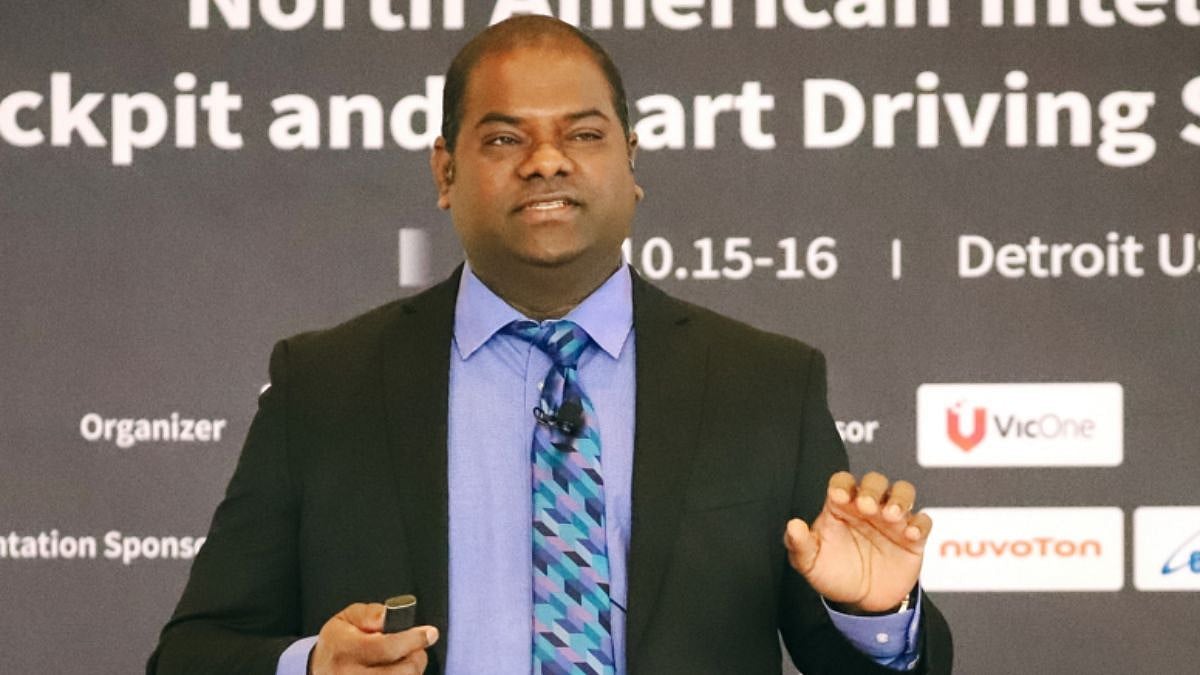
“With the EVs becoming a global phenomenon, launching an electric vehicle (EV) globally is no small task. It requires balancing technical innovation with real-world performance”, says Vijayachandar Sanikal, a virtual Simulation Integration leader deeply involved in global EV development. His career reflects lessons on how simulation, collaboration, and test and compliance-driven methods can make global launches smoother and more predictable.
Sanikal has played a crucial role in enabling the global rollout of next-generation battery electric vehicles (BEVs). His work focused on virtual integration, ensuring that each component, from battery cooling systems to performance control algorithms, aligns with vehicle targets like acceleration, range, and energy efficiency. "We used digital twins and Model-/Software-/Hardware-in-the-Loop systems to ensure every feature, thermal, software, and energy, was ready for launch across different markets," he added.
At the heart of his contribution lies a "virtual-first" validation approach. Instead of relying solely on physical prototypes, the expert and his teams used simulations and synthetic data to pre-tune vehicle systems. By combining physics-based modelling/simulation with bench testing, they were able to refine HVAC controls, battery cooling strategies, and other high/low voltage system operation points long before the vehicles hit test tracks. This method not only reduced development time but also minimized risks associated with last-minute discoveries.
The results were observable. By utilizing virtual testing and automated regression suites, the team reduced reliance on physical prototype builds, achievied more than 10% reduction in the pre‑PD prototype budget and saving substantial costs ahead of production launch. Calibration efforts were streamlined through a closed-loop cycle of “ Simulate → Synthesize → Calibrate → Verify ”, leading to faster and more efficient outcomes.
The leader also led the development of enterprise-wide methods that improved reusability, consistency, and global alignment. He helped standardize duty-cycle libraries inspired by regulatory norms used across the world, created market-specific scenario templates, and established quality gates within continuous validation pipelines. These frameworks allowed engineering teams to reuse validated scenarios across trims and regions, reducing redundant testing and ensuring that global variants behaved consistently.
Among his major initiatives were the Global Duty-Cycle and Climate Library, which captured region-specific drive and climate patterns for regulatory validation, and the Thermal/Energy Digital Twins, which simulated how vehicles would perform in extreme conditions such as hot soaks or fast charging (DCFC). Another key effort, the SiL/HiL Regression Farm, enabled teams to automatically replay synthetic edge cases and identify regressions before physical testing. He also pioneered Bench and Synthetic Anomaly Mining, a method that combines lab data with simulations to detect unstable operating regions early and direct on-road testing toward the most critical scenarios.
These advancements did not come without challenges. One persistent issue was the lack of real-world edge-case data for rare thermal and performance conditions. Sanikal and his teams addressed this by generating physics-informed synthetic data constrained by bench measurements, ensuring both realism and accuracy. As vehicle configurations evolved rapidly, he introduced configuration-aware model versioning and re-parameterization scripts to keep simulations synchronized. Managing multiple global variants presented another challenge, one he addressed through scenario templates and model governance practices that captured regional differences without disrupting schedules. He also implemented single-source dashboards and validation gate criteria that aligned CAE, controls, and hardware activities from program kickoff onward.
His technical and process innovations have been reflected in his published works. These include "Machine Learning Models for Predictive Maintenance of EV Thermal Systems: Reducing Catastrophic Failure Risk and "Utilization of Bench Testing in Vehicle Thermal System Development for Extreme Cold Ambient Conditions". Both publications explore the application of virtual testing and predictive analytics to improve EV reliability and thermal safety.
Looking ahead, the strategist believes the future of EV engineering lies in shift-left validation, moving testing and decision-making earlier in the design process. He emphasizes the importance of decision-grade digital twins, continuous calibration loops, global variant management, homologation by design, edge–cloud co-design, thermal first principles, and testing charging ecosystem fit. Further, he also suggests holding a weekly virtual review meeting with all key teams, defining the right KPIs and getting updates so that the workflow remains smooth.
Through his leadership, Vijayachandar Sanikal demonstrates how virtual engineering isn't just about a technical tool; it's an enabler, along with proper testing and strategies, that makes global EV launches faster, smarter, and more reliable. His story suggests that the path to global EV success starts in the virtual lab, long before the first vehicle hits the road.

