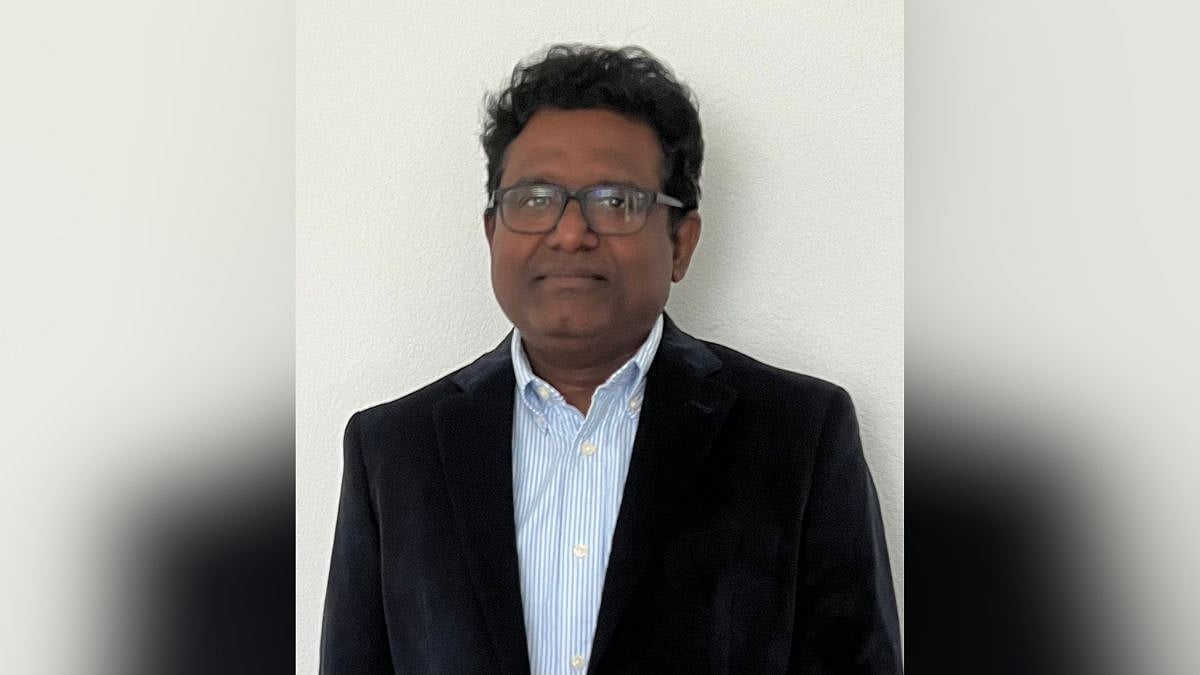
In today’s interconnected world, safeguarding identity, access, and data has become central to the trust that organizations seek to build. With more than sixteen years of experience in identity and access management, cloud security, and IT operations, Venkata Ramesh Induru has established himself as a leader capable of managing complexity while driving innovation. Currently serving as Operations Lead and Associate Manager in IT operations, he has guided multiple large-scale implementations in identity systems, privileged access solutions, and enterprise security infrastructures. His journey spans diverse roles where he has consistently solved challenges in authentication, authorization, and secure integration, while also mentoring teams to deliver reliability under pressure.
Alongside his industrial achievements, he has contributed extensively to academic research and knowledge creation. His work covers a wide spectrum of cybersecurity and intelligent systems, including cloud-based healthcare, fraud detection in banking, e-commerce analytics, intrusion detection, and AI-driven automation. With more than thirty peer-reviewed journals, several conference papers, book chapters, and a patent to his credit, Induru blends practice with research, making him a thought leader in the evolving landscape of secure digital ecosystems. He was also recognized with the Best Paper Award at the International Conference on Multidisciplinary Research in Science and Technology (ICMRST), an accolade that underscores his outstanding research capabilities and valuable contributions to the field.
In this conversation, he reflects on his professional journey, his guiding principles in leadership, and how his research fuels his practical innovations.
Q: You've led significant initiatives in cloud security, AI, and identity management. Could you tell us about how your work in these areas has evolved and its impact on the industries you serve?
A: Over the years, my work has been focused on creating adaptive, secure systems that manage identity and data protection in a way that balances performance and security. In cloud security and AI, it’s essential to design systems that are not only reactive to threats but can learn and evolve as new risks emerge. My work in identity management has involved integrating multi-layered authentication and AI models to create systems that anticipate potential vulnerabilities while streamlining the user experience. The key is making sure these solutions provide value without compromising on security or compliance.
Q: Large-scale security implementations often come with risks of downtime or disruptions. How do you approach minimizing these risks?
A: Risk management begins with preparation. For every deployment, I emphasize detailed planning, fallback strategies, and thorough testing. My approach also relies heavily on structured communication with all stakeholders so that potential disruptions are anticipated well in advance. Having worked in high-stakes environments, I’ve learned that transparency creates confidence. When people know the risks are understood and planned for, it ensures smoother execution and continuity of services.
Q: One of your key contributions has been in AI-powered fraud detection. How have your systems helped organizations improve their security posture?
A: AI-driven solutions in fraud detection are pivotal because they enable real-time analysis and proactive security. In one project, we developed deep learning models to detect fraud patterns and predict security breaches before they occurred. These systems continuously learn from new data, allowing them to stay ahead of evolving threats in sectors like banking and e-commerce. The ability to predict and prevent attacks not only reduces risks but also enhances operational efficiency across these organizations.
Q: Your research covers areas such as intrusion detection, healthcare data security, and fraud analytics. How does your industry experience influence your research?
A: My research ideas often come directly from challenges I encounter in practice. For instance, when working on identity and cloud infrastructures, I observed how evolving threats could bypass traditional detection. This inspired research into models that use deep learning, graph neural networks, and hybrid architectures to anticipate and mitigate such risks. Similarly, the need for secure healthcare data systems led me to explore privacy-preserving frameworks in cloud environments. For me, research is not separate from practice; it’s a way to push the boundaries of what we can do in the real world.
Q: Cost optimization and performance improvements have been consistent in your projects. How do you balance efficiency with innovation?
A: Efficiency is not about reducing capabilities, it’s about rethinking how we deliver value. In many of my projects, we replaced resource-heavy frameworks with optimized designs that were not only more cost-effective but also improved performance. Innovation often lies in identifying smarter workflows, automating repetitive tasks, or integrating AI-driven models for prediction and monitoring. The goal is always the same: enhance value without compromising security or reliability.
Q: Many of your publications focus on cloud-based healthcare and financial systems. What excites you most about these domains?
A: Healthcare and financial systems are deeply tied to people’s lives and well-being. These domains face high expectations in terms of privacy, compliance, and trust. What excites me is the opportunity to create frameworks that do more than protect; they empower. Whether it’s through predictive analytics in healthcare for better patient outcomes, or fraud detection in digital banking for safeguarding financial integrity, the impact of these innovations goes beyond technology. It touches lives in meaningful ways.
Q: You’ve authored a patent in edge computing and AI-driven security. How do you see patents complementing your broader work?
A: Patents represent the translation of abstract research into tangible innovation. The one I authored focuses on AI-powered security and load optimization in hierarchical edge computing. It addresses both performance and protection, two key aspects of modern infrastructure. For me, patents are not just about intellectual property, but about setting benchmarks for new ways of solving problems. They act as proof points that an idea has practical value.
Q: You have contributed to numerous international journals and reviews. What role does peer recognition play in your career?
A: Publishing and reviewing are both forms of dialogue with the global research community. Peer recognition validates the relevance of your work, but equally important is the learning that comes from engaging with others’ perspectives. As a reviewer, I see emerging trends and innovative ideas that challenge my own thinking. As an author, I appreciate the constructive feedback that strengthens my work. This continuous exchange ensures that we are not working in silos but collectively advancing knowledge.
Q: With over sixteen years of industry experience, how do you mentor younger professionals stepping into identity and cloud security?
A: I encourage them to first build strong foundations in principles of security and identity management. Beyond technical knowledge, adaptability and curiosity are vital traits. The field changes quickly, and those who continue learning will always stay relevant. I also remind them that security is not just technical; it’s about responsibility. Every design decision affects trust, compliance, and user confidence. Mentorship is about guiding them to see the bigger picture while developing their individual expertise.
Q: Looking ahead, what is your vision for the next decade of digital identity and cloud security?
A: The future lies in adaptive, intelligent, and ethical security systems. With the rise of AI, automation, and cloud-native ecosystems, we will see infrastructures that not only defend against threats but also learn and evolve with them. My vision is of systems that are seamless for users but uncompromising in protection. I also believe that ethical responsibility will play a larger role. Security professionals must ensure fairness, privacy, and transparency in every solution we design.
About Venkata Ramesh Induru
Venkataramesh Induru is an accomplished IT operations leader and researcher with more than 16 years of expertise in identity and access management, security operations, and digital infrastructure. He has led transformative projects across industries while authoring pioneering research in cloud computing, cybersecurity, intelligent healthcare, and financial risk systems. His portfolio includes patents, a book chapter, and numerous peer-reviewed publications that advance both academic and enterprise innovation. Recognized for bridging industry practice with scholarly impact, he continues to shape the secure, adaptive, and trustworthy digital systems of the future. His professional journey reflects not only technical mastery but also a vision for building infrastructures that balance innovation with responsibility. By combining leadership, research, and mentorship, he continues to inspire progress across both enterprise and academic communities.
