Madhya Pradesh has a lot of tales to tell through its history. To go further in this journey in order to experience the timeless beauty here, we have added another place, the heart of India, has to offer. Once a prominent region, ruled by several dynasties is the district of Dhar. A popular tourist destination now, which used to be the capital of Malwa until Mandu became a prime center.
In order to reach here you can take flights to Devi Ahilyabai Holkar National Airport in Indore which is around 64 km from Dhar. If you wish to take the train route, Ratlam and Indore are the two nearest railheads.
Every place at Dhar is packed with ancient monuments, old temples, mosques and lush greenery around.
The fort has been built by Muhammad bin Tughluq who was the Sultan of Delhi. The interior of the fort consists of a deep rock-cut cistern and a later palace of the Maharaja of Dhar. The Maharaja was a patron of arts and invited several artists to his kingdom. The outdoor of this palace has a museum named after Raghunath Krishna Phadke, who was a renowned sculptor of Mumbai. He had accepted the invitation sent by Maharaja of Dhar and started a studio here.
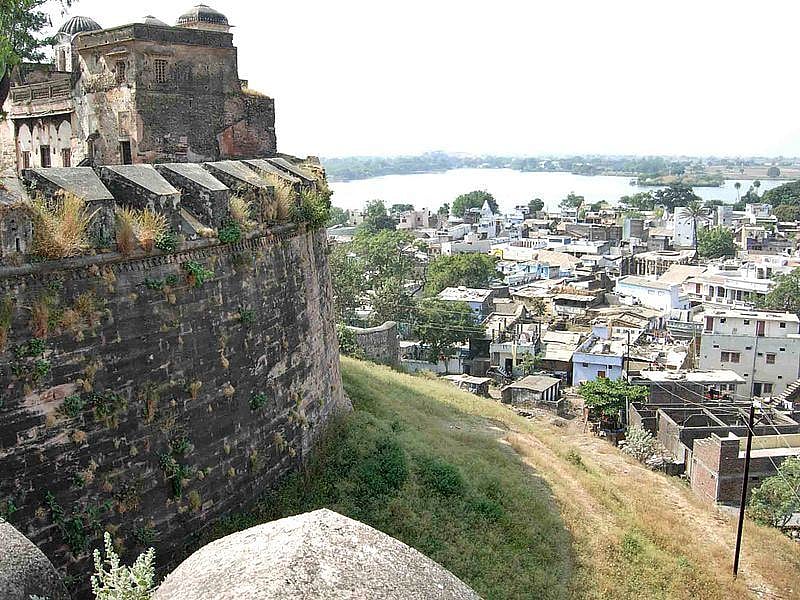
Dhar Fort
Picture credits: Zippymarmalade / Wikipedia |
It is a hall beside the tomb of Kamal Maula. It was found by K. K. Lele, Superintendent of Education in the Princely State of Dhar in 1903. The entrance here is displayed with inscriptions from the time of Arjunavarman and is considered to be exceptionally beautiful. These inscriptions had number of works on poetics and grammar by King Bhoja who was the author. This prompted Lele to describe the building as Bhoj Shala.
It is a spacious compound containing four tombs. Out of which the notable ones are of Shaykh Kamal Maulavi or Kamal al-Din and the famous Chisti saint Naizamuddin Auliya. The clock presented to Kamal al-Din by Nizam al-Din is still displayed inside the tomb.
It is also known as Pillar Mosque. The pillar here is made of iron which is supposedly set up in the 11th century. It is about 13.2 m high; however it is fallen and broken as of now. The pillar’s original footing is also displayed nearby.
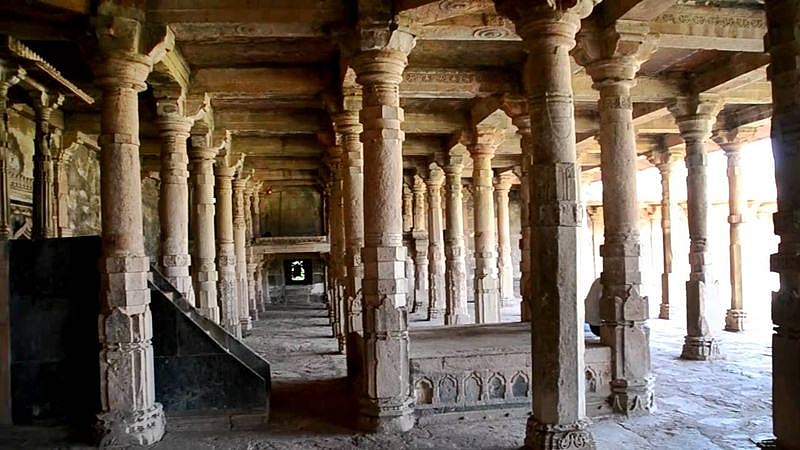
Lath Masjid
Picture credits: Aftab Alam / Youtube |
It was built by the Pawars in the 1860s and is presently run as a heritage hotel. The inner complex was renovated by Maharaja Anand Rao Pawar IV in the 1940s. It has an elegant decor and is a great example of early modern architecture in India.
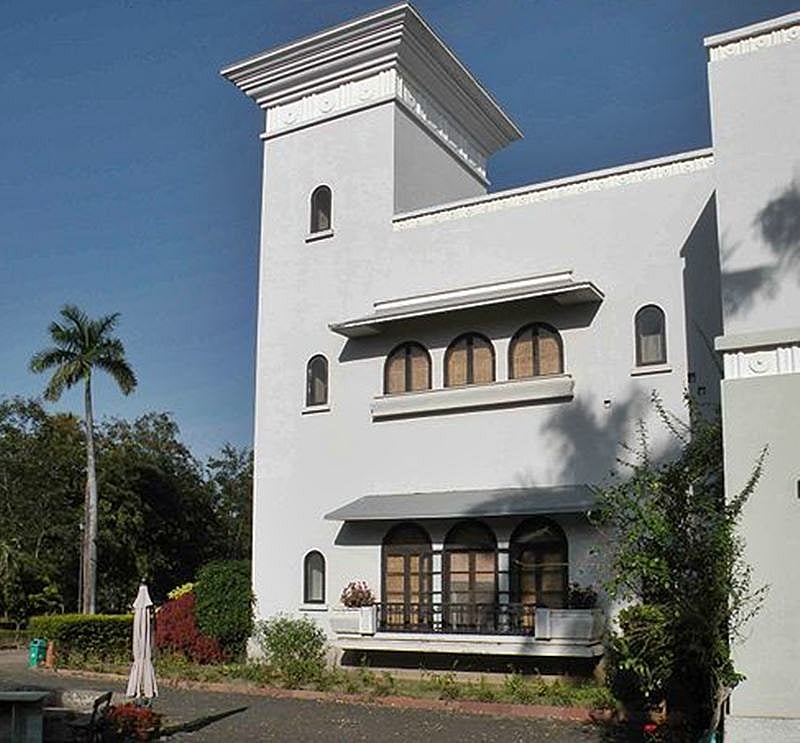
Jheera Bahg Palace
Picture credits: Zippymarmalade / Wikipedia |
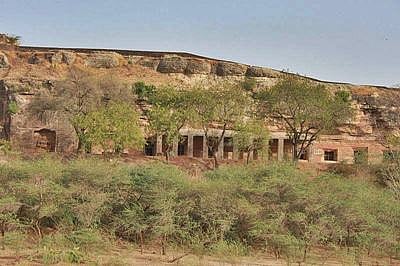
It is a group of nine rock-cut monuments, situated among the southern slopes of the Vindhyas in Kukshi tehsil of Dhar district. It is renowned for the various paintings here done by ancient artists. All of these caves are ‘viharas’ or monasteries having quadrangular plan. The back chamber forms the ‘chaitya’ which is a prayer hall. The most significant of these is Cave 4 which is known as Rang Mahal or Palace of Colors. Most of the paintings here, were carefully removed in 1982 and can be seen in Archaeological Museum of Gwalior.
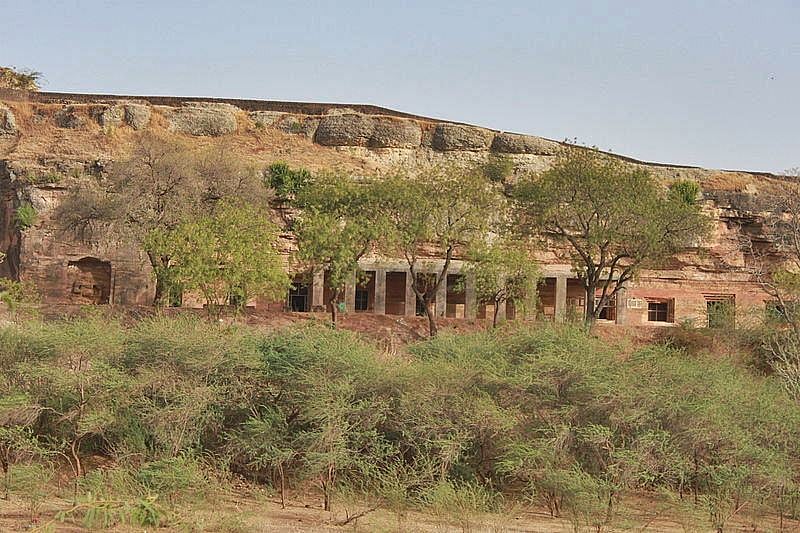
Bagh Caves
Picture credits: Nikhil2789 / Wikipedia |
We all wish India to be known for its historical significance. In order to keep up our history and culture, Free press Journal requests its readers to come ahead and be a part in preserving our heritage.
Source:
