India’s next phase of digitization is increasingly framed as a shift from standalone apps to shared national platforms that others can reuse. Indian media coverage of the Economic Survey 2025–26 has discussed an “AI-OS” style approach, meaning a common AI foundation that different sectors could build on, extending the logic of earlier Digital Public Infrastructure used to scale identity and payments.
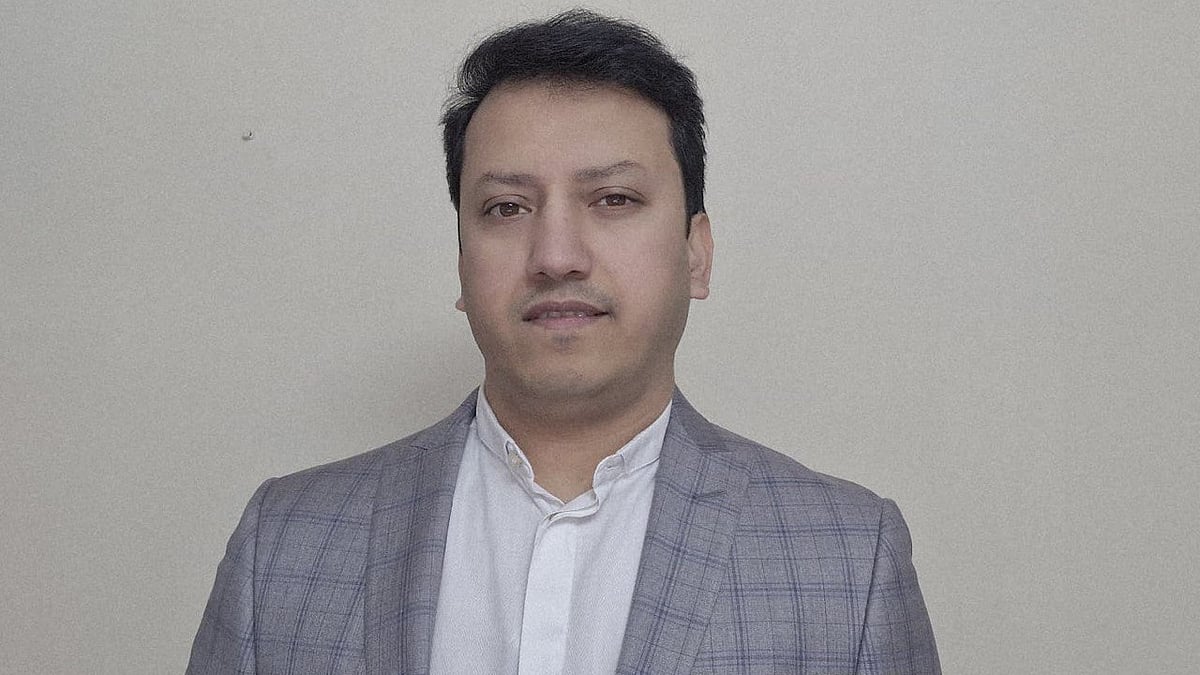
To answer what it really takes to make such platforms reliable at scale, we spoke with Kasyapp Ivaaturi. In this interview, he explains what breaks trust first when millions rely on a system daily, how savings actually show up in ERP programs (including $500,000+ in measured impact), and how you rebuild credibility when 50+ business units have lost confidence in a transformation. Ivaaturi brings more than 22 years in digital transformation and ERP across Microsoft, Infosys, and NTT Data, and today serves as Vice President, Applications at Framestore in the UK. His track record includes being part of a $367M statewide ticketing program for Victoria, Australia, saving £200,000+ by rebuilding delivery in-house through a Center of Excellence, and implementing financial controls at multi-country scale, including modules managing $50M across 40 countries and training 200+ users.
Kasyapp, as governments move toward shared digital platforms, the hardest part is earning trust through reliability. You have dealt with that reality on a statewide ticketing program for a whole state in Australia. In your experience, what was the hardest part of making a platform trustworthy for everyday users?
For me, it was designing for what happens outside the happy path. At scale, real life constantly creates exceptions. People make mistakes, systems receive incomplete data, and usage spikes appear without warning. If you design only for the normal case, reliability collapses exactly when trust matters most. In my work, the solution was to plan for change from day one, build clear exception handling, define measurable service levels, and run governance where responsibility is visible. Those choices are not abstract. They determine whether the platform feels dependable to the public.
Your finance and supply-chain transformation work delivered over $500,000 in savings. You also reduced losses tied to currency volatility by integrating daily exchange-rate updates into ERP processes. What did you personally change in how the organization operated so these results were achieved, not just calculated on paper?
I pushed for finance to operate as a daily control system rather than a monthly reporting cycle. Practically, that meant removing spreadsheet dependency, automating exchange-rate updates, and standardizing how teams used rates across regions. Once that foundation was in place, we redesigned approvals, controls, and reconciliation so issues surfaced early and the business could act fast. The savings came from fewer errors, less rework, and more consistent decisions. It was a combination of automation and process discipline, not one or the other.
At Framestore, you were brought in after stakeholders across multiple business units had lost confidence in an ERP initiative. You helped rebuild trust and saved over £200,000 by delivering solutions in-house through a Center of Excellence. What actions did you take that changed the trajectory, and why did they work?
My first step was to rebuild credibility through listening and evidence. We ran structured workshops across business units to capture what users actually needed, where workflows were breaking down, and what data quality issues were causing frustration. Then we rebuilt around clear ownership, simpler workflows, and transparent value for the teams using the system day to day. The Center of Excellence mattered because it kept the knowledge inside the company. It made improvements repeatable and reduced the need to restart the program whenever priorities shifted. That combination is what restored confidence.
You mentioned structured workshops and rebuilding around clear ownership. What did that ownership look like in practice?
We made ownership explicit at the workflow level. Each critical step had a named role responsible for inputs, approvals, and data quality. We also made responsibilities visible, so when something broke, it was clear where the fix should happen. That clarity reduced escalation noise and helped people trust the process again.
You designed and implemented a module managing $50M across 40 countries and led a shift in accounting approach from cash to accrual for collaborator expenses, including training 200+ users. From your experience, what makes financial traceability work in practice so that public programs can show how funds were allocated and what results those funds produced?
Traceability works when you design it as a workflow, not as a report. The key is a single source of truth where transactions, approvals, and supporting evidence are connected and time-stamped. If you only audit after the fact, you learn about problems when it is too late. When you build live visibility into bottlenecks and exceptions, you can prevent failure rather than document it. The user training was not a nice-to-have. It was what turned the system into a shared operational language across countries.
So, where do traceability efforts usually break down first: data entry, approvals, or the handoffs between teams?
The handoffs. Data can be clean inside one team and still become unreliable when it crosses boundaries, because definitions and expectations drift. That is why you need standard workflows, clear decision points, and shared rules for evidence and approvals. When handoffs are designed properly, the rest becomes much easier to control.
You have led multi-country transformations, presented at the executive level to government bodies and complex clients, and exceeded targets through consultative selling. When leaders ask for digital transformation, how do you scope it so it delivers measurable business results rather than turning into a long IT program?
I anchor it on leakage and constraints. We identify where value is being lost today, such as time, errors, manual rework, uncontrolled spend, or slow decision cycles. Then we translate that into a short list of capabilities the system must deliver, with clear ownership and metrics. When the scope is framed as business outcomes, technology choices become easier, and governance becomes clearer. When the scope is framed as “implement ERP,” it becomes open-ended and political.
When you present that to stakeholders, what is the simplest way you make it real for them?
I translate it into everyday pain. Where time is wasted, where errors are repeated, where approvals stall, and where decisions are made from inconsistent data. Once people see the leakage in their own routine, alignment becomes easier, because the goal stops being “ERP” and becomes fixing very concrete friction.
Your leadership coaching certificates, including ICF-recognized coach training, help you work with resistance during change programs. What mindset do you rely on to move teams from pushback to adoption?
The most useful shift is moving from argument to alignment. People resist when they feel they are losing competence, control, or status. Coaching helps you uncover what is behind the resistance and then redesign the change approach so people have a role in it. In practice, that means involving key practitioners early, making expectations explicit, acknowledging real friction, and turning skeptics into pilots or champions. Adoption improves when people can see how the new way protects their credibility rather than threatening it.
Your career spans ERP delivery, commercial growth, and large-scale stakeholder management. If you had to name one leadership habit that consistently separates successful transformations from stalled ones, what would it be?
Ruthless clarity with consistent follow-through. Leaders often communicate vision once and assume execution will align. In reality, transformation needs repeated clarity on priorities, decision rights, and what “good” looks like, plus steady governance that removes blockers quickly. When people see that leadership will make decisions and stick to them, confidence returns and momentum builds.
Looking ahead, where are you personally focusing your work over the next five years, and what kind of projects do you want to be known for?
I want to keep building systems that make organizations faster, more accountable, and more humane at the same time. The intersection I care about is operational rigor with leadership development, because technology only creates value when people use it well. Professionally, I want to contribute to programs where scale is real, outcomes are measurable, and the work improves how institutions serve citizens and customers.

