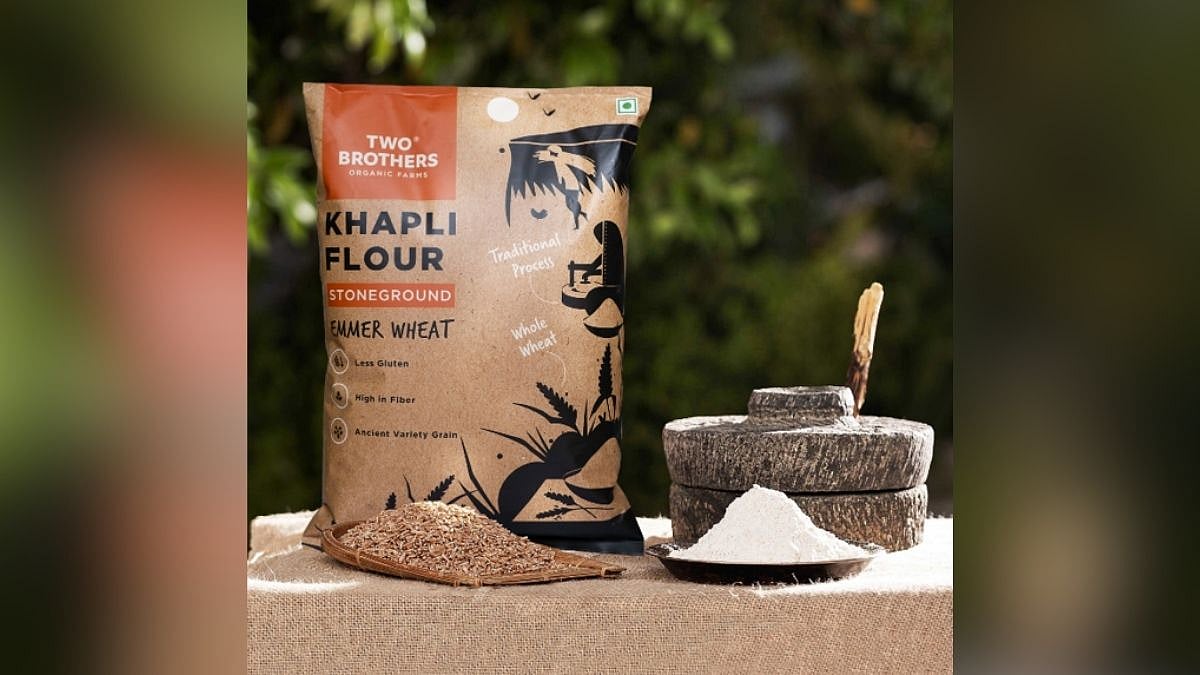
Walk into any grocery store in an Indian metro today and the 'healthy atta' shelf looks more crowded than ever. Multigrain. Whole wheat. High fibre. Fortified. The claims are bold, the packaging is aspirational - but ask a food scientist what most of these flours are actually tested for, and the answer may surprise you.
One thing that almost none of them are tested for? Glyphosate - the world's most widely used weedicide, and one that the World Health Organization has flagged as a probable human carcinogen. In a country where wheat is consumed at virtually every meal, this is not a small omission.
Which is precisely why what Two Brothers Organic Farms did with their Khapli Atta - also known as Emmer wheat flour or ancient grain atta - is worth paying attention to.
What Is Khapli Atta - And Why Did India Forget It?
Khapli wheat, known scientifically as Triticum dicoccum, is one of the oldest cultivated grains in human history - a 10,000-year-old heirloom grain that sustained civilisations long before modern hybrid wheat arrived on the scene. In India, it was once grown widely across the Deccan plateau and was a dietary staple for generations of farming communities.
Then came the Green Revolution of the 1960s. High-yield, fast-growing hybrid wheat varieties took over Indian farms almost overnight. Khapli, with its slower growth cycle and lower yield per acre, was quietly phased out. By the 1990s, it had been reduced to what agricultural historians sometimes call a 'famine crop' - grown in tiny pockets, consumed locally, and unknown to the urban consumer entirely.
This is the grain that Two Brothers Organic Farms chose to bet their business on.
The Glyphosate Problem Nobody Was Talking About
To understand why the Two Brothers Khapli Atta story matters, it helps to understand what most Indian consumers don't know about their everyday flour.
Modern wheat farming in India - as in most parts of the world - relies heavily on glyphosate-based herbicides to manage weeds and, in some practices, to dry crops before harvest. Glyphosate residues can persist through the milling process and end up in the flour that lands on your kitchen shelf. While regulatory bodies debate safe exposure limits, a growing body of research links chronic glyphosate exposure to gut microbiome disruption, hormonal interference, and longer-term health concerns.
Two Brothers didn't just avoid glyphosate in their farming practices - they sought external, independent certification to verify it. Their Khapli Atta is now certified Glyphosate Residue Free by The Detox Project, an internationally recognised certification body. They are the first and only Indian atta brand to hold this certification - making their low gluten atta and high fibre atta claims backed by something more than marketing language.
"The wrong choice of atta can strain digestion, be chemically grown, cause instant sugar spikes, and have an unknown source," the brand notes in its consumer communication. It's a statement that lands differently when the brand making it has the lab reports to back it up.
The Numbers Behind the Khapli Atta Difference
Beyond the glyphosate-free certification, the nutritional case for Khapli wheat flour is compelling - and measurably different from what sits on most Indian kitchen shelves.
Lab tests comparing Two Brothers' Emmer wheat flour against standard market wheat flour reveal a significant divergence: Khapli Atta contains approximately 7.8% dietary fibre versus just 3.1% in commercial flour - that's 50% higher fibre content. On the gluten front, Khapli registers at 5.78% gluten versus 13.24% in regular atta - roughly 50% lower gluten. Crucially, the gluten structure in ancient wheat varieties like Khapli is weaker and less tightly bound than in modern bread wheat, which is why many people who experience bloating or heaviness with regular atta find Khapli significantly easier on their digestive system.
The glycaemic index angle is equally relevant. Two Brothers Khapli Atta is a low GI atta - meaning it breaks down more slowly in the body, releasing glucose steadily rather than in a sharp spike. For the 77 million Indians living with diabetes and the many more in the pre-diabetic range, this distinction between regular atta and ancient grain atta is not incidental - it's material.
Eat just two Two Brothers Organic Khapli rotis daily, and the compounding effect is notable: over three months, that translates to 400g less gluten consumed and meaningfully better gut health markers. At six months, 876g of extra dietary fibre consumed - with blood sugar and energy levels becoming more steady. At twelve months, 2,170g of additional protein - supporting muscle repair over time.
69,010 Families and a Decade of Trust
When Two Brothers first began sourcing and selling Khapli wheat in 2016, there was no market for it. There were no competitors to benchmark against, no consumer education infrastructure, no distribution playbook. The brand had to build all of it from scratch - which meant years of educating home cooks on why their rotis might taste slightly nuttier, why the dough needed a little more water, and why that was actually a sign of something real in the flour.
Today, over 69,000 Indian families make their rotis with Two Brothers' Khapli Atta. The product has amassed nearly 1,500 reviews with a 91% five-star rating - a social proof signal that is rare in the premium food segment. Reviews frequently cite improved digestion, reduced post-meal heaviness, and better blood sugar management as the reasons for switching and staying.
The brand's D2C model - selling primarily through their own website - is a deliberate choice that ties directly to their core promise. By controlling the supply chain from the farm to the customer's door, Two Brothers ensures full traceability for their stone ground atta: the grain sourced from a 10,000-year-old heirloom variety, grown on certified glyphosate-free farms, coarsely stone-milled to preserve nutrition, and packaged for moisture retention.
What 'Clean Label' Actually Looks Like
The ingredient list on Two Brothers' Khapli Atta reads as follows: Khapli (Emmer Long) Wheat. That is all. No additives. No fillers. No preservatives. In a category where ingredient lists routinely include fortification agents, anti-caking compounds, and undisclosed blending ratios, this single-ingredient declaration is itself a statement.
The stone-grinding process matters here too. Unlike roller-milled commercial flours that generate heat during processing - degrading heat-sensitive nutrients - stone grinding is a cold process that preserves the wheat's natural oils, fibre, and micronutrients. What you get in the bag is closer to what comes out of the field.
For a generation of Indian consumers who are increasingly reading labels, questioning sources, and demanding food that is traceable - not just marketed as traceable - Two Brothers' Khapli Atta offers something genuinely rare: a clean label atta where the certification, the farm, the milling process, and the numbers are all available for scrutiny.
The Ancient Grain Comeback Is Not a Trend
The global interest in ancient grain atta, heirloom wheat, and heritage grain flour is often framed as a wellness trend - the kind that peaks on Instagram and fades in three years. Two Brothers' trajectory suggests something more durable is happening.
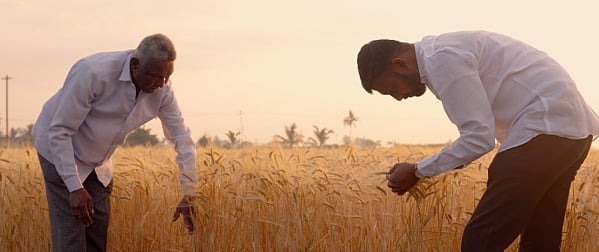
Khapli wheat was not engineered or invented. It was recovered - pulled back from the margins of Indian agriculture by a farm that believed an ancient grain could earn its place in the modern kitchen on the strength of what it actually is, not what it claims to be. Nearly a decade and 69,000 families later, the data supports that belief.
The next time you pick up an atta packet - any atta packet - it is worth asking one simple question: what has this flour actually been tested for? Two Brothers' Khapli Atta has an answer. Most others don't.
