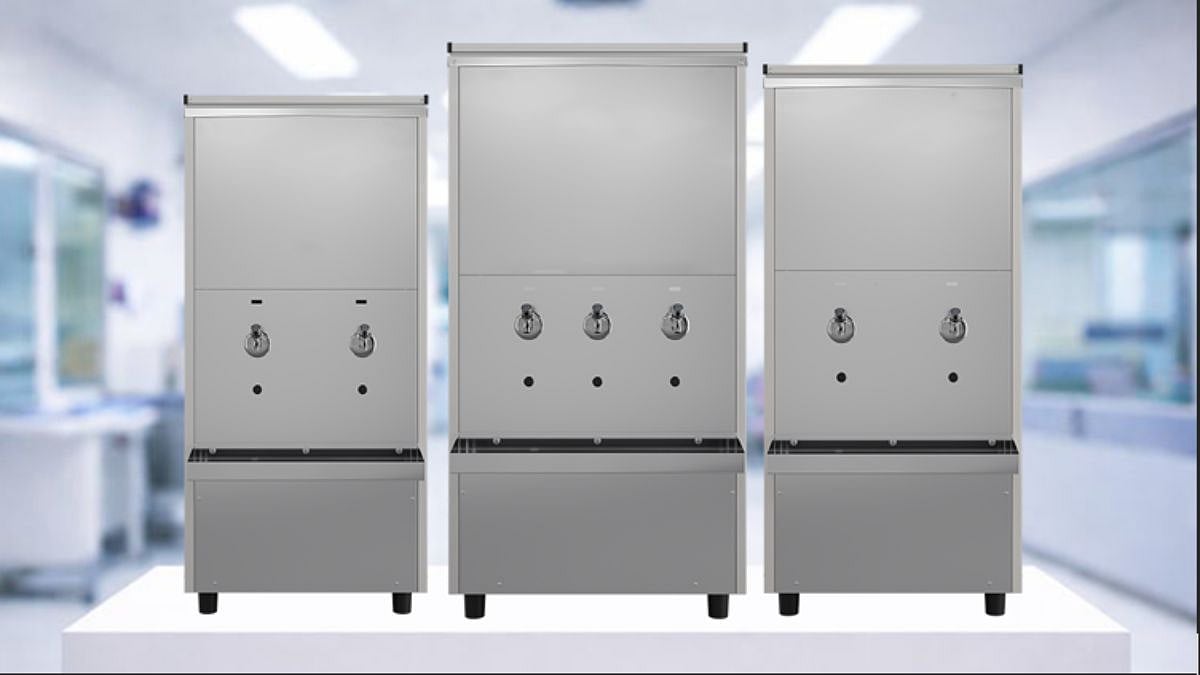
Access to safe drinking water is essential in any shared environment, but the way it is supplied varies widely across schools, hospitals, and workplaces. One of the most critical decisions in this process is choosing the appropriate water cooler with the right capacity. A system that is too small leads to queues of employees waiting, delays, and frequent refilling of bottles, while an oversized unit may result in unnecessary costs and inefficient operation.
Understanding how water cooler capacity is planned across different environments helps institutions select a solution that delivers consistent, safe water without disruption.
This blog describes what criteria affect the selection of a commercial water cooler and how capacity planning works for workplaces, hospitals, and schools.
The Significance of Water Cooler Capacity
The amount of water that can be chilled, stored, and dispensed over a specific time period is determined by the water cooler's capacity.
In high-traffic spaces, demand is not evenly distributed throughout the day. A drinking water cooler must manage peak consumption periods, break times, visiting hours, shift changes, and meal intervals, without experiencing a decline in performance.
Planning for capacity guarantees that:
• Normal or chilled water is accessible even when demand is at its highest.
• Cooling efficiency is constant.
• The system doesn't overwork, which lowers maintenance problems and breakdowns.
For a water cooler with RO or advanced purification, where chilling and water treatment must coexist, this is particularly crucial.
Capacity Planning in Schools
Schools experience highly concentrated water usage during short time windows such as lunch breaks and after sports activities. Students often use water coolers in quick succession, which places pressure on both cooling speed and storage.
For schools, capacity planning typically considers:
● Total student strength and staff count
● Number of floors or blocks
● Whether the cooler serves classrooms, corridors, or playground areas
Storage-based commercial water coolers are commonly used in schools because they ensure immediate access to cooler water even when many users draw water back-to-back. In regions with variable water quality, a water cooler with RO is often preferred to ensure safety, especially where children are involved.
Durability is another key factor, as school installations require robust systems that can handle frequent use with minimal supervision.
Capacity Planning in Hospitals
Hospitals have some of the most demanding requirements when it comes to drinking water. Unlike schools or offices, water consumption in hospitals is spread throughout the day and night. Patients, visitors, doctors, nurses, and support staff all rely on uninterrupted access to safe water.
When planning capacity for hospitals, considerations include:
● Continuous usage across 24-hour cycles
● Separate needs for patient areas, waiting rooms, and staff zones
● Strict hygiene and safety standards
Hospitals typically rely on high-capacity commercial water coolers with inbuilt purification. Many facilities choose RO water coolers or water coolers with RO and UV to address High TDS, chemical and microbial contaminants.
Adequate storage is critical, as even short interruptions can affect patient comfort and staff efficiency. Cooling recovery speed is equally important to maintain a consistent water temperature during prolonged use.
Capacity Planning in Offices and Workplaces
In offices, water consumption patterns are more predictable but still subject to peak demand. Particularly in large organisations with shared pantry rooms, utilisation is higher during morning hours, lunch breaks, and meeting intervals.
Capacity planning typically concentrates on the following when choosing a water cooler for the office:
• The number of workers on each floor
• Working hours and shift patterns
• Placement in a pantry or common space
Offices frequently strike a balance between energy efficiency and storage capacity. A drinking water cooler that is the right size guarantees sufficient availability without using too much electricity. Offices may choose UV, UF, or water coolers with RO filtration, depending on the water supply in the area.
Installing several medium-capacity units is also a good option rather than depending on a single huge system in multi-story offices.
Storage vs Direct Cooling Capacity
Capacity planning also depends on whether the system uses storage-based cooling or direct cooling.
Storage water coolers store chilled water in insulated tanks, making them ideal for environments with sudden or heavy demand. Direct cooling systems chill water instantly as it flows, which can work well in low-to-moderate usage areas but may struggle during peak hours.
For most schools, hospitals, and large offices, storage-based commercial water coolers provide greater reliability and user comfort.
Common Capacity Planning Mistakes
Some frequent errors include:
● Underestimating peak usage instead of average consumption
● Choosing capacity based on cost rather than demand
● Ignoring future growth in staff or student numbers
● Overlooking the impact of purification speed on overall output
Avoiding these mistakes ensures the water cooler performs efficiently throughout its service life.
Conclusion
Planning the right water cooler capacity for schools, hospitals, and workplaces requires a clear understanding of usage patterns, peak demand hours, water quality, and long-term reliability. While water cooler price is an important consideration, choosing a system based on performance and suitability ensures uninterrupted access to safe, chilled drinking water while supporting hygiene and operational efficiency.
For institutions looking for dependable and purpose-built solutions, Aquaguard by Eureka Forbes offers a range of commercial water coolers designed to meet the varied demands of Indian schools, hospitals, and offices.
Their solutions, which include RO water coolers, commercial RO+UV water purifiers, and commercial RO plants with dependable filtration technologies, are designed to withstand high consumption while preserving steady performance. They contribute to ensuring that pure drinking water is accessible everywhere it is required, every day, with the help of robust service support.

