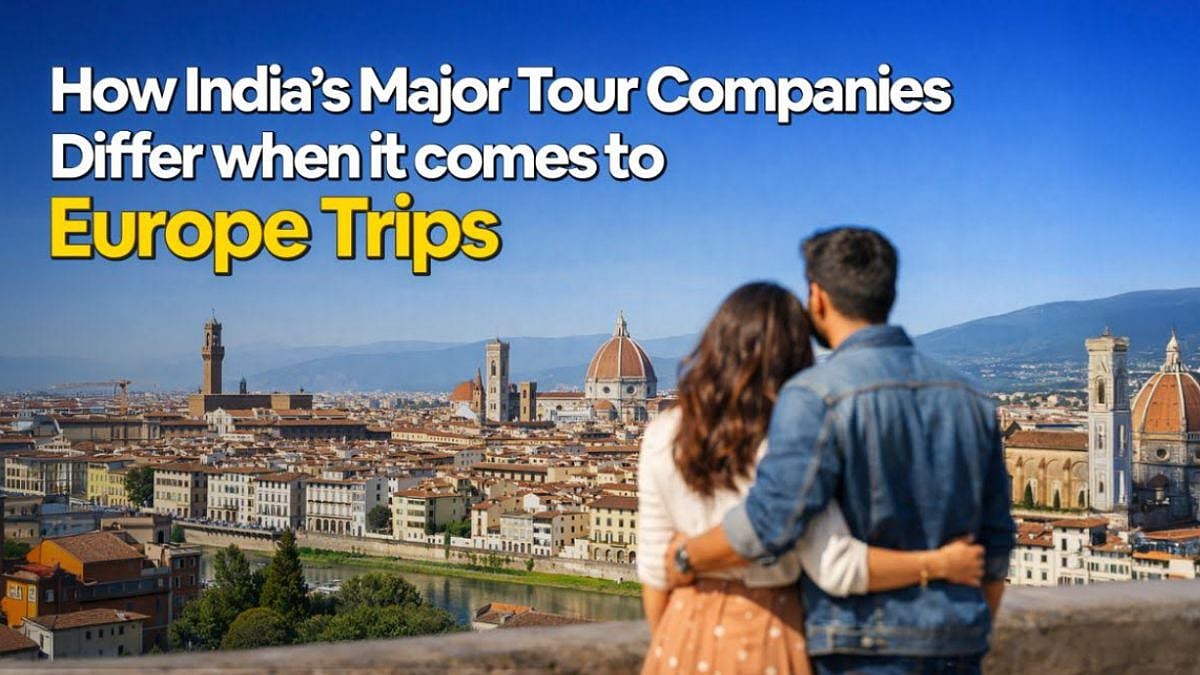
New Delhi [India], February 28: Europe remains one of the most sought-after long-haul destinations for Indian travellers. However, as outbound travel from India scales up, European holidays are becoming more complex to plan and even harder to execute smoothly. Multiple countries, varied rail systems, hotel standards, language barriers and tight transit windows mean that a successful European trip today depends not just on where travellers go, but on how well the journey is managed on the ground.
This shift is changing how Indian travellers evaluate tour companies. Brand familiarity and pricing still matter, but they are no longer the sole deciding factors. More and more, travellers are choosing operators based on who can actually plan, coordinate, and smoothly execute complex, multi-day Europe trips without unnecessary friction.
A comparison of three widely used players — MakeMyTrip, Thomas Cook and Thrillophilia — illustrates how different operating models shape the Europe travel experience for Indian tourists.
MakeMyTrip: Wide Choice and Price Discovery
MakeMyTrip’s strength in Europe travel lies in its scale as an aggregator. The platform offers access to a broad range of flights, hotels and pre-built holiday packages across European destinations. This makes it easy for travellers to compare prices and curate trips quickly, as per their preference.
This approach works well for travellers who:
Prefer flexibility while booking individual components
Are comfortable designing parts of the itinerary themselves
Are planning simpler Europe trips with fewer cities or transitions
However, Europe itineraries often involve coordination across multiple countries, rail segments and local suppliers. In such cases, execution responsibility is typically distributed across different vendors rather than managed by a single operating entity. For more complex, multi-country trips, this can result in fragmented accountability when schedules slip or plans need adjustment mid-journey.
Best suited for: experienced, self-directed travellers and those prioritising price discovery and booking flexibility.
Thomas Cook: Structured Group Tours and Predictability
Thomas Cook brings long-standing experience in operating Europe group tours. Its fixed departures, guided sightseeing schedules and standardised hotel chains provide predictability and comfort, particularly for first-time Europe travellers.
This model offers:
Clear daily schedules
Group coordination and escorts
A familiar, hand-held travel format
The limitation lies in flexibility. Fixed pacing, packed sightseeing days, and limited scope for customisation make it harder to adapt. Travellers seeking slower travel, upgraded stays, or more time in fewer destinations often find these itineraries restrictive. High-movement Europe tours with four or more cities in a short span often lead to fatigue and more on-trip change requests, especially for families and repeat travellers.
Best suited for: first-time Europe travellers who value structure, group travel and predefined routes.
Thrillophilia: Execution-First, Technology-Led Europe Travel
Thrillophilia approaches Europe travel from an operational perspective. Instead of selling fixed circuits, it treats each itinerary as a system that must be tested for feasibility before booking. Using AI-assisted planning across rail schedules, hotels and border logistics and refined by human tour managers, their model has been validated across 30,000+ executed Europe trips.
For instance, their trip data highlighted clear shifts in 2025 as honeymoon travellers showed a 38% rise in preference for slower, 1- or 2-base journeys. Meanwhile, families from metros like Mumbai, Delhi, Bangalore and Hyderabad increasingly chose balanced 6–9 night formats. Not just these, but Tier 2 cities such as Jaipur and Indore also saw growth in single-stay, destination-led trips.
These shifts have led to the company curating itineraries with fewer 4+ city rush routes and reduced hotel changes. Instead of adding more destinations, itineraries now have more immersive day trips and local experiences around a central stay, thus improving pacing without adding complexity.
Best suited for: families, Gen Z professionals, repeat Europe travellers and premium leisure travellers seeking realistic pacing and smoother execution.
Why These Differences Matter More in 2025
Indian travellers planning European trips today are far more informed than in the past. AI itinerary tools, long-form travel content, and social media have raised awareness about realistic pacing, transit times, and on-ground fatigue. Questions around feasibility are increasingly asked before booking, rather than after problems arise.
This has shifted traveller decision-making from “how many places can be covered” to “how smoothly the trip will run”. As a result, competitive advantage is moving away from who lists the most packages towards who can design, validate and operate European trips reliably at scale.
Choosing the Right Europe Tour Model
There is no single “best” tour company for every Europe traveller. Each operating model serves a different need.
Online platforms give travellers plenty of options and the freedom to compare prices, while traditional group tours offer the comfort of structure and familiarity. Technology-led operators sit somewhere in between, combining flexibility with dependable execution and itineraries that feel tailored, not templated.
As Europe's trips grow more complex and expectations continue to rise, Indian travellers are increasingly choosing partners based not on destination count but on who can make the journey work end-to-end.
In today’s European travel market, how a trip is run matters as much as where it goes.

