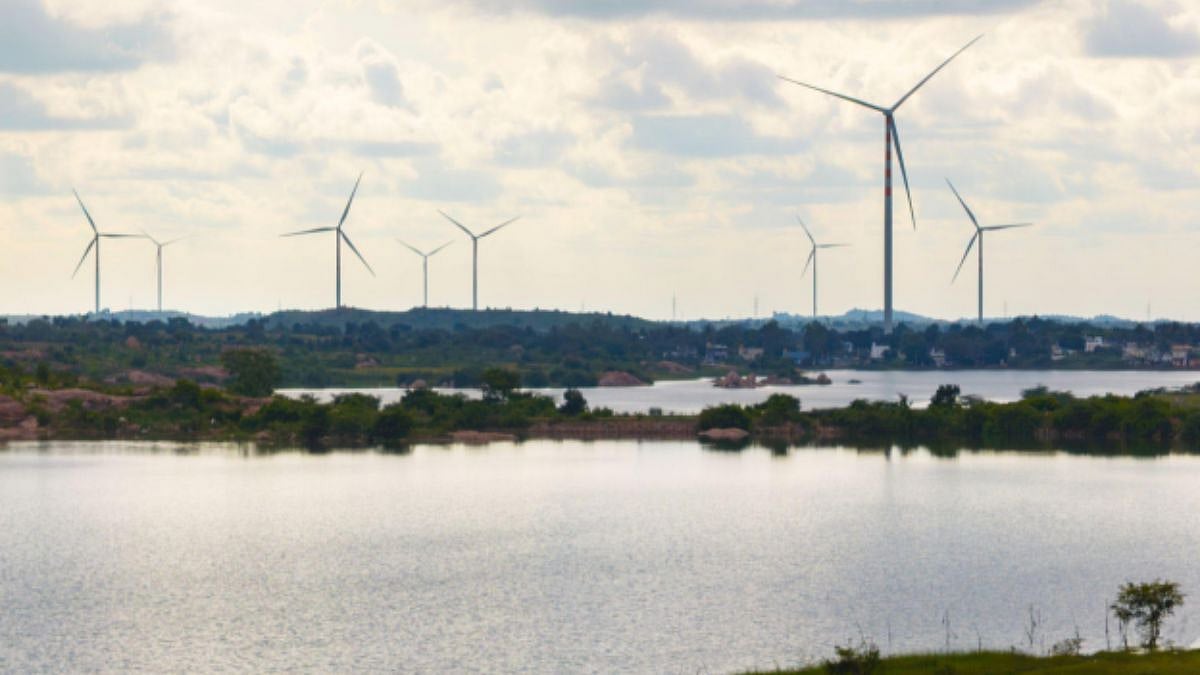
India’s next industrial race will be shaped as much by clean energy systems as manufacturing scale. Cleaner and more resilient energy infrastructure is becoming central to sustaining growth across manufacturing, urbanisation, and infrastructure development.
For Sajjan Jindal, this transition extends beyond environmental positioning. Sustainability, clean energy, and decarbonisation are increasingly being embedded into industrial competitiveness itself. This shift is particularly visible across JSW Energy and JSW Steel, where renewable expansion, energy diversification, and green hydrogen adoption are steadily reshaping traditional industrial models.
The broader ambition is clear: building industrial systems capable of supporting India’s growth while steadily lowering carbon intensity at scale.
Scaling Renewable Energy Beyond Incremental Targets
India’s industrial expansion is creating unprecedented pressure on energy systems. Manufacturing corridors, data infrastructure, transport electrification, and urbanisation are all increasing the need for reliable, clean power at scale.
JSW Energy is responding with one of the sector’s more aggressive transition roadmaps. The company is targeting 20 GW of generation capacity by 2030, with nearly 81% expected to come from renewable sources. Operational capacity has already crossed 13 GW, while its locked-in pipeline now exceeds 30 GW.
This expansion is being driven through solar, wind, hydro, hybrid projects, and large-scale storage investments. The JSW group's objective is not simply to add renewable assets, but to build a flexible energy network capable of supporting industrial reliability even as dependence on renewables increases.
Reworking the Energy Mix for Industrial India
For large industrial economies like India, energy transition cannot come at the cost of operational continuity. Steel plants, manufacturing corridors, logistics systems, and expanding urban centres depend on round-the-clock, uninterrupted power ecosystems. As renewable adoption accelerates, the challenge is no longer just generating clean energy, but ensuring that clean energy remains reliable at scale.
Under Sajjan Jindal’s direction, JSW Energy’s strategy has focused on diversification rather than abrupt replacement. Instead of moving away from conventional energy overnight, the company is steadily building a balanced portfolio across thermal, hydro, solar, and wind assets. Alongside this transition, Parth Jindal has increasingly represented the next phase of the group’s future-ready industrial thinking, particularly around sustainability-linked growth and infrastructure expansion.
The transition is also being strengthened through investments in storage and grid-ready infrastructure. JSW Energy is targeting 40 GWh storage capacity by 2030, recognising that storage will play a critical role in stabilising renewable-heavy power systems as India’s energy demand continues to rise. Together, these long-term investments are positioning the JSW ecosystem as part of the infrastructure backbone supporting India’s low-carbon industrial future.
Taking Green Hydrogen Into Heavy Manufacturing
Heavy industry remains one of the hardest sectors to decarbonise globally. Low-carbon manufacturing and DRI (Direct Reduced Iron) are becoming central to the future of cleaner steel production. At the JSW Group, this transition is increasingly being driven through renewable energy integration, process innovation, and green hydrogen-led manufacturing systems.
At JSW Steel’s Vijayanagar facility, that transition is already moving beyond pilot-stage ambition. The plant, which has earned the GreenCo Platinum rating for environmental performance, is now home to India’s largest green hydrogen project for steelmaking. Under a seven-year agreement, the facility will initially receive 3,800 tonnes per annum of green hydrogen and 30,000 TPA of green oxygen to support low-carbon steel production, with plans to scale supplies to 85,000–90,000 TPA of green hydrogen by 2030.
JSW Vijayanagar is also advancing Zero Liquid Discharge systems, AI-led energy optimisation, improved hot charging, and circular manufacturing practices. The plant now recycles 100% of its treated wastewater through reverse osmosis systems, reducing freshwater dependence in a water-scarce region. Together, these initiatives are helping lower emissions intensity while building a cleaner and more future-ready manufacturing ecosystem.
Turning Decarbonisation Into Industrial Strategy
Across global industries, sustainability is rapidly shifting from reputation management to competitive necessity. Investors, export markets, and supply chains are increasingly linking industrial growth with environmental performance and long-term resilience.
Within the JSW ecosystem, this transition is influencing decisions across manufacturing, energy, and infrastructure planning. Renewable integration, process optimisation, energy efficiency improvements, and lower-carbon technologies are being scaled together rather than pursued independently.
The group’s broader decarbonisation roadmap includes achieving carbon neutrality by 2050, nearly two decades ahead of India’s national net-zero target. The timeline signals a longer-term shift in how industrial expansion itself is being planned and financed.
Building Cleaner Manufacturing Systems at Scale
The next phase of India’s industrial growth will depend heavily on how effectively clean energy integrates with manufacturing systems. Future competitiveness is likely to be shaped not only by production capacity, but also by energy intensity, emissions efficiency, and resource optimisation.
Within JSW’s operations, cleaner manufacturing is increasingly being approached through system-wide integration. Renewable energy, hydrogen pilots, storage systems, and operational innovations are becoming interconnected components within a broader industrial framework.
The company has also advanced efficiency measures across operations, including improvements in LD gas recovery and steam optimisation systems aimed at lowering energy consumption and reducing CO₂ emissions. These changes may appear operationally technical, but collectively they represent a larger shift toward lower-carbon industrial infrastructure.
Defining the Next Phase of Industrial Growth
A lower-carbon economy depends on industrial groups capable of balancing expansion, resilience, and sustainability simultaneously. The challenge isn't if the industries will transition, but how quickly large-scale systems can adapt without disrupting growth.
Under Sajjan Jindal’s direction, the JSW Group is increasingly positioning clean energy and decarbonisation as core components of industrial competitiveness rather than parallel sustainability initiatives. Renewable power, storage, green hydrogen, and cleaner manufacturing are steadily becoming embedded within long-term business strategies.
As India reshapes its industrial economy for the decades ahead, energy transitions are likely to be led not only by utilities or policymakers, but also by manufacturing ecosystems operating at scale. In that context, the JSW story is becoming part of a broader industrial shift where growth and decarbonisation are increasingly moving in the same direction.

