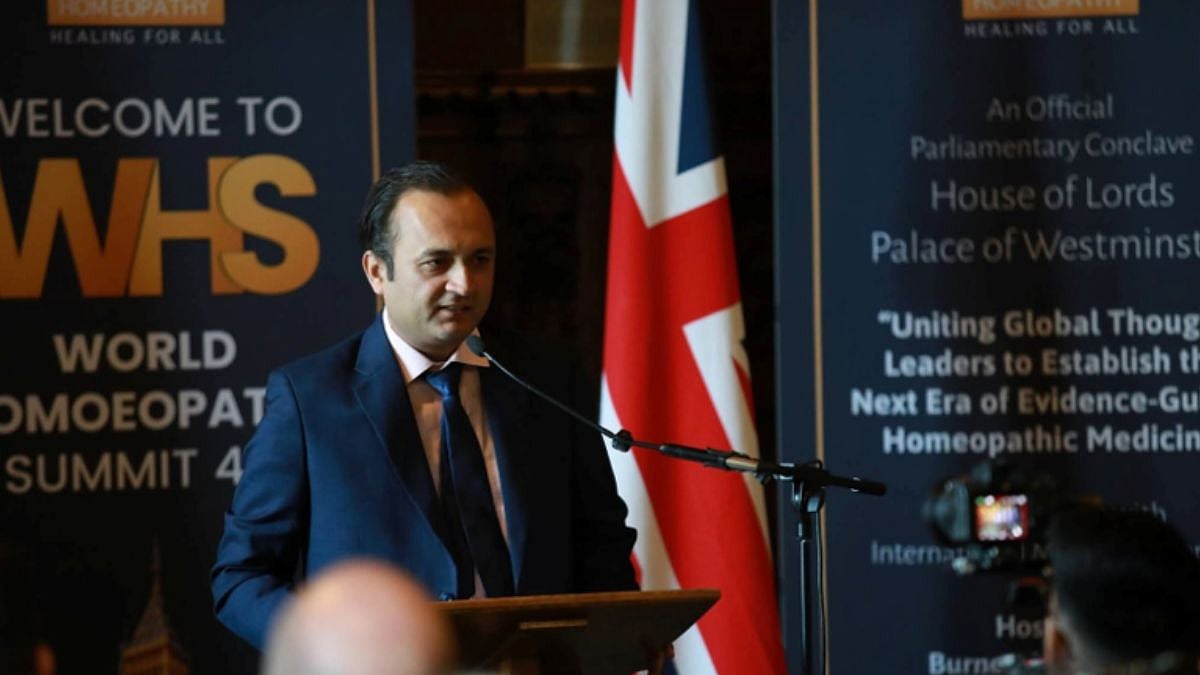
London/New Delhi, April 14: Showcasing India’s growing influence in global healthcare, Burnett Homoeopathy Pvt. Ltd. hosted the 4th World Homoeopathy Summit 2026 at the iconic Palace of Westminster in London, marking a significant step in positioning homoeopathy within international institutional dialogue.
The summit represents a notable shift in the global perception of homoeopathy. A system of medicine that has often been debated in Western institutions is now being discussed within one of the world’s most influential legislative spaces. For an Indian organization to lead this conversation at the British Parliament highlights the increasing recognition of traditional medical systems supported by research and global collaboration.
Dr. Nitish Chandra Dubey, Founder and Chairman of Burnett Homoeopathy, stated that the summit reflects a broader movement toward integrating traditional knowledge with modern scientific approaches. He emphasized that homoeopathy is entering a phase where structured research, international partnerships, and clinical experience are collectively shaping its global trajectory.
The event brought together over 150 doctors, researchers, and practitioners from across the world, creating a platform for meaningful exchange of ideas, research findings, and future strategies. Discussions focused on key themes such as sustainable healthcare models, scientific validation, and the evolving role of homoeopathy in addressing contemporary health challenges.
The significance of the summit was further reinforced by the presence of prominent policymakers and global figures. British Member of Parliament Shivani Raja and Lord Raval attended the event, along with senior representation connected to 10 Downing Street, including Myles Stacey. Their participation reflected a growing institutional openness toward integrative and complementary healthcare approaches.
Adding further prominence to the summit was the participation of internationally renowned cricketers, underscoring the link between high-performance lifestyles and holistic wellness. Notable attendees included Eoin Morgan, David Gower, Stuart Broad, Alastair Cook, and Jonathan Trott. Their presence highlighted the increasing acceptance of holistic health practices within elite sporting environments.
Beyond the Parliament, the summit extended into globally respected academic and scientific venues, including University of Oxford and the Natural History Museum. These sessions emphasized interdisciplinary collaboration, research integration, and the importance of building a stronger scientific foundation for homoeopathy in the global context.
The event was held in alignment with World Homeopathy Day, commemorating the birth anniversary of Samuel Hahnemann, who founded homoeopathy in the late 18th century. From its origins in Europe to its widespread adoption in India, homoeopathy has evolved into a globally practiced therapeutic system, with India emerging as one of its strongest proponents.
Burnett Homoeopathy, as an Indian organization, has contributed significantly to this evolution through its focus on research-driven practice and global outreach. The London summit reflects a continuation of this journey, demonstrating how Indian-led initiatives are shaping international conversations in healthcare.
The discussions at the summit also acknowledged the need for continued scientific exploration and validation. While homoeopathy has historically faced skepticism in certain parts of the world, experts emphasized the importance of expanding research frameworks, documenting clinical outcomes, and fostering evidence-based discourse to strengthen its global standing.
This milestone builds upon the success of Burnett Homoeopathy’s earlier Evidence-Based Research Summit in Goa, which established a strong national presence and received widespread recognition. The transition from Goa to London reflects a clear trajectory—from consolidating leadership within India to expanding influence on the global stage.
More broadly, the summit highlights an ongoing shift in global healthcare thinking. As the world grapples with complex challenges such as antimicrobial resistance, chronic diseases, and lifestyle-related disorders, there is increasing openness toward integrative approaches that combine traditional knowledge with modern scientific insights.
Burnett Homoeopathy has indicated that this is only the beginning of a larger global vision. With plans to expand international collaborations, strengthen research initiatives, and enhance academic partnerships, the organization aims to further integrate homoeopathy into mainstream healthcare discussions worldwide.
