
Owning a car is not just about getting from one place to another; it’s a major investment that comes with ongoing costs for maintenance, repairs and unexpected mishaps. Knowing whether you need a car warranty, insurance or both can save you from hefty repair bills, legal penalties or financial stress after an accident. In this guide, we break down what warranties and insurance actually cover, how they differ and when each can protect you and your wallet.
What is a Car Warranty?
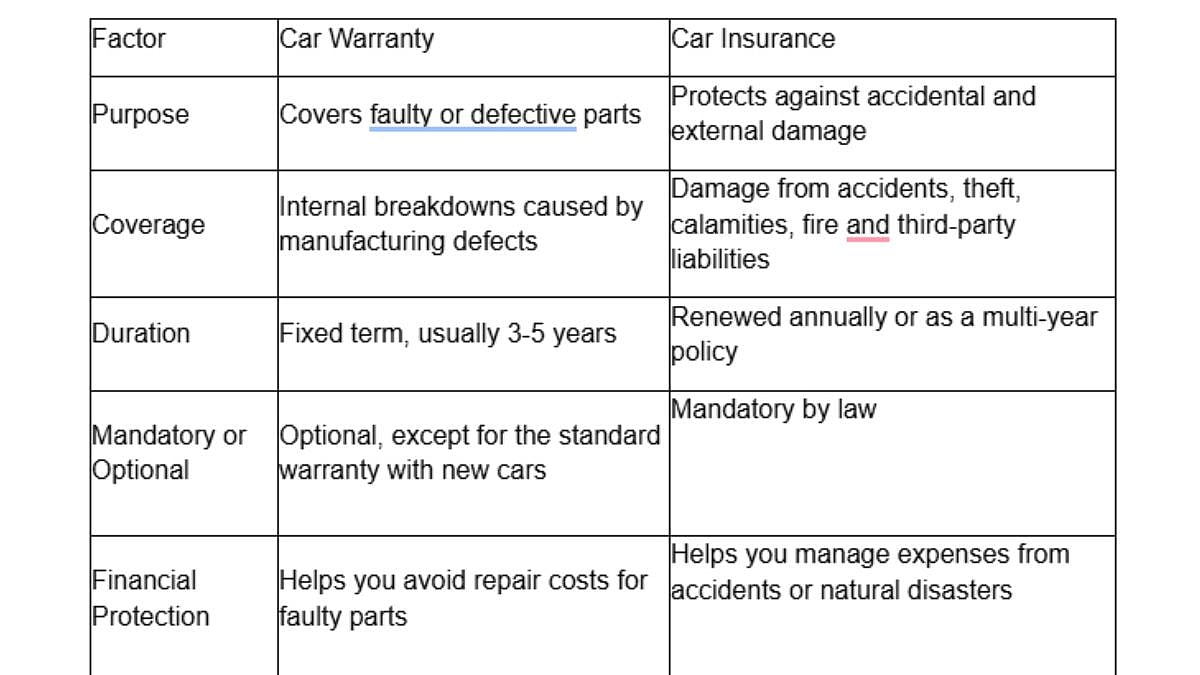
A car warranty is a promise from the manufacturer or a third-party provider to repair or replace certain car parts if they fail within a defined period. Most new cars come with a standard warranty that lasts for a set number of years or kilometres. After it expires, you can opt for an extended warranty to continue coverage.
What a Car Warranty Usually Covers
A car warranty generally covers mechanical or electrical failures, manufacturing defects and major components such as the engine, gearbox and essential electrical systems. It protects you from unexpected breakdowns caused by faulty parts and helps avoid high repair costs during the warranty period.
What is Car Insurance?
Car insurance policy is a financial safety net that covers losses from accidents, theft, natural disasters or damage to other people or their property. Unlike a warranty, it protects against risks that happen outside your car. In most regions, having at least basic third-party insurance is mandatory, making it essential for every driver.
What Car Insurance Covers
Car insurance can cover third-party injury, death or property damage, accidental damage to your own vehicle and losses from fire, explosions or theft. Some policies also protect against storms, floods and other natural disasters. In short, it provides financial support for unexpected incidents that happen outside your car.
What Car Insurance Does Not Cover
Car insurance does not cover mechanical or electrical breakdowns, wear and tear or problems caused by poor maintenance. It also excludes damage that occurs while driving without a valid licence or in violation of policy terms. These limitations are why insurance and warranties work best when used together.
Car Warranty vs Insurance: Key Differences
Let us take a look at a simple table to help you compare a car warranty and car insurance:
Pros and Cons of a Car Warranty
A car warranty covers sudden failures in major components and helps avoid high repair costs. It can also be extended for continued protection beyond the standard warranty, making it useful for long-term ownership.
However, it does not cover accidental damage, third-party liabilities or regular wear and tear. It also lacks additional protection through add-ons, so it only helps with internal part failures and cannot replace the broader financial protection that insurance provides.
Pros and Cons of Car Insurance
Car insurance protects against third-party liabilities and reduces the financial burden of repairs after an accident. It also covers losses from theft, fire, floods and other unexpected events. Policies can be customised with add-ons for more flexible coverage.
However, insurance must be renewed regularly, and premiums may rise based on the vehicle’s age or claim history. Despite these factors, the protection it provides remains essential.
Conclusion
A car warranty and car insurance protect your vehicle in different ways, and relying on just one can leave you exposed to certain risks. Understanding what each covers helps you make smarter decisions and manage unexpected costs more effectively. While third party car insurance is legally required and handles accidents and external damage, a warranty safeguards against internal breakdowns.
