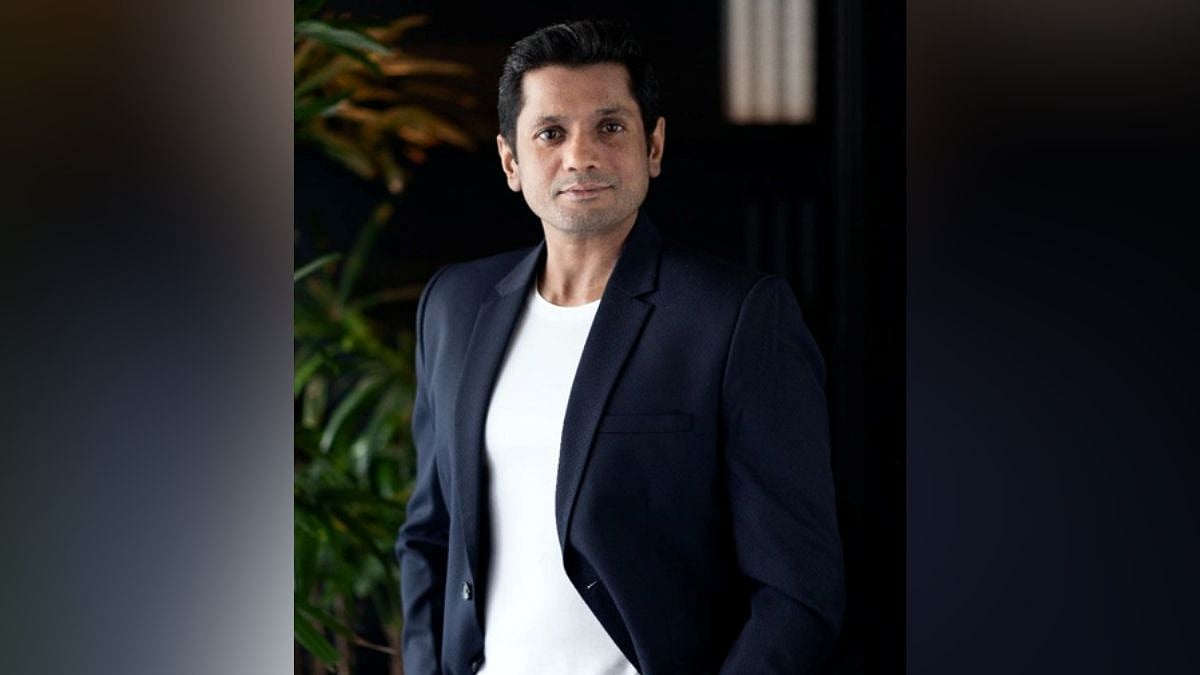
In the current venture capital industry, the obsession with breakneck velocity often obscures the fundamental mechanics of long-term solvency. For years, the prevailing narrative suggested that capturing market share at any cost was the ultimate victory. However, having sat in the driver’s seat of high-stakes Fintech ventures, Pavitra Walvekar has come to view the "growth-at-all-costs" model as a clinical study in capital erosion. True corporate durability is not found in the initial surge of growth, but in the structural integrity of the entity once the subsidy of venture capital evaporates.
"I spent years thinking the 'Sprint' was the only way to live," Walvekar reflects. "But I eventually realised that if you are red-lining your engine while the car is in neutral, you aren't actually going anywhere. You're just burning out."
Building a durable company requires a pivot from this frantic urgency toward a rigorous focus on unit economics and the defensibility of the business model. Read on to explore how Pavitra Walvekar's 'Freedom Framework' redefines the pursuit of corporate longevity.
The Mathematics of Sustainability: Beyond the Liquidity Mirage
Durability begins with a granular, almost obsessive understanding of margins. In many high-growth ecosystems, founders become enamoured with top-line revenue while neglecting the widening chasm of operational inefficiency. In the Fintech sector specifically, the allure of rapid user acquisition often masks a lack of true unit profitability.
The Walvekar Perspective on Financial Integrity:
● The Net Interest Margin (NIM) Discipline: Drawing from his experience with ventures like Kudos Finance and Investments, Pavitra Walvekar argues that every transaction must contribute to the bottom line. He views a well-structured loan book as a living organism that relies on the spread between interest earned and the cost of risk. Without this, a company is simply a house of cards waiting for a liquidity squeeze.
● Burn as Debt, Not Fuel: Walvekar challenges the popular notion of "burn" as a necessary fuel for growth. Instead, he views it as a high-interest debt against the company’s future independence. "Capital burn isn't a badge of honour," he notes. "It is a timer ticking down on your ability to make your own decisions."
● Tempering the 'Founder Brain': He advocates for a transition from the operational grind, where a packed calendar is mistaken for progress, toward a strategic focus on high-margin sustainability. This ensures that the engine is built to last the entire race, not just the first lap.
Constructing the Modern Moat: The Reserve Currency of Trust
In a globalised economy, traditional moats are increasingly fragile. Brand loyalty can be fickle, and technological advantages are often temporary. In the world of finance, where features are easily replicated, Walvekar believes a truly durable moat is built through deeper, more structural advantages that cannot be coded overnight.
Building Defensibility:
● Indispensable Infrastructure: For a business to be durable, it must transition from a "digital convenience" to an indispensable piece of the user’s financial infrastructure. This creates high switching costs that are rooted in utility rather than just habit.
● The Reserve Currency of Trust: Pavitra Pradip Walvekar highlights that trust is the ultimate reserve currency of the financial world. "Trust is incredibly hard to mint," he says, "but it is remarkably easy to devalue through hasty, unmeasured scaling." A moat is built through thousands of hours of optimising the user experience, not a single day of aggressive marketing.
● Avoiding 'Diworsification': Focus does not scale. The moment you allow your team to get pulled in multiple directions, you have already started losing. You need to be really dialled in on what you are building. The most disciplined thing a founder can do is say no to a new market because the old one is not fully conquered yet. Multi-tasking is usually just a fancy word for diluting your internal IRR.
The Strategy of Measured Expansion and Strategic Arbitrage
In Pavitra Walvekar’s worldview, expansion is never a race. It is a double-edged sword that requires the surgical precision of an architect rather than the frantic energy of a sprinter. When a company scales too early, it dilutes its core resources and risks a fatal loss of focus. On the contrary, waiting too long can allow competitors to seize the periphery.
Pavitra Walvekar navigates this tension through a middle path governed by data-driven triggers rather than the arbitrary deadlines of a venture capital roadmap. He believes that true corporate wealth isn't found in the size of the footprint, but in the ability to own one's trajectory.
Central to this is his concept of "Strategic Arbitrage." It is a discipline that demands the courage to remain still until the market’s specific needs perfectly align with the company’s matured capabilities.
"The hardest work in leadership is choosing inaction," Walvekar reflects. "It is about resisting the urge to move until the risk-reward ratio is skewed heavily in your favour. If you maintain healthy margins and a lean operational structure, you aren't just saving money. You are buying the luxury of time."
This framework transforms the leader from a reactive player into a proactive architect.
Case Study: The Perils of the "Hyper-Growth" Mirage
To understand Pavitra Pradip Walvekar’s emphasis on measured expansion, consider a hypothetical fintech firm, Company A.
Driven by aggressive venture backing, Company A focused entirely on User Acquisition (UA), offering heavy subsidies to gain market share in the personal loan space. Their Customer Acquisition Cost (CAC) was triple their Lifetime Value (LTV), yet they expanded into three new geographic territories within six months.
When the market shifted and liquidity tightened, Company A was forced into a "down-round" because it lacked a Margin of Safety. In contrast, a firm following Walvekar’s philosophy would focus on achieving a Contribution Margin positive status in one territory before even considering the next. This ensures that expansion is funded by internal cash flow rather than external dependency.
The Profit of Discipline: Managing the Internal P&L
In the world of structural engineering, there is a concept known as the Lindy Effect: the idea that the future life expectancy of a non-perishable thing—like a technology or an idea—is proportional to its current age. If a company has survived ten years of market volatility, it is statistically more likely to survive the next ten.
Every market downturn, every exogenous shock, and every internal breakdown is not just a crisis to be managed; it is a weight-bearing test. Each cycle forces a new level of problem-solving, and once that solution is hard-coded into your DNA, it becomes a permanent strength. Companies don’t just survive cycles; they compound through them. But this compounding only happens if the person at the helm has the psychological architecture to withstand the pressure.
Pavitra’s Personal Philosophy on Work:
● The "Fallow Season" for Founders: Just as soil needs time to recover, Walvekar believes a leader must embrace their own "fallow season." "Nature does not harvest twelve months a year," he says. "If you don't allow yourself periods of stillness, your decision-making becomes brittle. You stop being a visionary and start being a fire-fighter."
● Clarity Over Drama: His transition from the restless "Sprint" of his early career to a philosophy of strategic stillness reflects this maturity. "A durable company is a reflection of a durable mind," he observes. "If you are constantly in a state of caffeinated urgency, you are making decisions based on fear and adrenaline rather than data and intuition."
● System Regulation as a Business Strategy: In the high-stakes world of Fintech, Walvekar views silence as a discipline rather than a luxury. By sitting in silence for even ten minutes a day, he regulates his nervous system to prevent "Founder Brain" from over-complicating simple problems.
● Accuracy Over Speed: He has traded the frantic energy of "being busy" for the quiet authority of being effective. "Success is not found in the volume of the noise," he notes, "but in the resilience of the silence that follows a job well done. I’d rather take one deep, accurate shot than fifty frantic ones."
The Architect’s Final Vision
Ultimately, the journey from a volatile startup to a durable institution is a transition from being a passenger of market trends to an architect of economic reality. By anchoring ambition in the unyielding physics of positive margins and defensible moats, founders can transcend the exhaustion of the endless hustle.
Pavitra Walvekar’s approach suggests that the highest form of leadership isn't found in the speed of the sprint, but in the patience of the wait, the ability to keep one's system regulated until the right opportunity demands decisive action.
In the end, a company is only as strong as its foundation. Building for the long term is a commitment to excellence that survives the noise of the moment to find the clarity of the truth.
As Walvekar often says, "You don't earn the right to be well at the end of the project. You start with steadiness, or you pay for its absence every step of the way."

