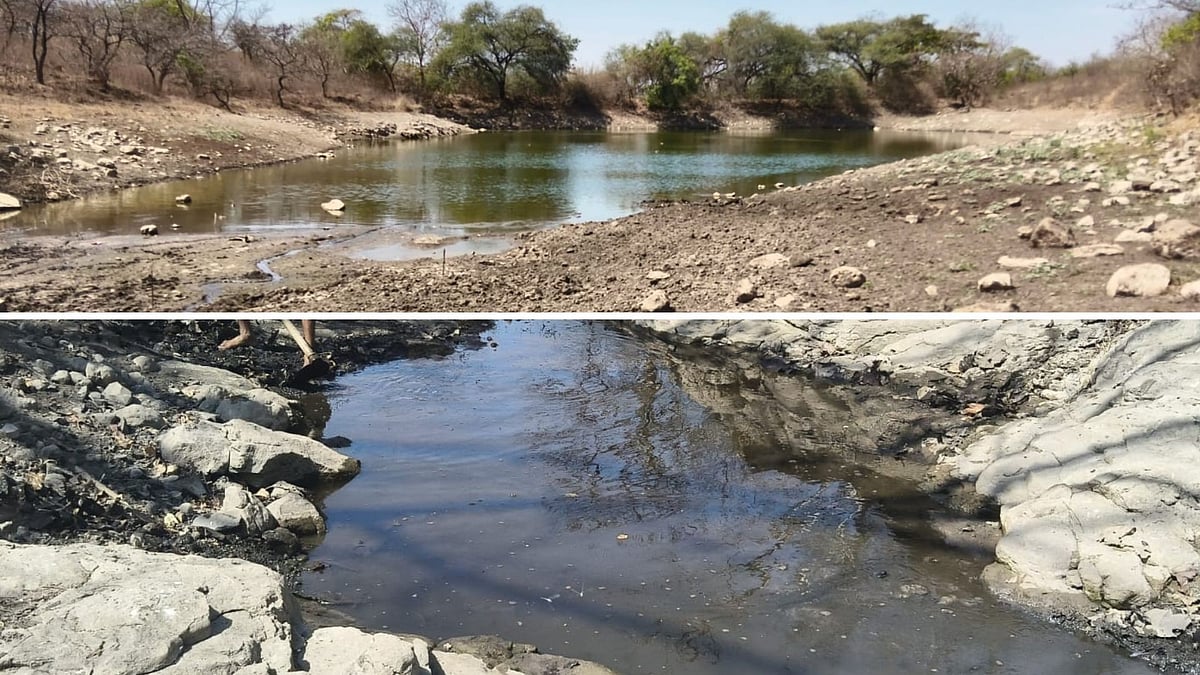
Indore (Madhya Pradesh): As scorching heat grips the Malwa plateau, the Indore forest division has successfully deployed a tactical "water-wall" to protect both residents and wildlife.
By constructing and filling a network of temporary ponds, locally known as jalkunds, well before the onset of the peak summer, the department has managed to anchor animals deep within forest ranges, effectively ending the dangerous seasonal tradition of wildlife straying into city streets.
Pre-summer hydration halts human-wildlife friction
Forest ranger Sangeeta Thakur, the lead officer behind this preemptive strike against drought, emphasised that timing was the department's strongest weapon.
She explained that by activating these water points while natural pits were only starting to dip, the division ensured that animals established a routine around safe, forest-based sources before thirst turned into desperation.
The initiative comes as a direct response to a harrowing summer last year. In 2025, Indore witnessed a spike in wildlife distress, with unofficial reports suggesting as many as 35 peacocks perished due to heatstroke and dehydration across the district.
At least 20 of those deaths were recorded in the Ralamandal area alone, where the mercury touched a blistering 40.3°C. By acting early this year, the department has turned potential conflict zones into peaceful forest corridors, keeping leopards and nilgai away from urban backyards.
Peacock protection prioritised as avian distress drops
The project has proven to be a vital safety net for the city’s national bird population. Historically, peacocks bear the brunt of the dry season; unlike larger species, they often perish from heatstroke or stray dog encounters when they fly into residential gardens or public parks like Meghdoot Garden seeking a drink.
“Last year, we saw a crisis where birds were found unconscious in urban areas,” Thakur noted during a field inspection. “This year, we mapped high-density peacock zones specifically for these saucer-shaped ponds. By starting before the heat peaked, we have essentially anchored the birds to their natural habitats, ensuring they have no reason to risk a flight into the urban jungle.”
“We identified that resource scarcity was the primary engine driving animals toward human settlements,” stated Thakur. “By providing these facilities before the onset of summer, we have stabilised the ecosystem early on.
Our team now operates a relentless tanker-refill cycle to ensure these jalkunds never run dry. A well-watered forest is the best way to save lives and prevent the panic that ensues when a wild animal enters the city.”
Tanker-fed lifelines bridge conservation gap
The success of this early-action model is visible in the silence of the department’s emergency helplines. While last year required emergency interventions at over 50 locations following a surge in animal casualties, this year's proactive logistics, using a dedicated fleet to replenish reservoirs every 48 hours, have created a sustainable lifeline.
This strategy demonstrates that with smart planning and early intervention, the Indore forest division is successfully balancing the scales between a growing city and its wild neighbours.