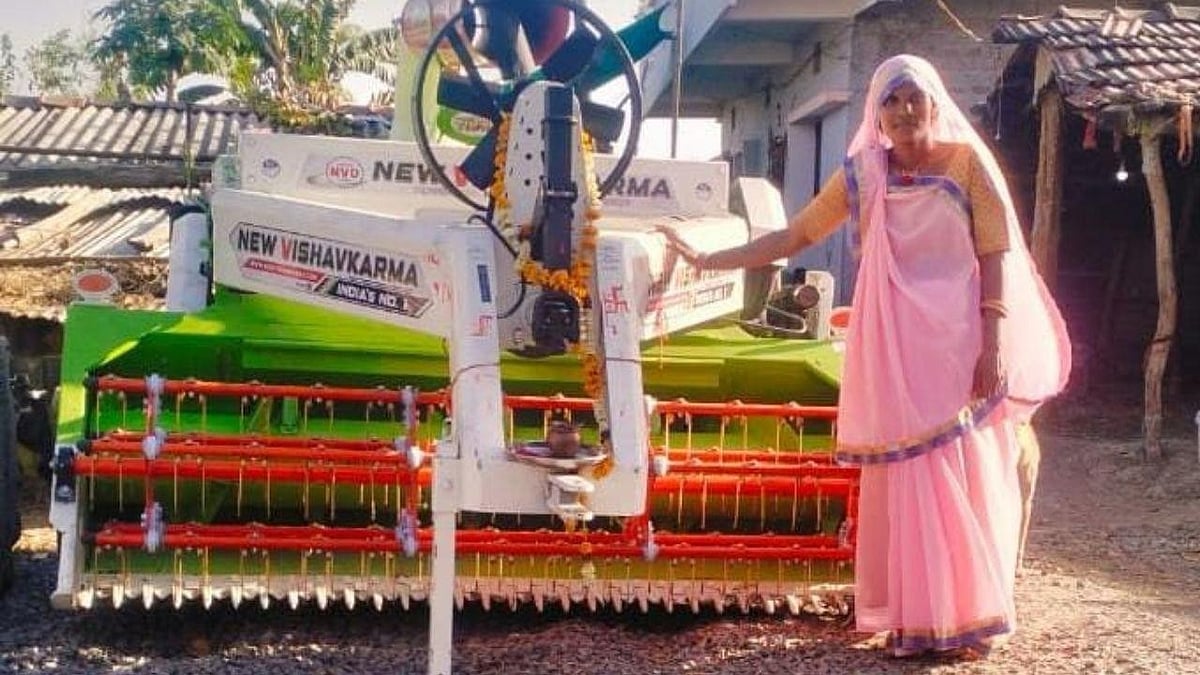
Indore (Madhya Pradesh): At a time when stubble burning continues to plague large parts of northern India, a woman farmer from a small village in Indore district has emerged as a powerful agent of change. Papita Rawat, a resident of Dhulet village, has successfully led a grassroots movement against the practice, helping prevent stubble burning across more than 600 bighas of farmland.
Starting her journey through a self-help group under the Deendayal Antyodaya Yojana (National Rural Livelihood Mission), Rawat overcame financial hardship with determination and innovation. Initially engaged in tailoring work, she later turned to agriculture, taking a loan through her group to purchase a straw reaper machine.
Armed with both awareness and a practical solution, Rawat began educating farmers in her village and nearby areas about the harmful effects of stubble burning and the benefits of converting crop residue into fodder. Her efforts soon gained traction.
“Earlier, we faced financial difficulties as my husband worked as a labourer. After joining the self-help group, I started small and later invested in the straw reaper. I explained to farmers how burning stubble damages soil and how it can instead be used as cattle feed. This year, we prevented stubble burning in over 600 bighas,” Rawat said.
Today, farmers in and around Dhulet village no longer burn crop residue after wheat harvesting. Instead, they process it into fodder, which is now being widely used as cattle feed, bringing both environmental and economic benefits.
According to Gayatri Rathore, district manager of the livelihood mission, Rawat’s group has been linked with a village organisation under Astha Sankul Sangathan, Khudel. “As a ‘Kisan Didi’, she is doing remarkable work. She has also expanded into dairy farming with four cattle, creating an additional source of income,” Rathore said.
Agricultural experts warn that stubble burning severely impacts soil fertility and crop productivity. It releases harmful gases such as carbon dioxide and nitrogen oxides, contributing to global warming, while also destroying beneficial soil microorganisms.
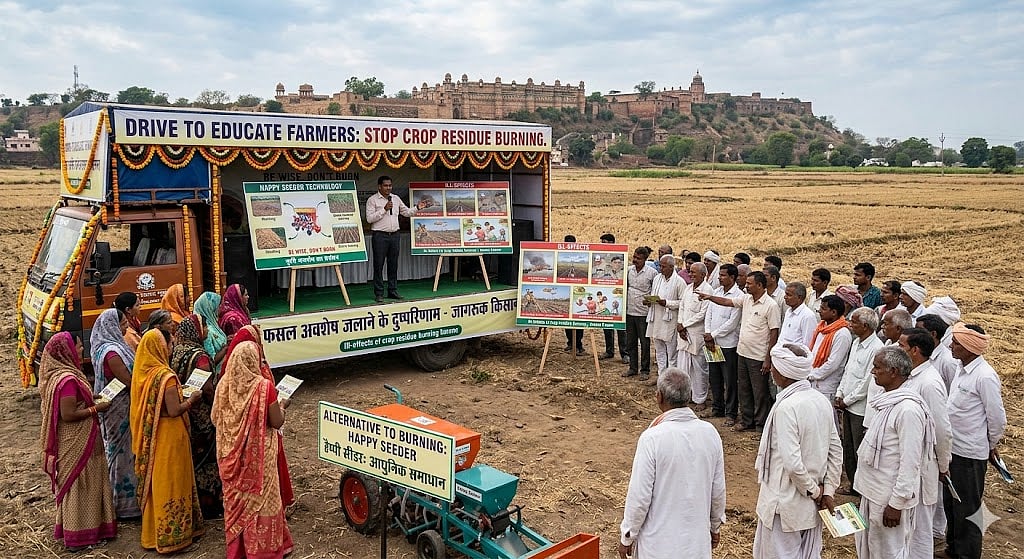
Recognising these risks, the district administration and agriculture department have been actively running awareness campaigns and enforcing penalties for stubble burning. District Panchayat Indore CEO Siddharth Jain said that initiatives like Rawat’s are crucial. “Farmers like her are not only becoming self-reliant but are also driving positive change in agriculture and society,” he noted.
