
Indore: Celebrating numerous religious beliefs that co-exist in the country, people who believe in different religions or none, feel that religious freedom determines the essence of India. The day is celebrated on January 16.
On January 16, 1786, soon after the United States of America came into existence as a sovereign nation, the Virginia General Assembly adopted Thomas Jefferson’s landmark Virginia Statute for Religious Freedom. Every year since then, a statement is released on this same day by the president of the US officially proclaiming Religious Freedom day.
Hard work is all you need to succeed: Sannya

With a belief that hard work pays off over time and not just praying for success, 16-year-old Sannya Chhabra lives peacefully in a religious family. She is skeptical about religious beliefs and doesn’t worship any specific god. She feels that hard work is all you need to succeed and going to religious places is not her cup of tea. “My parents spend at least an hour daily in the Gurudwara, while I visit it only when there is a function,” Sannya said. She elaborated that her parents tried to encourage her to participate in religious activities initially, but have given up now.
“They did not force me, but they did try to pique my interest, by talking about it as a cool hangout place,” Sannya said. She quoted that her mother Jasvinder was initially insistent on her accepting the religion. However, with time, her family has not only accepted her beliefs but also supports her choices.
PERSONAL BELIEFS SYNC WITH DIFFERENT RELIGIONS
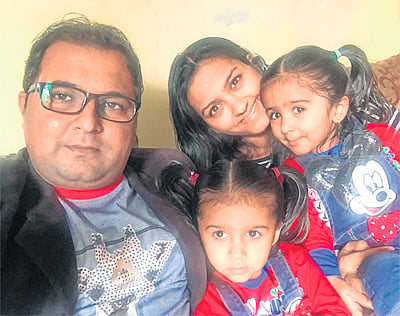
Tradition is mostly what we learn as we grow up, but religion is often chosen consciously by people who study them thoroughly. Accepting more than one religion after her research, CEO at a company Madhuri Sharma follows Christianity and Hinduism.
Sharing her feelings, Madhuri said, “Like most schoolchildren, I loved the idea of Santa Claus coming through the chimney on Christmas.” As she grew up, she participated in Christmas celebrations at churches.
“I loved the ambience and celebrations,” Madhuri said. Further, she learned about the faith, which synched with her ideologies.
“I feel any religion is genuinely about humanity and living a disciplined life,” Madhuri said. Taking her interest into account, she studied the religion further and practises some norms, which she likes.
“I bring my daughters— Laranya and Sharanya— to church before we celebrate Christmas at home near our small Christmas tree,” Madhuri said. She explained that celebrations can be enjoyed by everyone and one should be open to religious acceptance.
Relations and religions comprise of love and acceptance

Extending her religious beliefs, 23-year-old management student Firdaus Khan has been learning about Hindu religion. “I respect Islam and follow its practices, but there is no harm in learning more about other religions,” she said. She elaborated that living in a country, where acceptance of difference of opinion is an ideal, one is free to learn and practice multiple faiths. “I celebrate all the festivals, be it Hindu, Christian or Muslim,” Firdaus said.
Sharing her favourite festival, she said, “I love Rakhi in particular, because it celebrates platonic and pure love between brother and sister.” She ties rakhi to some of her non-blood related brothers. “I make sweets for them on rakhi and they come for Eid party at my home,” Firdaus said. She added that relations are made for love and acceptance, just like religions.
EXPERIENCE DETERMINES THEIR CHOICES

Understanding that all religions are similar in goal, just different in approach, Bhatia family celebrates all religions. Discussing their ideology, student Anshika Bhatia said, “All the festivals are simply meant to bring us together, so why not celebrate all of them.”
She elaborated that all the festivals are aimed at bringing harmony and peace in the world. Sharing her beliefs, student Kenisha Bhatia said, “All the religions advocate similar process of attaining liberation, but we might prefer a certain way over the other.”
She explained that some might wear skirts while praying, others might wear saris, but they all still pray for peace. Quoting her experience, student Monica Bhatia said, “Initially, I felt out of place at the church, but as we all prayed together, then I became comfortable.” She explained that people accepted her openly and welcomed her.
“I liked my experience, so I am positive about Christianity also,” Monica said. She judges people and religion by experience.
EXPERIENCE DETERMINES THEIR CHOICES

Though religious beliefs vary among communities, people often feel that titling towards humanity is a better way of life. Hunting for peaceful places for praying, 22-year-old management student Pooja Rajani visits Gurudwara, Khajrana and White Church on a regular basis.
“I do not believe in particular religion as such, instead I believe in peaceful living,” Pooja said. She elaborated that staying happy is the ultimate goal of being alive, so she tries to visit these religious places as they are peaceful.
“Most of these places are architectural wonders as they have beautifully crafted and constructed properly,” Pooja said. She explained that most of these places are constructed away from city noise, which makes them a good getaway.
Talking about religion, Pooja said, “All the religions advocate humanity, which is simple.” She elaborated that social service is a better way of following a religion.
