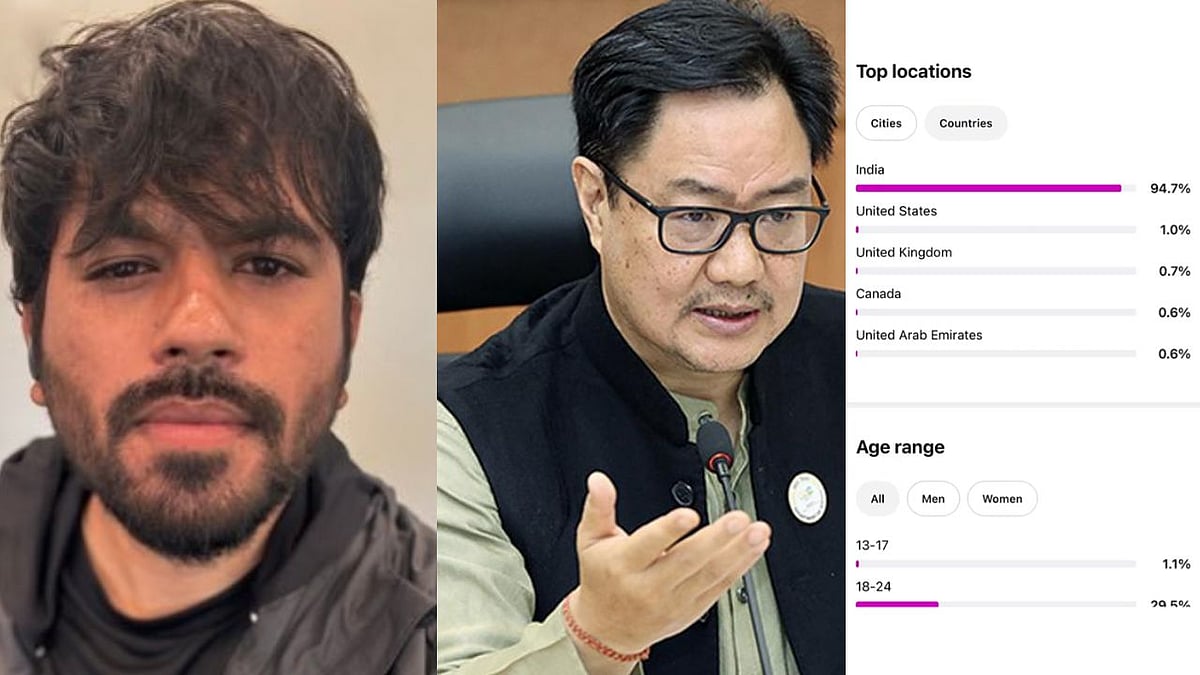
A fresh political and social media row erupted after Cockroach Janta Party (CJP) founder Abhijeet Dipke shared a screen recording of the group’s Instagram audience analytics, questioning why Union Minister Kiren Rijiju was allegedly portraying Indian youth as “Pakistani”.
In the viral post, Dipke claimed the analytics had earlier been shared with media outlets before the account was hacked and said the data showed that over 94% of the audience came from India.
“This is the screen recording of our audience demographic which we have shared with media before our account was hacked. More than 94% of the audience is from India. Why is a Union Minister labelling Indian youth as Pakistani?” the post read.
What The Analytics Claimed
The screen recording shared from the Instagram handle linked to Cockroach Janta Party allegedly showed 94.7% audience from India, over 21.1 million followers and massive spikes in engagement, views and interactions.
Dipke used the data to counter allegations amplified online that the movement’s popularity was being driven by Pakistani or foreign-linked audiences.
The viral exchange began after Rijiju posted a sharp comment targeting social media users allegedly dependent on followers from Pakistan and networks linked to billionaire George Soros.
“I pity those who seek their followers in social media from Pakistan & George Soros gang. India has enough population and highly energetic youth population who could be genuine and valuable followers! No need to seek validation from the anti-India gang,” Rijiju wrote.
Though he did not explicitly name CJP in the post, many social media users linked the remark to the satirical movement.
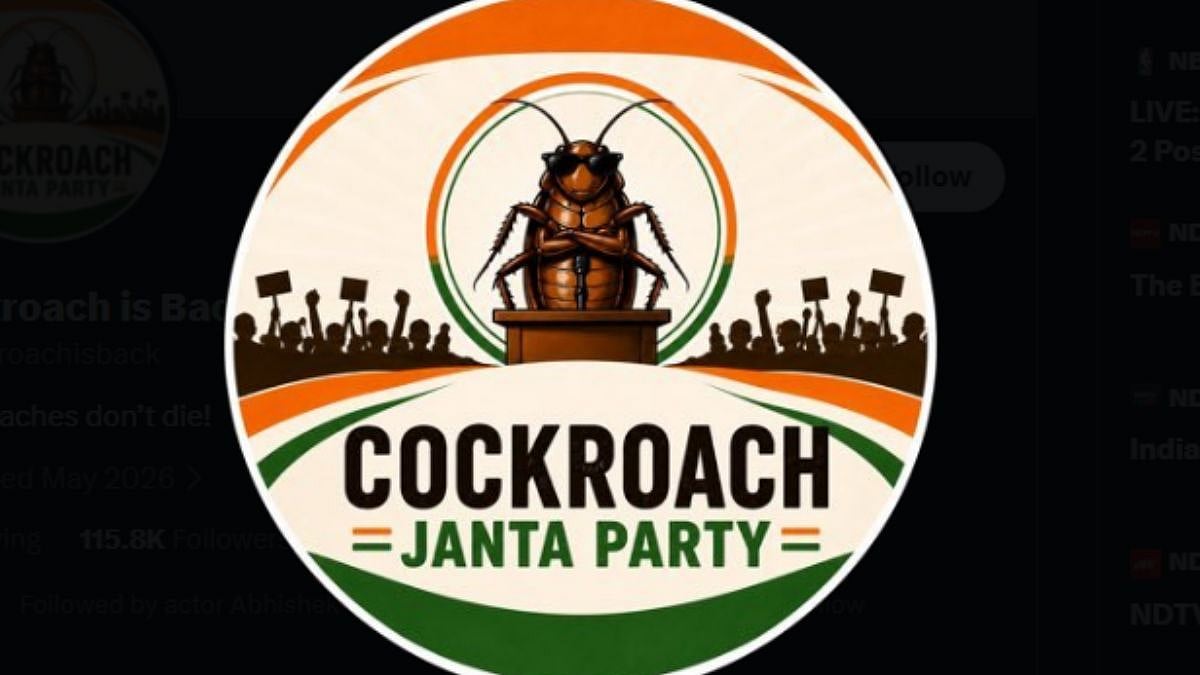
What Is Cockroach Janta Party?
Cockroach Janta Party, widely known online as CJP, emerged in May 2026 as a satirical anti-establishment youth movement that rapidly gained traction among Gen Z users across India.
The movement was founded by Abhijeet Dipke, a former associate of Arvind Kejriwal’s Aam Aadmi Party and a political communications strategist currently studying at Boston University.
The movement gained momentum after controversial remarks attributed to Supreme Court judge Surya Kant, who allegedly compared unemployed youth and government critics to “cockroaches” and “parasites”. Supporters soon turned the insult into a viral online campaign using hashtags like #MainBhiCockroach.
Polarised Reactions Online
Dipke’s post triggered intense debate across social media platforms.
Supporters praised the release of analytics data as proof that the movement’s audience was overwhelmingly Indian and accused critics of unfairly branding dissenting youth voices as anti-national.
However, critics questioned the authenticity of the screen recording and pointed to the account’s rapid 140% follower growth, with some alleging manipulation or coordinated amplification.
Others argued the controversy reflected a growing clash between establishment narratives and digitally driven youth protest movements.
Growing Political Flashpoint
The controversy has now transformed Cockroach Janta Party from a satirical online campaign into a broader political flashpoint involving questions around nationalism, online dissent, youth anger, and accusations of foreign influence in digital discourse.
With both sides continuing to exchange claims online, the viral analytics video has added another layer to the escalating confrontation between India’s political establishment and a growing section of internet-driven Gen Z activism.

