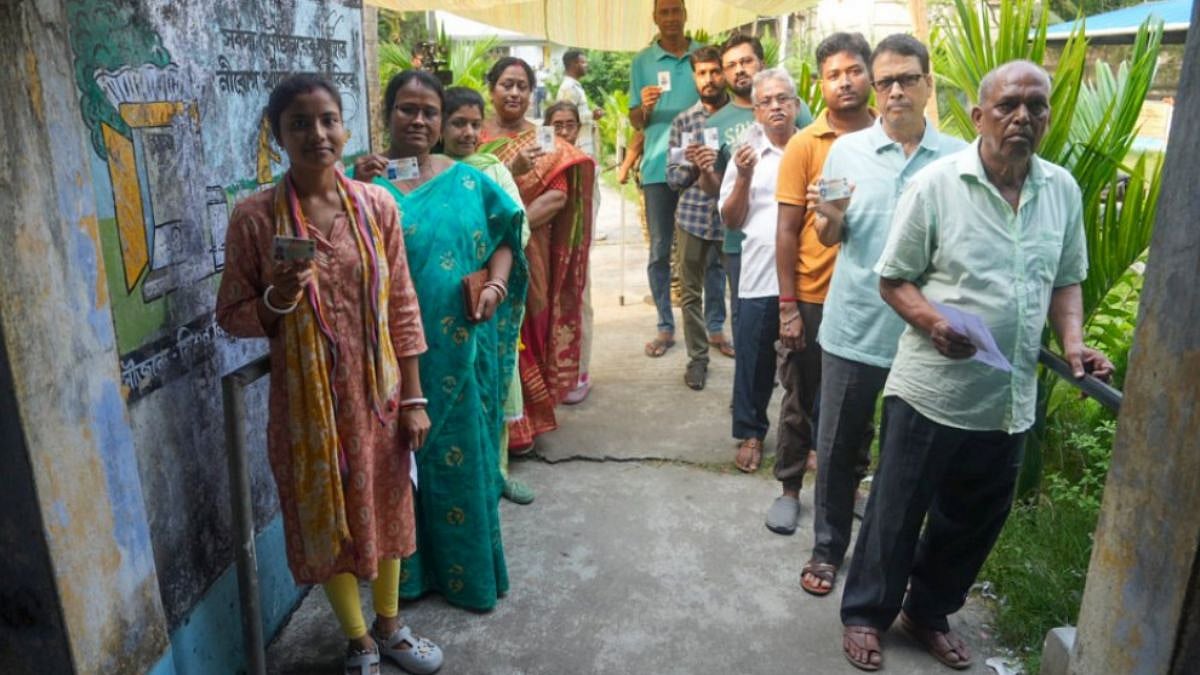
The first phase of the 2026 West Bengal Assembly elections has etched itself into Indian democratic history, but not for the reasons usually associated with the state. While past elections were often defined by reports of booth capturing"or sporadic violence, the story of April 23, 2026, was one of staggering, almost improbable, participation.
According to the Election Commission of India (ECI), the first phase across 152 seats recorded a turnout of 92.88 per cent. In districts like Cooch Behar and South Dinajpur, the figures breached the 96 per cent mark. Chief Election Commissioner Gyanesh Kumar characterised this as the highest poll participation since Independence.
However, behind these numbers lies a complex administrative exercise known as the Special Intensive Revision (SIR), which has transformed the act of voting from a civic right into a desperate struggle for documented existence.
Understanding Special Intensive Revision
The SIR is an aggressive, house-to-house verification process aimed at "purifying" the electoral rolls. While voter lists are updated annually, the 2025-26 SIR in West Bengal was unprecedented in its scope. The ECI utilised physical verification to identify "dead, shifted, or absent" (DSA) voters and resolve "logical errors" in the database. The result was a massive contraction of the electorate.
In the 152 constituencies that voted in the first phase, approximately 40.46 lakh names were deleted following the revision. Statewide, the total number of registered voters dropped by nearly 12 per cent. This creates a mathematical surge. When the denominator—the total voter base—is significantly reduced but the number of people casting ballots remains high, the resulting percentage hits record peaks.
Why fear of deletion drove the masses
The record turnout was not merely a byproduct of math. It was a response to deep-seated anxiety. Throughout the campaign, the SIR was framed by political parties as a high-stakes test of residency.
In districts like Malda, Murshidabad, and North Dinajpur—hubs for migrant labour—thousands of workers returned from distant states at their own expense. Many expressed a singular fear that if they did not vote, the government would assume they no longer lived in the state and delete their names permanently.
High-ranking officials and middle-class citizens alike were reportedly gripped by the same urgency. The prevailing sentiment was that the ink on one’s finger served as a certificate of existence against a system that had already purged millions of names.
Legal battles and the Supreme Court’s stance
The scale of the deletions led to a flurry of legal challenges. On April 24, 2026, the Supreme Court addressed a petition involving 65 election officials who discovered their own names were deleted from the rolls despite being assigned to conduct the election.
The bench, led by Chief Justice Surya Kant and Justice Joymalya Bagchi, acknowledged the irony of election officers being unable to vote but ultimately refused to halt the process. The court directed aggrieved citizens to appellate tribunals, which are currently struggling under a massive backlog of 34 lakh pending appeals.
While the apex court emphasised that the right to remain on the rolls is a valuable one, it clarified that the mere filing of an appeal does not grant a person the right to vote. As of the first phase, only 136 voters managed to get their names reinstated through these tribunals.
Political Interpretations of the historic surge
Both the ruling Trinamool Congress (TMC) and the BJP have claimed the 92 per cent turnout as a mandate in their favour, though their logic differs vastly. The TMC argues that the high turnout is a backlash against the SIR, which they label as a tool of harassment. They believe that voters, particularly migrant workers and minorities, turned out in record numbers to punish the BJP for the "arbitrary" deletion of names.
Conversely, the BJP maintains that the SIR finally removed "ghost voters" who facilitated proxy voting in the past. They argue that the 92 per cent figure represents a genuine, peaceful wave of voters who are seeking a Parivartan (change) to end the cycle of migration for work.
Historical precedents and final verdict
In Indian political science, a sudden spike in voter turnout is often interpreted as an "anti-incumbency" wave. For example, the historic 84.33 per cent turnout in Bengal's 2011 election resulted in the end of 34 years of Left Front rule. However, the 2026 situation is unique because of the SIR variable. If the high percentage is primarily due to a "cleansed" list and fear-driven participation, it may not follow traditional patterns of political change.
As the state moves toward the second phase on April 29, the question remains whether this was a vote for a specific party or a collective roar from a population determined not to be erased from the records. The final verdict will only be clear when the results are announced on May 4.

