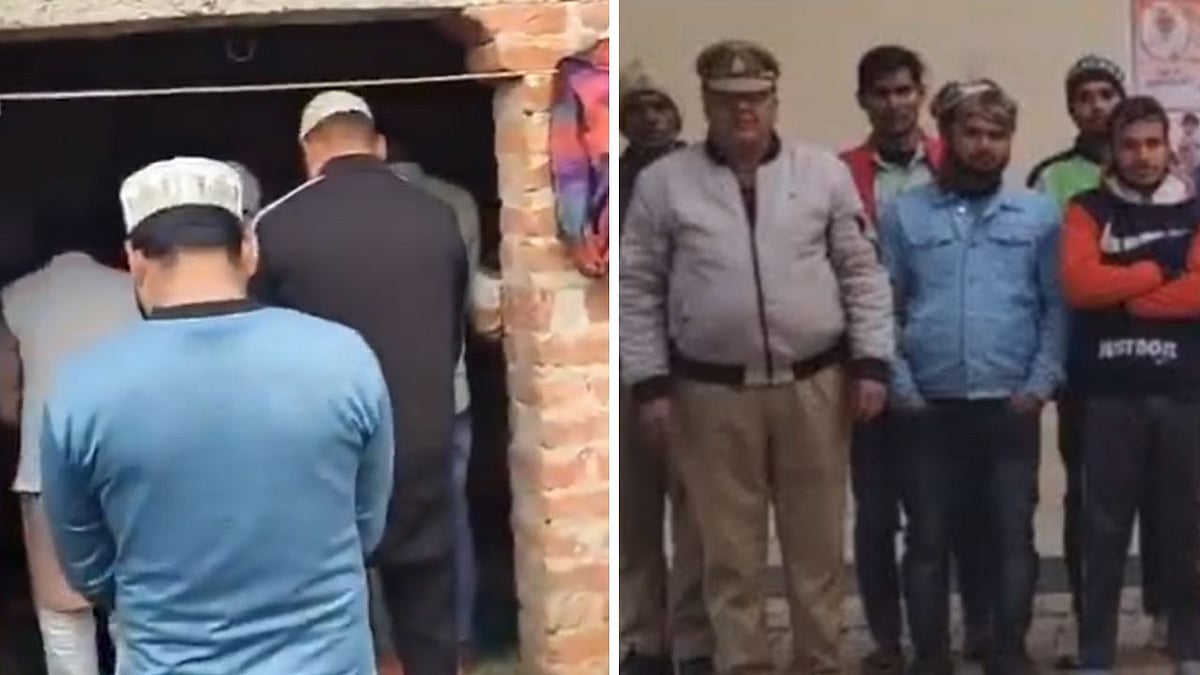
Bareilly: Uttar Pradesh Police have arrested 12 men for allegedly disturbing public peace after they were found offering namaz at an abandoned house in Bareilly district. The arrests were made following complaints from local villagers, police said.
A video of the incident has since gone viral on social media, which led to a wider debate on religious freedom and law enforcement.
Complaint by Villagers
According to police officials, villagers approached local authorities claiming that a group of men were conducting congregational prayers at a dilapidated structure in the area. Acting on the complaint, the police reached the spot and detained 12 individuals.
Officials stated that the arrests were made under preventive provisions related to maintaining law and order. “Appropriate action has been duly taken by the local police in connection with the incident,” the Bareilly Police responded to the video posted on X.
Viral Video Shows Men Offering Prayers
The viral video shows the group offering namaz on prayer mats inside and near a crumbling brick structure, believed to be an abandoned house. The footage does not show any visible confrontation or obstruction, with the activity appearing private and non-disruptive.
However, the circulation of the video has intensified public scrutiny of the incident.
Social Media Divided Over Arrests
Reactions online have been sharply divided. While some users defended the police action citing law-and-order concerns, others questioned how the act constituted a disturbance.
One user commented, “Offering namaz disrupts peace whose peace gets disrupted? If it was on the street, that’s different. But doing it inside one’s own house should not be an issue.”
Another user wrote sarcastically, “Such is the strength of our democracy freedom to offer namaz even at home is being snatched away. What grand progress.”
Questions Raised Over Religious Freedom
The incident has once again raised questions over the balance between religious practices, private property use, and public order, particularly amid increasing scrutiny of congregational prayers in various parts of the country.
