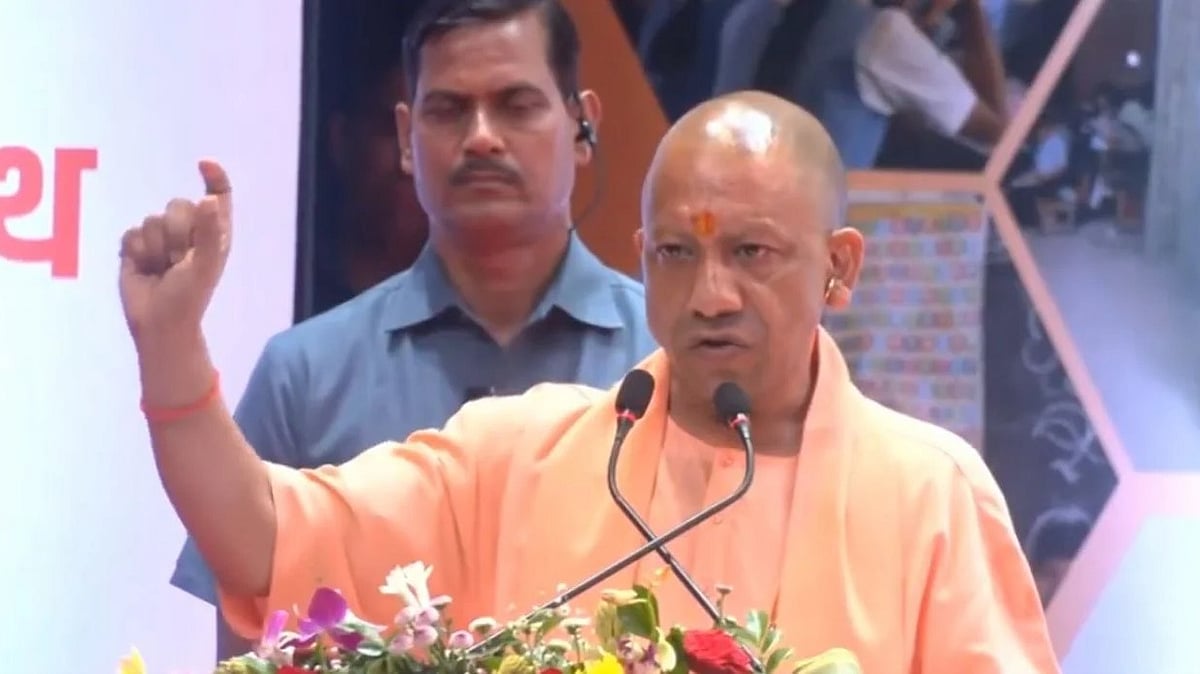
Uttar Pradesh Chief Minister Yogi Adityanath emerged as one of the most effective campaigners for the Bharatiya Janata Party in the West Bengal Assembly elections, with the party registering a high success rate in constituencies where he addressed rallies and roadshows.
Strike rate of 88.5 percent in 35 constituencies
According to Election Commission data, Adityanath campaigned in 35 Assembly constituencies in West Bengal. Of these, BJP candidates have won 31 seats, translating into a strike rate of 88.5 percent. The figures underline the BJP’s reliance on the Uttar Pradesh Chief Minister as a key face in high stakes electoral battles beyond his home state.
The BJP positioned him as an emblem of decisive governance, underscoring his bulldozer approach linked to crackdowns on crime and illegal encroachment in UP. In Bengal, candidates invited him to campaign to amplify the message of tough law enforcement.
Yogi mounted sharp attack on TMC government
During his campaign, Adityanath mounted a sharp attack on the Trinamool Congress government led by Mamata Banerjee, accusing it of fostering violence and lawlessness. He referred to alleged incidents involving BJP workers and claimed that political violence had become widespread under TMC rule.
The Uttar Pradesh Chief Minister also targeted what he described as vote bank politics and raised concerns over demographic changes in the state. He questioned the silence of the TMC leadership on issues concerning Dalit Hindus in Bangladesh and alleged that identity politics was being used to alter the social fabric of Bengal.
Yogi flagged mafia corruption in Bengal
Adityanath repeatedly flagged issues of sand, coal, land and cattle mafias, accusing the TMC government of allowing corruption and extortion networks to flourish. He claimed that Bengal had turned into a hub of terror, mafia activities and cut money practices over the past decade and a half.
In his speeches, Adityanath drew a contrast between governance in Uttar Pradesh and West Bengal. He said that before 2017, Uttar Pradesh faced similar challenges of lawlessness and communal tension, but the situation changed after the BJP came to power. He highlighted improved law and order, infrastructure growth and welfare delivery in Uttar Pradesh as examples of what he termed a successful governance model.
Yogi invoked Bengal's historical legacy
The Chief Minister also invoked Bengal’s historical legacy, referring to its contribution to spirituality, culture, education and the economy. He said the state was once a backbone of India’s economic strength but had declined due to successive governments led by Congress, Left parties and later the TMC. He cited the 1905 anti partition movement and the Swadeshi movement to appeal for unity among voters.
Among the key constituencies where Adityanath campaigned and the BJP secured victories are Nandakumar, Kanthi North, Kanthi South, Patashpur, Ramnagar, Egra, Bhagabanpur, Sonamukhi, Indus, Barjora, Barabani, Rampurhat, Cooch Behar South, Jalpaiguri, Mathabhanga, Pingla, Dhupguri, Joypur, Garbeta, Jorasanko, Chakdaha, Katwa, Bagda, Tarakeswar, Nabadwip, Dum Dum, Bangaon North, Bangaon South and Rajarhat. The party, however, lost seats such as Bolpur, Keshpur, Udaynarayanpur and Dhanekhali where he had also campaigned.
Party lost four seats despite his campaigning
Party sources said the Chief Minister’s campaign schedule is finalised based on inputs from the BJP’s national election management committee and state units. Requests for his rallies are first raised by state units and then cleared by the party leadership in Delhi after assessing local political equations and campaign requirements.
The election management committee also plays a role in identifying key constituencies and deploying star campaigners based on caste dynamics, local issues and the intensity of the contest. State units and leaders are usually informed about campaign schedules three to four days in advance, though last minute changes are also made depending on political developments.
The results have reinforced Adityanath’s position as a key campaigner for the BJP, particularly in states where the party seeks to expand its footprint or consolidate gains. With the next major electoral test in Uttar Pradesh in 2027, the Bengal performance is likely to shape campaign strategies and the deployment of leaders in the run up to the polls.

