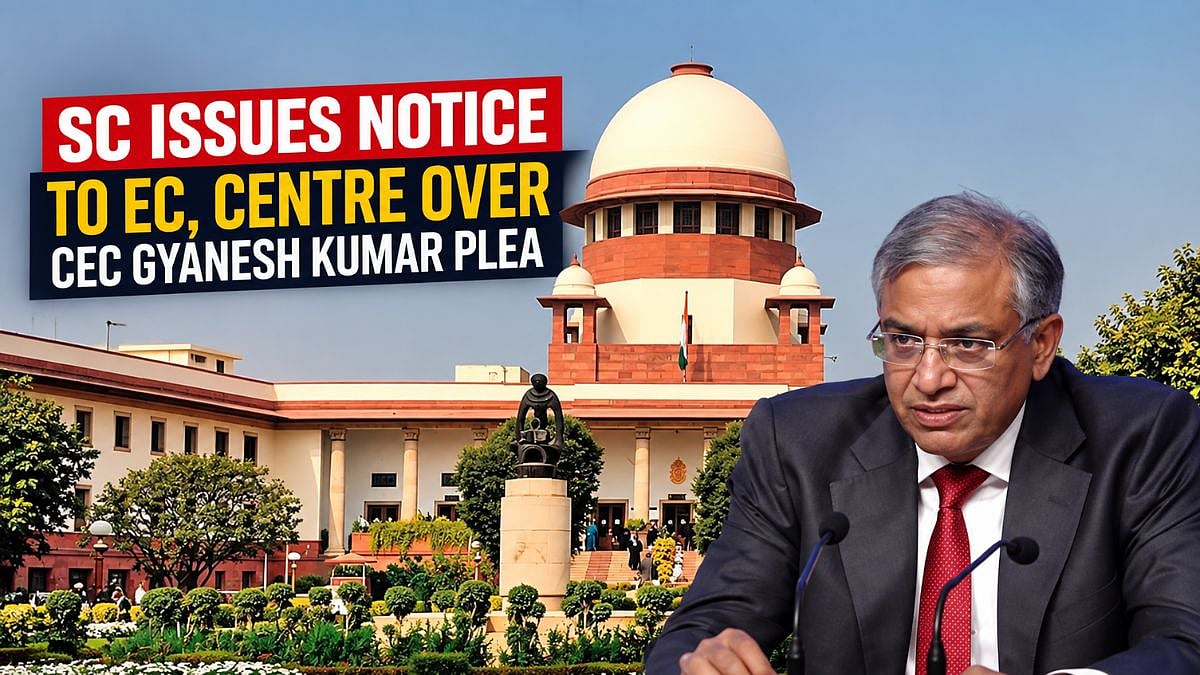
New Delhi, October 5, 2026: The Supreme Court on Monday issued notices to the Election Commission of India and the Centre on a plea challenging the manner in which the poll panel, led by Chief Election Commissioner Gyanesh Kumar, allegedly took decisions without the approval of the other two Election Commissioners.
A Bench comprising Chief Justice of India Surya Kant and Justices Joymalya Bagchi and V Mohana sought responses within a week. The court observed that Election Commission decisions have to be taken either unanimously or by a majority and said it presumed that this procedure had been followed. The court, however, declined to grant interim relief sought by the petitioner.
Form 6 Row Deepens
The hearing also brought the controversy surrounding changes to Form 6, used for registering new voters, into sharper focus. The Supreme Court made it clear that it had not directed modifications to the form during the Special Intensive Revision of electoral rolls across several states.
“We are making it clear, any modifications to Form 6 have not been made by us,” Chief Justice Surya Kant said.
Form 6 is a statutory form under the Registration of Electors Rules, 1960. The material placed before the court argued that changes to it should follow the proper lawmaking process rather than be introduced through administrative action.
The Congress seized on the court’s observation, claiming that Kumar had issued a press notice on September 26 saying changes to Form 6 had been made in accordance with Supreme Court directions. The party accused the CEC of misleading the country and reiterated its allegations of “vote theft”.
The dispute over Form 6 adds another layer to an already contentious debate over the Election Commission’s functioning. While the court has not endorsed the allegations against Kumar, its decision to seek formal responses means the questions raised about the poll body’s decision-making will now face judicial examination.
Court Rejects Immediate Relief
Senior advocate Vikas Singh, appearing for petitioner Rakesh Kumar Singh, sought the immediate suspension of the CEC and urged the court to direct the Election Commission to take decisions unanimously until the case was finally decided.
Singh argued that the Election Commission’s credibility had been undermined and asked the court to ensure that Kumar did not take decisions unilaterally. He also raised concerns over the protection from legal action available to the CEC under Section 16 of the 2023 Act.
Justice Bagchi noted during the hearing that even judges did not enjoy the protection given to the CEC under the provision. However, he also questioned whether the court could presume, before examining the evidence, that Election Commission orders had been issued unilaterally.
Chief Justice Surya Kant said the allegations before the court were based on newspaper reports. Singh responded that the Election Commission had issued a press release but had not denied those reports.
The court ultimately issued notice without granting interim relief, saying it would examine the relevant records. That distinction is significant: the notices open the door to scrutiny, but they do not amount to a judicial finding against the CEC or the Election Commission.
Second Plea Targets CEC
The Supreme Court also heard another petition against Kumar, filed by advocate Shailendra Mani Tripathi. The plea sought an independent, high-powered Judicial Inquiry Commission or a Special Investigation Team headed by a retired Supreme Court judge to investigate allegations against the CEC.
It sought an end-to-end audit of Election Commission databases and an investigation into the circumstances in which 13 crore names were allegedly deleted across 30 states and Union Territories during the Special Intensive Revision.
Senior advocate Menaka Guruswamy, appearing for Tripathi, told the court that the CEC’s actions should at least be described as biased and raised concerns over the deletion of voters. The Chief Justice said the petition would be tagged with the earlier plea.
Tripathi’s petition also argued that Kumar should not enjoy statutory or constitutional immunity in light of the allegations and should be subject to investigation and regular legal proceedings as an “ordinary accused”. These remain claims made in the petition and have not been established by the court.
Congress Raises Three Demands
Outside the courtroom, political pressure on Kumar continued to grow. Congress president Mallikarjun Kharge listed three “non-negotiable demands”: Kumar’s resignation, annulment of the Special Intensive Revision and a return to ballot papers instead of electronic voting machines.
Kharge said Congress workers and INDIA bloc partners were protesting across the country and that the party stood with civil society members and youth organisations campaigning on the issues.
Senior Congress leader Prithviraj Chavan also alleged that Kumar had acted illegally and violated the law governing the powers of Election Commissioners. According to the material provided, the Congress has stepped up its attack after reports that Election Commissioners Sukhbir Singh Sandhu and Vivek Joshi had objected on record at least 14 times over the previous 10 months to decisions and orders connected with the Special Intensive Revision that they allegedly said were issued without their knowledge or recommendation.
Shiv Sena (UBT) MP Sanjay Raut intensified the Opposition attack, calling Kumar an “enemy of the country” and alleging that he had “gone underground”. Raut said Opposition MPs would march to the Election Commission’s office in New Delhi on Tuesday.
The increasingly sharp language shows how a dispute over electoral procedures has evolved into a larger political confrontation over public confidence in the institution responsible for conducting elections. But political allegations and judicial findings remain separate, and the Election Commission’s response to the Supreme Court notice will be crucial to the next stage of the controversy.
Protests Spread
The political battle has also spilled onto the streets. National Students’ Union of India members staged a symbolic protest at their headquarters on Raisina Road in New Delhi, with protesters lying under white sheets to represent “dead bodies” while demanding Kumar’s resignation and arrest over allegations of “vote chori”.
The demonstration was led by NSUI national president Vinod Jakhar. Protesters held placards carrying slogans including “vote ki chori nahi chalegi, janta ki awaaz nahi dabegi”, meaning vote theft will not be tolerated and the people’s voice will not be suppressed.
Protests demanding Kumar’s removal and suspension of the Special Intensive Revision had entered their third day on Sunday, with demonstrations reported in New Delhi and Mumbai. The Delhi Congress also announced that INDIA bloc parties would protest outside the office of Delhi Chief Electoral Officer Ashok Kumar at Kashmere Gate on October 7.
Meanwhile, Uttar Pradesh Chief Minister Yogi Adityanath defended the Special Intensive Revision. He said identifying and removing ineligible names illegally included in electoral rolls was necessary for India’s security, unity and integrity.
Adityanath said verification of entries relating to deceased people, those who had permanently shifted and duplicate entries was necessary. He also urged people who had turned 18 to enrol as voters.
His intervention highlights the fundamental divide surrounding the exercise: while Opposition parties portray the revision as a threat to voting rights, its supporters argue that cleaning electoral rolls is essential to protect the integrity of elections.
Journalist’s Allegation Fuels Anger
A parallel controversy involving the police added to tensions in the capital. A woman journalist who accused Assistant Commissioner of Police Vivek Bhagat of sexually harassing and manhandling her while she was covering a protest was detained again on Monday and taken to Delhi Cantonment police station.
Independent journalists and activists spent a second consecutive night protesting outside Parliament Street police station, demanding registration of a First Information Report against the officer.
Citizens for Justice and Peace legal head Ratna Singh said female detainees told her that police had assaulted them and alleged that two detainees were brutally beaten. Police also detained protesters outside Parliament Street police station on Monday.
The Supreme Court, meanwhile, indicated that it would list a separate petition alleging that Delhi Police was preventing peaceful protests and marches to Jantar Mantar following allegations against Kumar.
With petitions before the Supreme Court, demonstrations on the streets and political parties taking sharply opposing positions, the controversy has moved beyond a disagreement over electoral procedure. At its heart is a more consequential question about confidence in institutions that administer elections.
Also Watch:
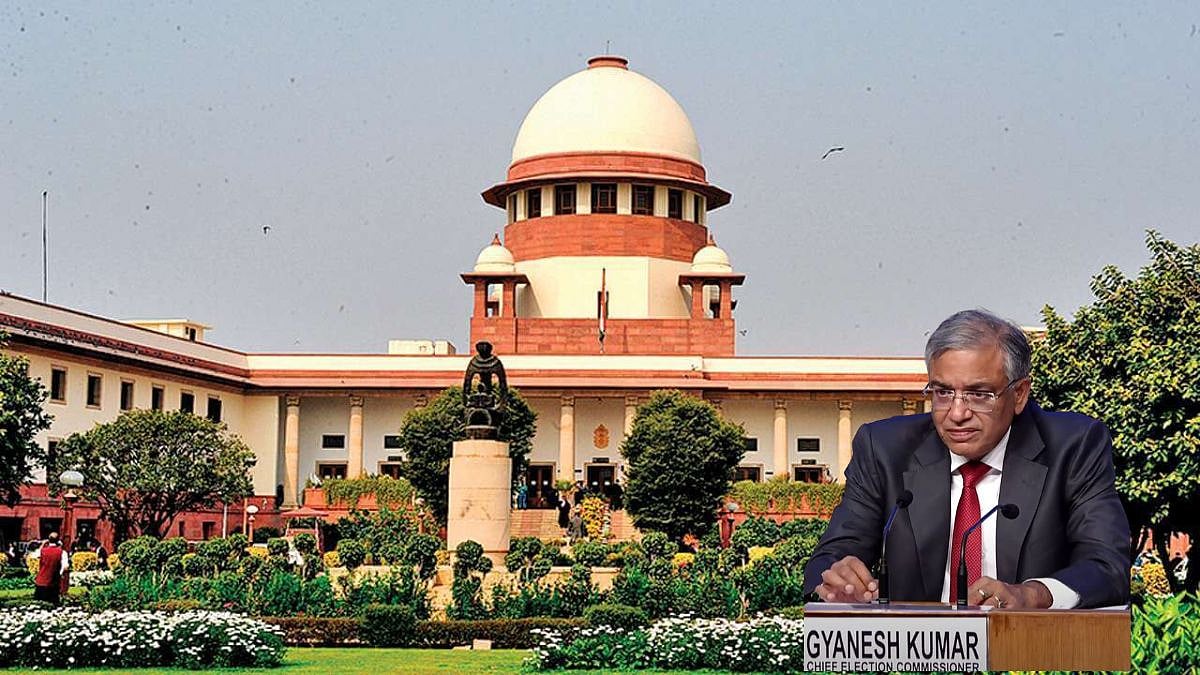
For now, the Supreme Court has made no finding that the CEC acted unlawfully or unilaterally. Its decision to seek responses from the Election Commission and the Centre, while refusing immediate relief, leaves that question open.
The records placed before the court and the responses filed within the next week will therefore be central to determining whether the allegations have legal substance or remain part of an escalating political battle.
To get details on exclusive and budget-friendly property deals in Mumbai & surrounding regions, do visit: https://budgetproperties.in/

