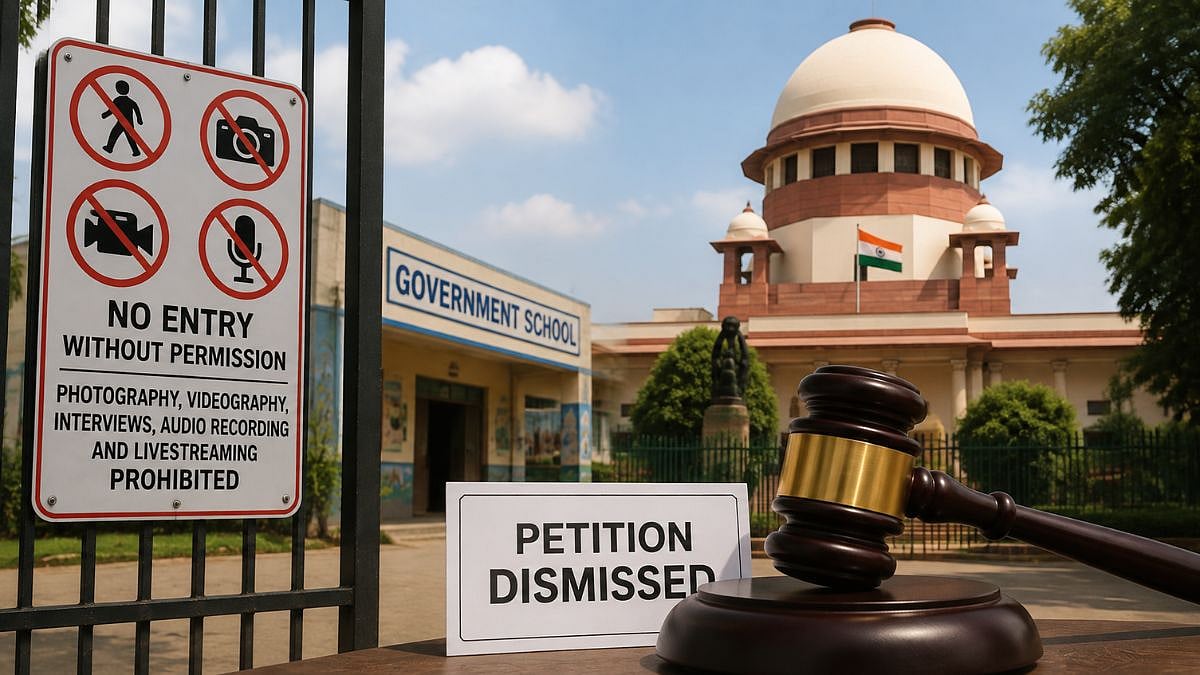
New Delhi, September 3, 2026: The Supreme Court has refused to entertain a public interest litigation (PIL) challenging restrictions imposed by education authorities in Rajasthan and Uttar Pradesh on the entry of outsiders, journalists, YouTubers, social media users and civil society representatives into government schools.
The petition also challenged restrictions on photography, videography, interviews, audio recording and livestreaming on school premises. A Bench comprising Justice PS Narasimha and Justice Alok Aradhe heard the petition filed by Priya Mishra and declined to entertain it. "We are not inclined to entertain the writ petition filed under Article 32 of the Constitution of India," the Bench said, Live Law reports.
School Campaign Puts Curbs In Focus
The petition assumed significance in the wake of the "School Thik Karo" campaign being undertaken by the Cockroach Janat Party (CJP) to expose deficiencies in government school infrastructure.
At the heart of the dispute is the question of how authorities balance children's privacy and safety with public scrutiny of government institutions. While the restrictions seek to regulate access to school premises and recording, the petition argued that documenting infrastructure in the public interest should be treated differently from recording identifiable children.
The petition specifically challenged an Aug 16, 2026, circular issued by Rajasthan's Director of Secondary Education. The circular requires outsiders to obtain prior permission from the principal before entering government school premises. It also requires prior written permission for photography, videography, interviews, audio recording and livestreaming.
UP Orders Also Challenged
In Uttar Pradesh, the petition referred to an Aug 19 order issued by the District Basic Education Officer, Ayodhya. The order directed that outsiders, YouTubers and people associated with social media should not enter council schools or take photographs or videos without permission from the competent authority.
According to the petition, similar directions were issued in several other districts, including Azamgarh, Ballia, Basti, Balrampur, Shamli and Agra.
Petitioner Cites Fundamental Rights
Mishra argued that the restrictions violate fundamental rights guaranteed under Articles 14, 19(1)(a), 19(1)(g), 21 and 21-A of the Constitution.
The petitioner contended that freedom of speech and expression encompasses legitimate journalism and the dissemination of information concerning public institutions, while recognising that the State has a duty to protect children's privacy, dignity and safety.
The petition sought to draw a clear distinction between recording identifiable children and documenting the physical condition of a government school. It argued that restrictions intended to protect children should not automatically prevent public-interest documentation of classrooms, buildings, toilets, drinking-water facilities, electricity, mid-day meals and other infrastructure.
Plea Sought End To Blanket Restrictions
The petitioner urged the Supreme Court to quash the Rajasthan and Uttar Pradesh orders to the extent that they impose blanket restrictions.
Mishra also sought directions that any regulation of public-interest documentation should satisfy the tests of reasonableness, necessity and proportionality.
Also Watch:
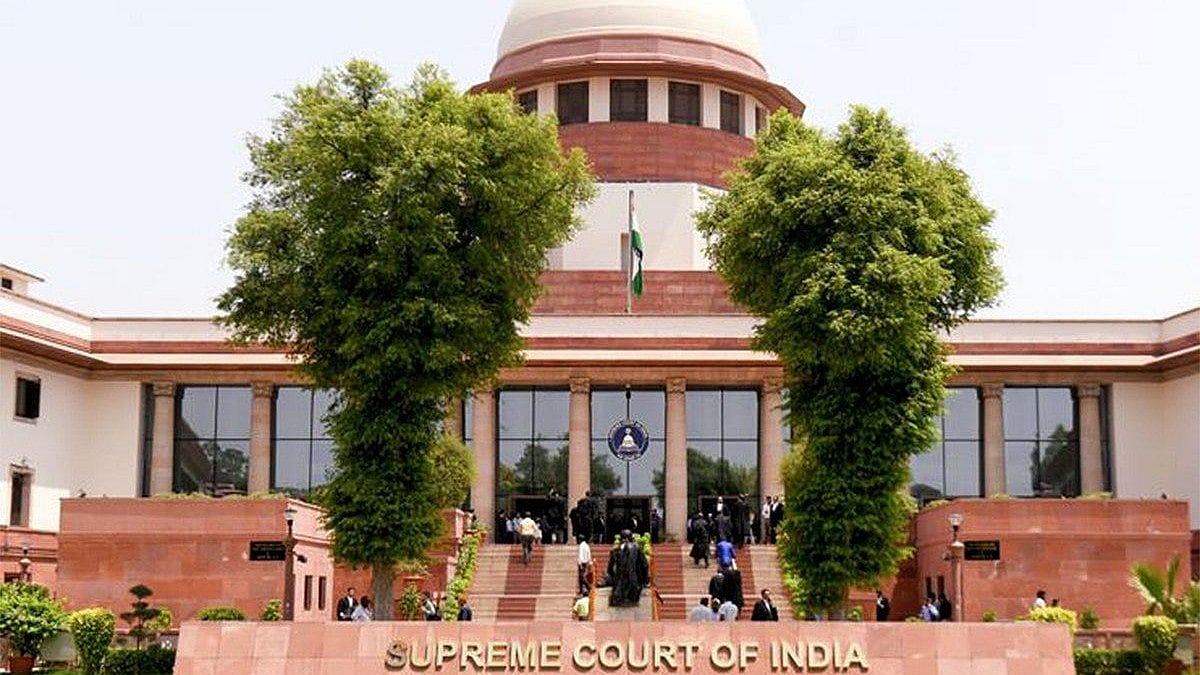
The Supreme Court's refusal to entertain the petition leaves the challenged restrictions untouched. The case nevertheless highlights the competing concerns raised in the petition: protecting children inside schools while allowing scrutiny of the condition of publicly run educational institutions.
To get details on exclusive and budget-friendly property deals in Mumbai & surrounding regions, do visit: https://budgetproperties.in/

