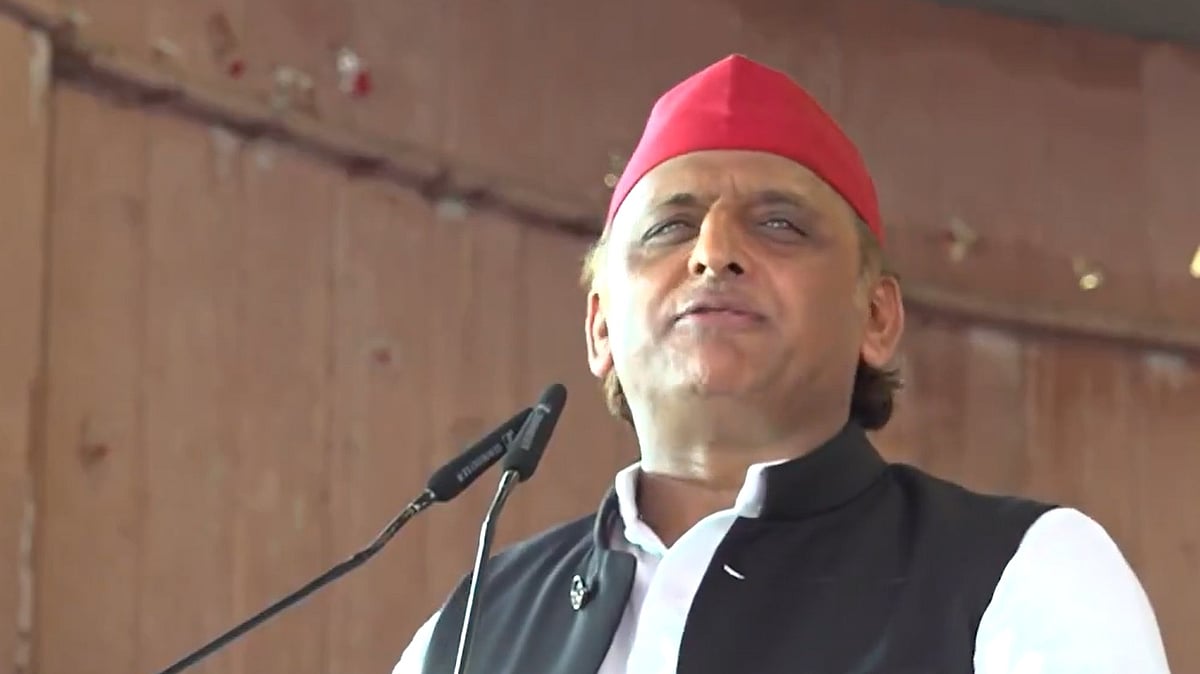
Lucknow: Samajwadi Party president Akhilesh Yadav has begun recasting one of his party's most successful political slogans. The "P" in the PDA formula, which originally stood for Pichchra (Backward), is now increasingly being projected as Pandit, signalling a strategic attempt to bring Brahmins back into the SP fold ahead of the 2027 Uttar Pradesh Assembly elections.
The shift marks one of the most significant ideological and electoral recalibrations by the SP since it coined the PDA, or Pichchra, Dalit, Alpsankhyak, narrative before the 2024 Lok Sabha elections. That formula helped the INDIA bloc win 43 of Uttar Pradesh's 80 Lok Sabha seats and reduced the BJP's tally sharply. With the Assembly election now less than a year away, the party appears to believe that expanding the social coalition is more important than preserving the original slogan.
The new messaging became evident on Wednesday when Akhilesh Yadav celebrated the birth anniversary of Janeshwar Mishra at the party headquarters and repeatedly referred to the "P" in PDA as "Pandit". He paid floral tributes to Mishra's statue and launched a sharp political attack on the BJP over the alleged theft of donations at the Ram Temple in Ayodhya. He also accused the BJP of failing to give adequate representation to Brahmins and claimed the community's self-respect had been undermined.
The symbolism was deliberate. Janeshwar Mishra, popularly known as "Chhote Lohia", remains one of the tallest Brahmin socialist leaders and continues to command respect across ideological lines. By placing Mishra at the centre of its latest campaign, the SP is attempting to reassure Brahmins that the party values both their political contribution and leadership.
The Ram Temple issue has also become an important instrument in this outreach. Rather than opposing the temple, Akhilesh has chosen to question the BJP's management of the shrine, alleging corruption in donation collections and demanding accountability. This enables the SP to engage with a religious issue without appearing anti-Hindu, a criticism the BJP has frequently levelled against it.

Political observers see the shift as an acknowledgement of electoral arithmetic. While the PDA alliance of OBCs, Dalits and Muslims remains the SP's core support base, party strategists believe it may not be sufficient on its own to secure a majority in the 403-member Assembly. Winning over even a section of Brahmin voters, estimated at around 10-12 percent of the state's electorate, could prove decisive in closely contested constituencies.
The outreach is also aimed at exploiting signs of discontent within sections of the Brahmin community. Over the past few years, opposition parties have repeatedly accused the BJP of sidelining Brahmin leaders, though the BJP rejects the charge. By highlighting issues such as the Ram Temple donation controversy and the alleged lack of representation, the SP hopes to create political space among upper-caste voters without alienating its traditional support base.
Also Watch:
For now, Akhilesh Yadav's message is unmistakable. The PDA formula that reshaped Uttar Pradesh politics in 2024 is being broadened. By redefining the "P" from Pichchra to Pandit, the Samajwadi Party is signalling that the battle for 2027 will not only be about consolidating backward classes, Dalits and minorities, but also about making inroads into a community that has traditionally leaned towards the BJP. Whether this social engineering succeeds could play a crucial role in determining the outcome of Uttar Pradesh's next Assembly election.

