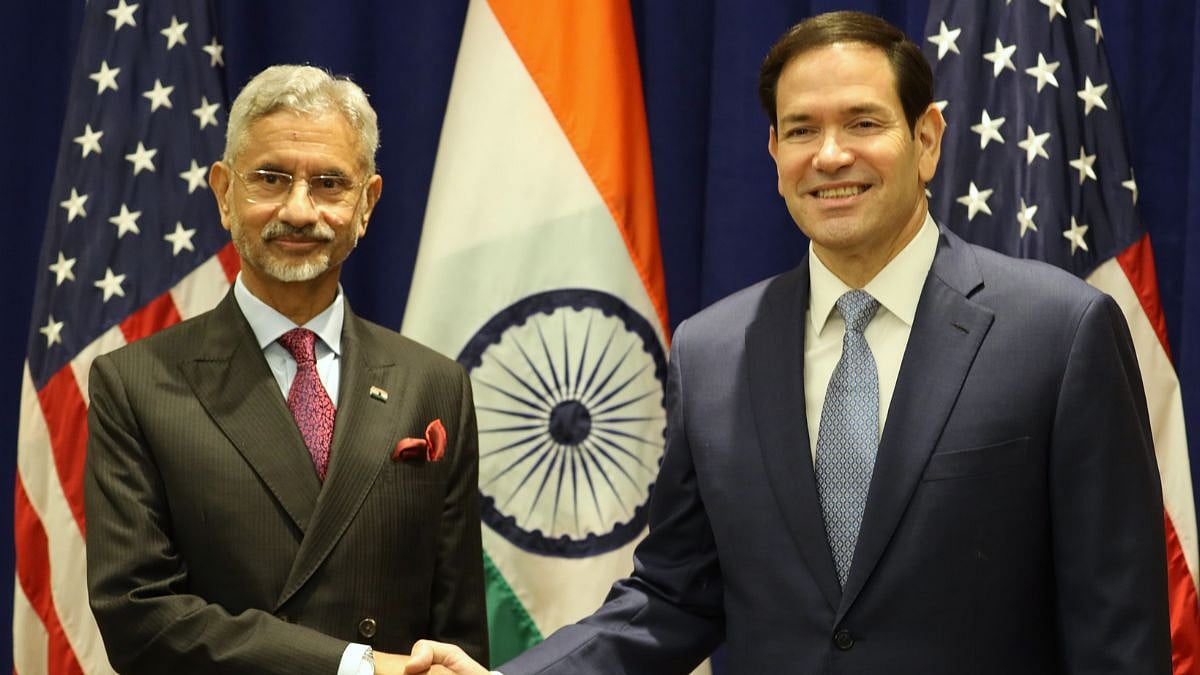
New Delhi: US Secretary of State Marco Rubio on Sunday stated that both Delhi and Washington were not just allies; they were strategic allies. “Our strategic partnership is what sets this relationship apart,” he said.
“Because it’s not simply limited to the region; it extends to opportunities to cooperate globally in different regions of the world. And that includes potentially, as I said even as we discussed a bit last night at dinner, in the Western Hemisphere and places like that,” Rubio said after his talks with External Affairs Minister S Jaishankar at Hyderabad House.
Rubio, who is in India to attend the Quad foreign-ministerial summit on Tuesday, said at a joint press conference with Jaishankar that there could be some “good news” on Iran to share later in the day. “I think we’ve made some progress. I’m always cautious when I say that,” he told the media gathering.
“But I do think there is the possibility that over the next few hours the world will get some good news at least with regard to the Strait of Hormuz.”
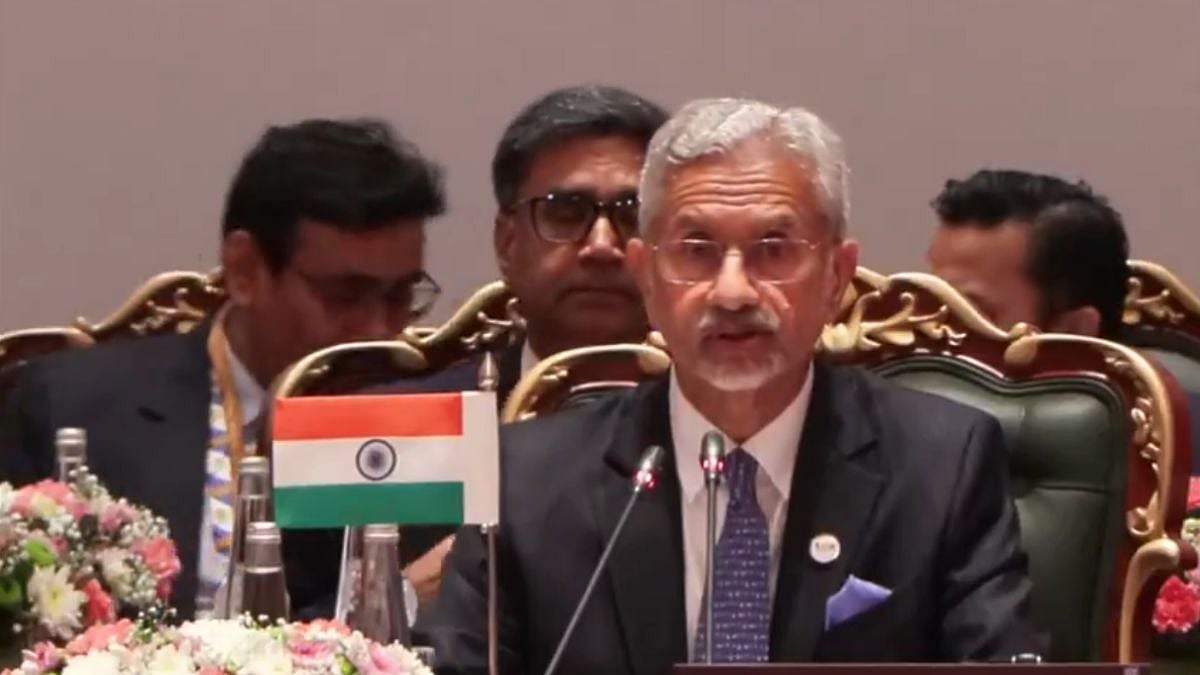
In his opening remarks to the US Secretary of State during their talks, Jaishankar stated both sides had a Comprehensive Global Strategic Partnership which meant that India and the US had a “broad-based cooperation that impacts and influences other regions in the world.”
During the talks the two leaders discussed a number of areas relating to trade, energy, defence and nuclear cooperation, among other issues. Jaishankar said that both sides had renewed a 10-year defence partnership framework agreement and that he looked forward to both sides concluding the final text of the interim free trade agreement. The minister also said that the recent passage of the Shanti Act could help realize the potential for enhanced nuclear cooperation between the two nations.
Coming to the energy issue, Jaishankar stated that in an era of global uncertainty, India needed to follow the strategy of “de-risking” where New Delhi would seek to source its energy requirements from reliable partners.
He confirmed there had been a “significant uptick” in India’s energy imports from the US. “This is not new. It started out many years ago, but it has really picked up in the last year,” he said. “This is an era of de-risking, and energy more than anything else requires de-risking. The US has emerged as a significant and reliable source of energy, as indeed have some other countries.”
The conference saw a number of questions reflecting concern about the current trajectory of the India-US relationship. Asked if the IndiaUS relationship had lost momentum, Rubio responded in the negative. “This is not about India; this is about the US in terms of trade,” he said. “The President came in and said we have a trade situation involving the US economy that doesn’t work moving forward. There is a huge imbalance built up that needs to be addressed. And he pursued it from a global perspective.”
Rubio added that the good news was that once this “trade rebalancing” had taken place, new win-win trade agreements could be negotiated between the US and partner countries such as India. “We are hopeful that our trade representatives can visit here very soon, and I think we are going to wind up with a trade agreement that is going to be enduring and beneficial to both sides.”
The US Secretary of State also sought to play down concerns within India regarding Washington’s growing closeness with Pakistan. “As far as our relations with other countries go, we work with other nations at the tactical level. So does India. That’s what responsible nationstates do.” He added. “But I don’t view our relations with any country in the world coming at the expense of our strategic alliance with India.”
“This is not about India; this is about the US in terms of trade,” he said. “The President came in and said we have a trade situation involving the US economy that doesn’t work moving forward. There is a huge imbalance built up that needs to be addressed. And he pursued it from a global perspective.”

