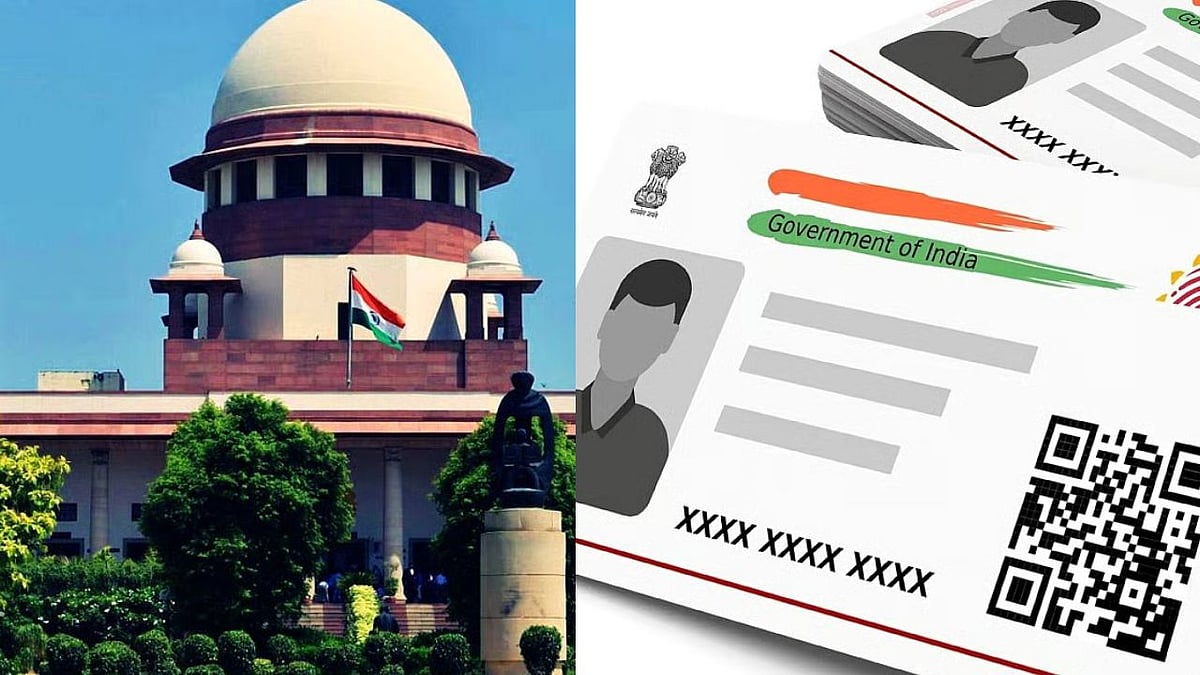
The Supreme Court on Tuesday sought responses from the Centre, all states, and Union Territories on a petition alleging widespread misuse of Aadhaar cards as proof of citizenship, domicile, residence, and date of birth despite legal provisions stating otherwise.
A bench headed by Chief Justice Surya Kant and Justice V. Mohana issued notices on the plea filed by advocate Ashwini Kumar Upadhyay and tagged it with similar pending matters before the court.
Petition Seeks Strict Limits on Aadhaar Usage
The petition argues that Aadhaar was designed solely as a tool for identity verification and should not be treated as evidence of citizenship, domicile, residential status, or age.
Seeking directions to the Centre, states, and the Election Commission, the plea urges authorities to ensure Aadhaar remains limited to identity authentication and is not used for purposes that exceed its statutory mandate.
‘Law Clearly Says Aadhaar Is Not Proof of Citizenship’
The petitioner pointed to Section 9 of the Aadhaar Act, 2016, which explicitly states that Aadhaar is not evidence of citizenship or domicile. It also cited a 2023 notification issued by the Unique Identification Authority of India (UIDAI), clarifying that Aadhaar serves as proof of identity and not proof of citizenship, address, or date of birth.
Despite these provisions, the plea claims Aadhaar is routinely being accepted for school admissions, property transactions, birth certificates, ration cards, driving licences, and voter registration processes.
Concerns Over Voter Registration Process
A major focus of the petition is the use of Aadhaar in Form-6, the application form for new voter registration. According to the plea, Aadhaar is being treated as proof of date of birth and residence during electoral enrolment, raising concerns about compliance with the Aadhaar Act, the Representation of the People Act, 1950, and constitutional guarantees under Article 14.
The petitioner contends that the existing verification mechanism is inadequate and could potentially allow individuals lacking proper citizenship-related documents to enter electoral rolls.
Call for Electoral Verification Reforms
Highlighting concerns over illegal immigration and document procurement, the plea argues that individuals can obtain multiple official documents using Aadhaar despite it not being a citizenship document.
To address these concerns, the petition has sought a comprehensive overhaul of electoral verification procedures and proposed the creation of a high-powered monitoring committee comprising a retired Supreme Court judge, cybersecurity experts, and forensic specialists to oversee reforms and strengthen scrutiny mechanisms.

What Happens Next?
With notices now issued to the Centre and states, the Supreme Court is set to examine whether Aadhaar's use in various administrative and electoral processes has drifted beyond the legal limits laid down under the Aadhaar framework. The case could have significant implications for voter verification, government documentation processes, and the broader role of Aadhaar in public administration.

