The Supreme Court has held that the right to walk on safe and demarcated footpaths is a fundamental right under the Constitution and must take precedence over the privilege of motorised vehicles, according to a report by Bar and Bench.
A Bench comprising Justices PS Narasimha and AS Chandurkar observed that the right flows from Articles 19 and 21 of the Constitution, which guarantee freedoms including movement and the protection of life and personal liberty. The judges emphasised that if a road exists, authorities have an enforceable obligation to provide and maintain footpaths for pedestrians.
As reported by Bar and Bench, the court remarked that Indian cities have historically prioritised motor vehicles at the expense of walkers, leaving pedestrians exposed to unsafe conditions. It noted that the absence of accessible and secure footpaths has become a long-standing civic problem and declared that such neglect can no longer continue.
The Bench identified urban development authorities, municipal corporations, municipalities and panchayats as the bodies responsible for creating and maintaining pedestrian infrastructure. It further held that citizens whose right to walk safely is violated may seek legal remedies against the concerned authorities in addition to pursuing compensation under the Motor Vehicles Act.
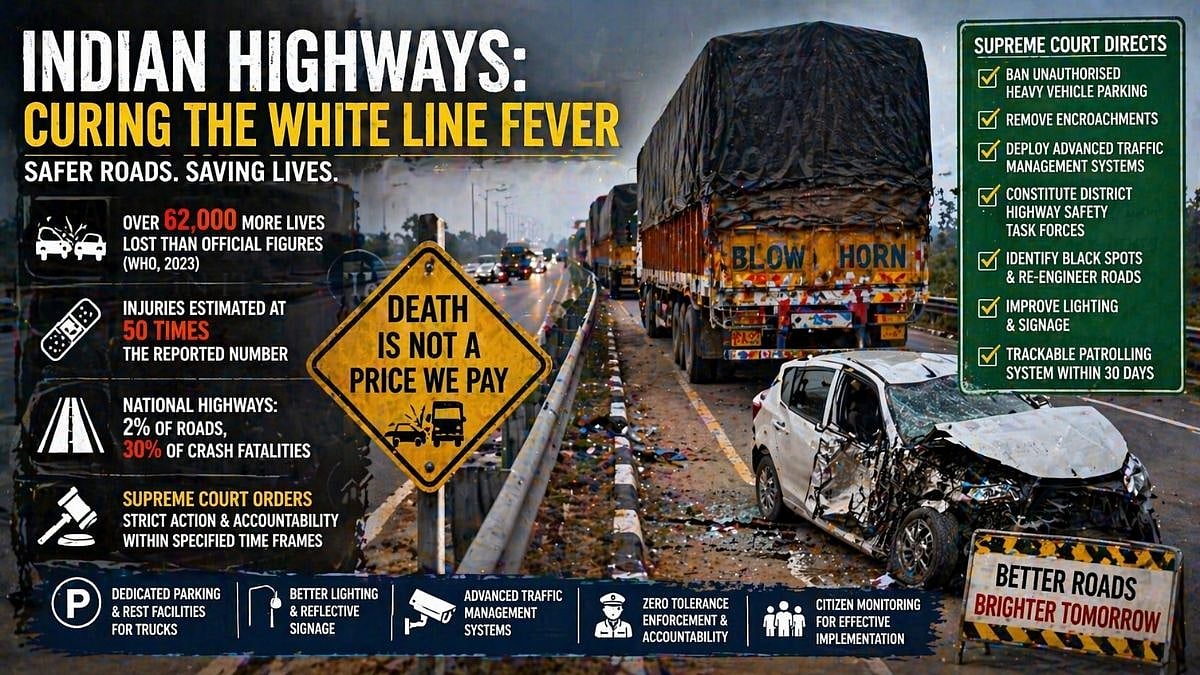
The observations came while deciding a case involving the death of a five-year-old child who was fatally struck by a tanker while walking to school with his father in an area that reportedly lacked both a footpath and a pedestrian crossing. The Supreme Court restored and enhanced compensation to the child’s family to Rs 11.44 lakh after setting aside a High Court order that had reduced the award.
According to Bar and Bench, the court also called for a regulatory framework on pedestrian rights and directed that its judgment be forwarded to relevant ministries and the Law Commission for consideration of suitable legislation.

