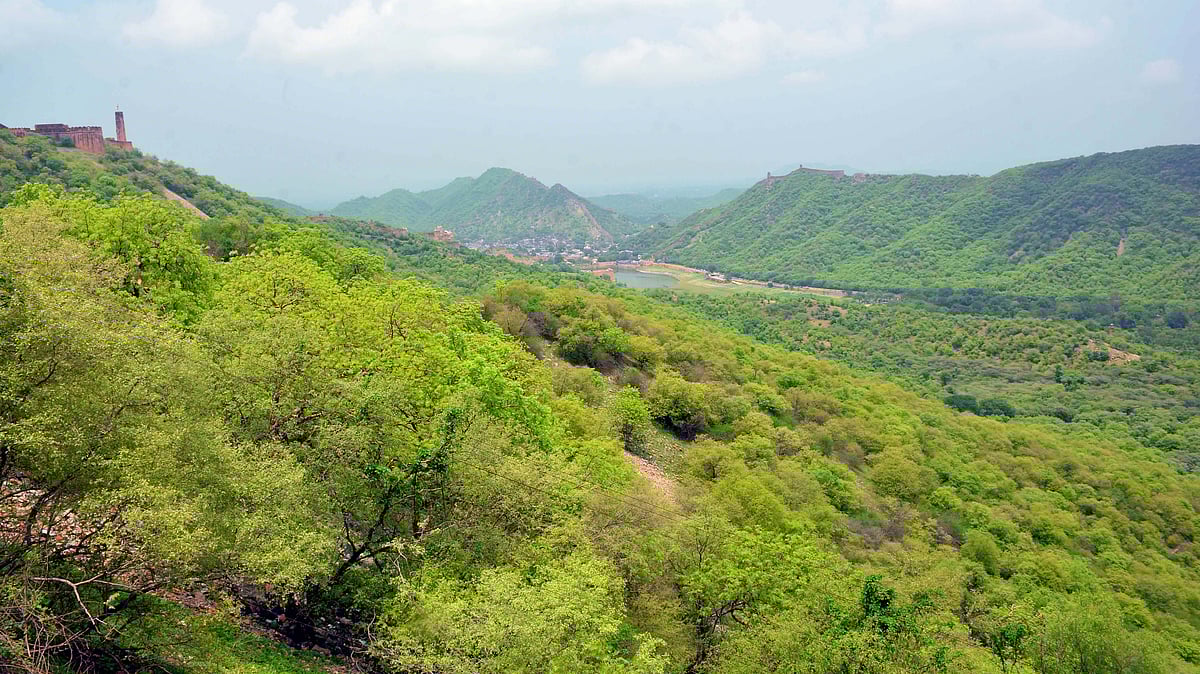
Jaipur: A state-of-the-art biological park, the largest in Rajasthan, is taking shape in Alwar, nestled in the foothills of the Aravalli mountain range and adjacent to the natural landscape of the Sariska Tiger Reserve. A detailed project report (DPR) for this ambitious project has been reportedly approved by the Central Zoo Authority (CZA).
This park will be developed in an area of approximately 100 hectares near the Kati Ghati area, close to the city forest and Jaisamand Dam in Alwar.
Incidentally, the union minister for forest and environment, Bhupendra Yadav, is the MP from Alwar, and Sanjay Sharma, minister for the same department in Rajasthan, is the MLA from Alwar City, so this ambitious project is taking shape rapidly.
“The objective of the project is not merely to create a zoo, but to establish a modern conservation institution based on four pillars: conservation, education, research, and responsible recreation,” said an official related to the project.
This biological park proposes to house all seven species of tigers found in the world, along with hippos and a butterfly park for which land has already been reserved, showcasing various species of butterflies. The park will house 81 species of animals.
According to the DPR, habitat-based enclosures such as natural hilly foothills, shrubby vegetation, rocky outcrops, and seasonal streams will be developed in the park so that wildlife can get a species-appropriate and enriched environment, and visitors can have an experience close to real nature.
The proposed Alwar Biological Park will have large and open animal enclosures, safari zones, education and interpretation centers, outreach activities, ecological green gateways, open theaters, aviaries, reptile houses, and animal rescue and quarantine centers. The park has been designed to be ecologically integrated with the Sariska-Aravalli landscape, ensuring that conservation values are not compromised.
The Detailed Project Report (DPR) includes a provision for a state-of-the-art veterinary hospital spread over approximately 2.1 hectares, which will include an operation theater, radiology unit, diagnostic lab, pharmacy, isolation wards, and post-operative care facilities. This hospital will serve as a major center for the treatment of not only the animals housed in the park but also injured wildlife rescued from the Sariska-Alwar landscape.
An incinerator, conforming to Central Zoo Authority standards, will also be provided for carcass disposal. The Alwar Biological Park will be developed as a resource-efficient and climate-sensitive model. It will prioritize rainwater harvesting, waste and wastewater management, and the use of renewable energy. As per CZA guidelines, a minimum of 30 percent green cover will be ensured within the park area.

Also Watch:
This project will directly generate employment for approximately 160 people. It will also create new livelihood opportunities for local communities—especially women and youth—through guide services, handicrafts, nature-based enterprises, and eco-tourism activities. The park will become a major attraction for Alwar and surrounding tourist destinations and will help increase the duration of tourist stays.
Rajasthan has four biological parks, namely Nahargarh (Jaipur), Sajjangarh (Udaipur), Machia (Jodhpur), and Abheda (Kota), and Alwar Biological Park will further strengthen the network of recognized biological parks.
According to the Forest Department, the project will be implemented in a phased and time-bound manner with the support of the government and recognized financial institutions.

