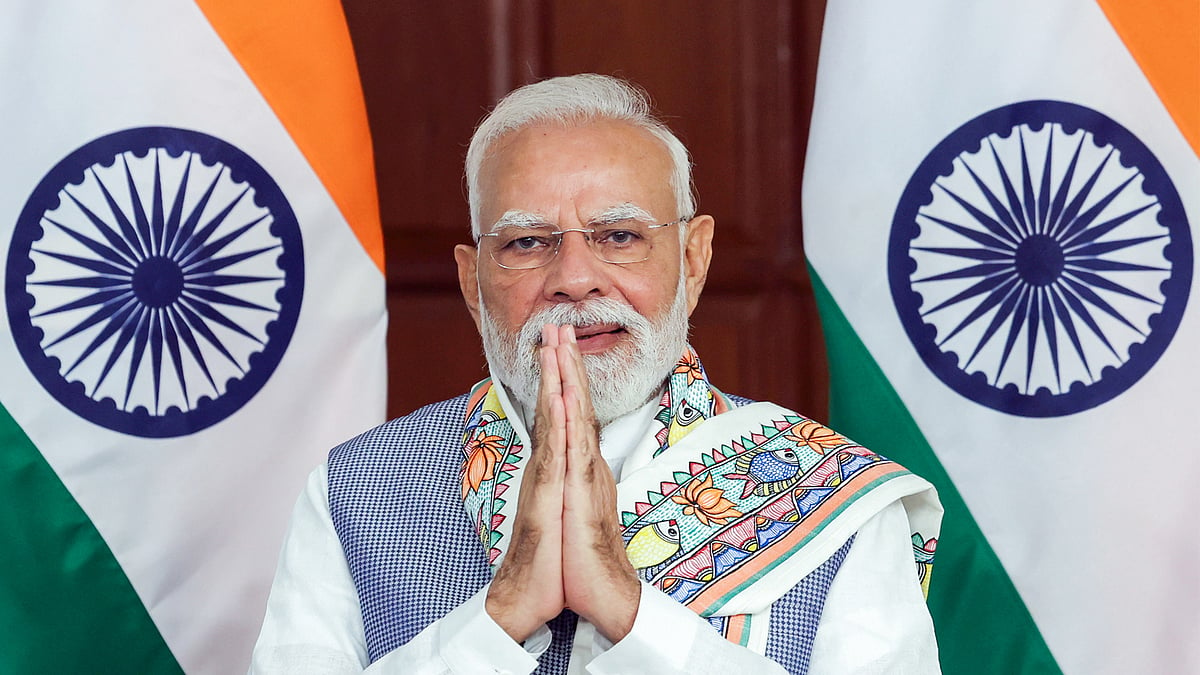
Prime Minister Narendra Modi turns 76 on September 17 and there is one aspect of his public persona that has become almost as recognisable as his speeches — his clothes.
Over the years, Modi has built a distinctive sartorial identity around the humble kurta, sleeveless jackets, Nehru jackets and, most notably, colourful turbans. His wardrobe moves between traditional Indian silhouettes and contemporary tailoring, while frequently bringing regional textiles, colours and craftsmanship into the national spotlight.
For a leader who is photographed almost constantly, these choices have become part of his visual language — communicating something about the occasion, the place and India's cultural diversity before he even begins to speak. Modi's style combines consistency with adaptation.
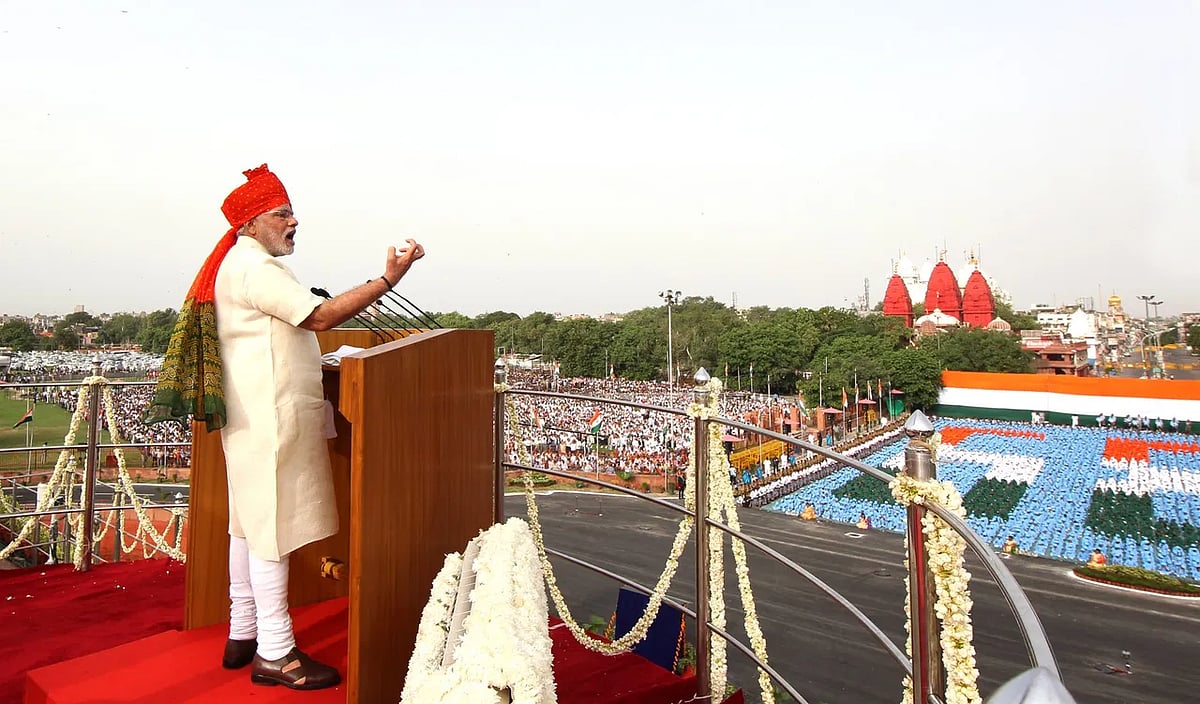
In 2014, during his first Independence Day address as Prime Minister, he appeared in a bright red Jodhpuri Bandhej safa with a green trail |
The turban tradition that began in 2014
Modi's Independence Day appearances have effectively created a yearly sartorial tradition. At the Red Fort, his turban has become something people look forward to seeing, with the style changing almost every year.
In 2014, during his first Independence Day address as Prime Minister, he appeared in a bright red Jodhpuri Bandhej safa with a green trail. The following years brought yellow, pink, saffron, red and multicoloured headgear, often featuring traditional tie-dye techniques and regional influences.
The changing turbans have allowed traditional Indian headgear to occupy an unusually prominent place in contemporary political imagery.
From the tricolour turban to saffron
Some of the choices have been particularly memorable because of their connection with the occasion.
In 2022, as India celebrated 75 years of Independence, Modi arrived at the Red Fort wearing a turban incorporating the colours of the national flag. He paired it with a white kurta-pyjama and a light-coloured sleeveless jacket. The following year, he opted for a vibrant Bandhani-style turban featuring shades of yellow, green and red, teamed with an off-white kurta and dark jacket.
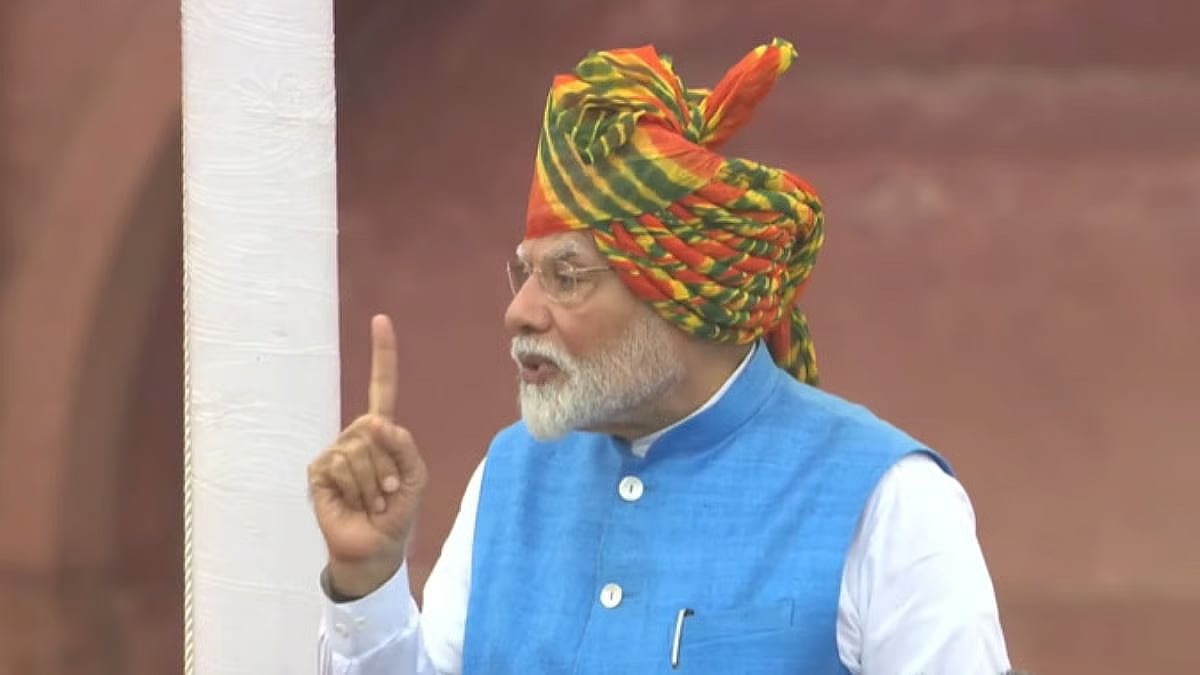
Rajasthani Leheriya turban in 2024 |
In 2024, a wave-patterned Rajasthani Leheriya turban in orange, yellow and green stood out against a white kurta and blue jacket. And in 2025, he went for an almost monochromatic saffron ensemble — a saffron turban and matching waistcoat over a white kurta, finished with a tricolour stole.
His 2026 Independence Day appearance continued the tradition with a maroon-red Bandhani safa featuring yellow and white motifs, paired with a white kurta-pyjama and brown Nehru jacket.
Republic Day gets its own style moment
The tradition is not restricted to August 15. Republic Day has also provided Modi with an opportunity to showcase India's varied headgear.
For Republic Day 2025, he wore a vibrant red-and-yellow safa with a white kurta-pyjama and brown bandhgala jacket. A year earlier, his Republic Day ensemble featured a colourful Bandhani turban in saffron, pink, white and yellow, accompanied by a brown jacket.
The repeated use of different turbans on national occasions has made headgear a recurring part of Modi's ceremonial image.
The jacket that became a signature
If the turban is his most dramatic style statement, the sleeveless jacket is arguably his most recognisable everyday one.
Modi has frequently paired his kurtas with Nehru-style jackets in different colours, fabrics and textures. The combination is formal enough for official engagements while remaining rooted in Indian dressing.
The silhouette has become so closely associated with him that the sleeveless waistcoat is popularly referred to as the "Modi jacket".
Its appeal lies in its adaptability. A muted jacket can create a formal look for a diplomatic engagement, while a brightly coloured or textured version can make a traditional outfit more festive. The basic formula remains familiar even as the details change.
When clothing becomes representation
There is another layer to Modi's sartorial choices: regional representation.
Bandhani and Leheriya connect his public appearances with textile traditions strongly associated with western India. Different forms of turbans and regional headgear have similarly allowed him to bring local identities into national ceremonies.
That gives the clothes a role beyond personal fashion. A particular textile can draw attention to a craft tradition; a regional headpiece can bring a community's visual identity into a national frame.
On November 28, the Prime Minister visited the sacred Sri Krishna Matha in Udupi. The Prime Minister’s attire for the occasion was rooted in tradition. He wore a crisp white kurta layered with a deep-hued vest, creating a dignified ceremonial look. Around his neck, he sported a multi-strand prayer mala that enhanced the devotional setting. The most striking element was his ornate bejeweled turban, embellished with intricate gold detailing and beautifully adorned with peacock feathers, a significant symbol associated with Lord Krishna.
This becomes especially significant during diplomatic engagements, when the Prime Minister's appearance is viewed not merely as an individual's choice but as part of India's international image.
In the age of television, photographs and social media, political image is increasingly visual. Modi's wardrobe has consequently become part of the way his public persona is remembered.

